


ISO 14001 Certification Process: Step-by-Step Guide for Businesses:

The ISO 14001 Certification Process provides organizations with a structured method to establish an effective Environmental Management System (EMS) that identifies environmental aspects, evaluates potential environmental impacts and implements operational controls to reduce risks to the environment. Businesses adopt this internationally recognized framework because it helps them meet environmental regulatory requirements, manage resources responsibly and improve environmental performance through continuous monitoring and improvement. A clearly defined certification process includes environmental review, policy development, risk assessment, employee awareness, internal auditing and independent certification audits, which together ensure that environmental management practices are properly implemented and maintained. Many professionals and organizations also strengthen their understanding of environmental management systems through specialized services offered by Eduskills Training, because proper knowledge and structured implementation significantly increase the chances of successful certification and long-term EMS performance.



Understanding the Purpose of ISO 14001 Environmental Management System:

The purpose of ISO 14001 is to help organizations manage the environmental effects of their activities, products and services through a systematic management approach. An ISO 14001 Environmental Management System built on principles allows companies to identify environmental aspects, evaluate the potential environmental impacts and establish controls that reduce pollution, waste generation and resource consumption.

A properly implemented EMS does not focus only on documentation because it integrates environmental thinking into operational decision-making. Organizations therefore develop structured procedures for waste management, emissions control, energy consumption, water usage and emergency environmental response. Continuous monitoring and improvement remain essential components of the system because environmental performance must be measured, reviewed and enhanced over time.

Key Objectives of an Effective EMS:

An effective Environmental Management System aims to control environmental risks while improving operational performance and regulatory compliance. Organizations that implement a strong EMS focus on several core objectives:

  • Identification and management of environmental aspects and impacts related to operations, products and services.
  • Reduction of pollution and environmental risks through preventive operational controls and responsible resource management.
  • Compliance with environmental laws and regulatory requirements, which reduces the risk of penalties or operational disruptions.
  • Improvement in resource efficiency, including energy usage, raw materials and water consumption.
  • Continuous environmental performance improvement through monitoring, internal audits and management reviews.

How ISO 14001 Supports Environmental Compliance and Sustainability?

ISO 14001 supports compliance because it requires organizations to identify applicable environmental laws, monitor regulatory updates and implement procedures that ensure legal obligations are consistently met.

At the same time, the framework promotes sustainable business practices because it encourages organizations to reduce environmental impact through efficient processes and responsible resource management. Waste reduction programs, emission control strategies, energy efficiency initiatives and responsible supply chain practices become part of everyday operations. Businesses therefore strengthen both regulatory compliance and environmental credibility while demonstrating accountability to stakeholders, regulators and customers.

Understanding the ISO 14001 Certification Requirements:

Organizations seeking environmental certification must first understand the key requirements that form the foundation of an effective Environmental Management System (EMS). ISO 14001:2015 establishes a structured framework that requires businesses to identify environmental risks, comply with environmental legislation and implement operational controls that reduce environmental impact. Companies must demonstrate clear procedures, trained personnel, performance monitoring systems and management oversight that supports continuous environmental improvement.

Core Principles of ISO 14001:2015:

ISO 14001:2015 is built on several core management principles that help organizations manage environmental responsibilities systematically. The standard follows a Plan–Do–Check–Act (PDCA) management cycle because environmental performance must be planned, implemented, monitored and continuously improved.

The standard also emphasizes risk-based thinking, which means organizations must evaluate environmental risks and opportunities before implementing operational controls. Environmental objectives, performance indicators and monitoring procedures must be clearly defined because management decisions depend on measurable environmental performance data.

Another key principle involves life cycle thinking, where organizations consider environmental impacts associated with the entire lifecycle of products and services. Raw material sourcing, manufacturing, transportation, product use and disposal must all be evaluated because each stage may influence environmental performance.

Environmental Aspects and Impact Assessment:

Environmental aspects refer to elements of an organization’s activities, products or services that interact with the environment. These aspects may include emissions to air, wastewater discharge, energy consumption, chemical usage, solid waste generation or noise pollution. Organizations must identify these aspects systematically because unmanaged environmental interactions can lead to pollution, resource depletion or regulatory violations.

Businesses prioritize significant environmental aspects because these require stronger controls, operational procedures and monitoring systems. A structured assessment process therefore ensures that environmental risks are managed proactively rather than reactively.

Legal and Regulatory Compliance Obligations:

Environmental laws and regulatory requirements play a critical role in environmental management because organizations must comply with national and regional environmental legislation at all times. ISO 14001 requires companies to identify applicable environmental laws, permits and regulatory obligations that apply to their operations.

Organizations must also establish procedures to monitor regulatory updates because environmental regulations frequently change as governments introduce stricter environmental protection policies. Compliance evaluation processes therefore ensure that legal requirements remain integrated into operational procedures, inspections and monitoring activities.

Companies that implement structured compliance management systems reduce the risk of regulatory penalties, operational shutdowns and reputational damage. Consistent regulatory monitoring also strengthens relationships with environmental authorities and regulatory bodies.

Leadership Commitment and Environmental Policy Development:

Strong leadership commitment forms the backbone of a successful Environmental Management System because environmental management requires clear direction from senior leadership. Top management must ensure that environmental objectives align with the organization’s strategic goals while also allocating sufficient resources for EMS implementation.

An organization must also develop a clear environmental policy that defines its commitment to environmental protection, pollution prevention, regulatory compliance and continuous improvement. This policy provides a guiding framework for environmental objectives, operational controls and employee responsibilities.

Employees must understand the environmental policy and their individual responsibilities because environmental performance depends on collective organizational behavior. Leadership therefore plays a critical role in promoting environmental awareness, supporting training initiatives and ensuring that environmental management becomes an integral part of daily operations.

“Successful implementation of the ISO 14001 certification process begins with a clear understanding of its core requirements, including environmental aspect evaluation, legal compliance and leadership accountability. Organizations that apply the Plan–Do–Check–Act framework strengthen environmental controls. Leadership involvement therefore transforms environmental policy into practical action that drives continuous environmental improvement.”

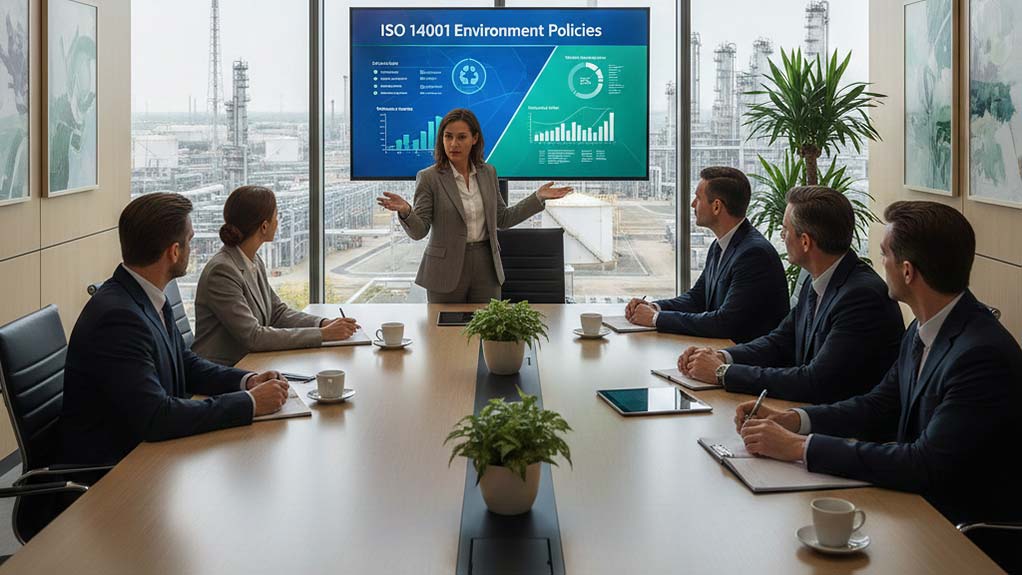
ISO 14001 certification process professionals reviewing environmental plans at industrial facility.

ISO 14001 Certification Process Step by Step:

Organizations achieve environmental certification through a structured implementation approach that forms the foundation of the ISO 14001 Certification Process, which ensures environmental risks are properly identified, controlled and continuously monitored. Businesses that follow the ISO 14001 Certification Process systematically strengthen environmental compliance while improving operational efficiency and responsible resource management. The following steps outline how organizations typically implement an Environmental Management System and prepare for independent certification audits.

Step 1: Conduct an ISO 14001 Gap Analysis:

ISO 14001 certification process normally begins with a gap analysis because organizations need to evaluate how their current environmental practices compare with the requirements of an Environmental Management System. This assessment reviews existing environmental procedures, regulatory compliance status, operational controls, documentation practices and environmental monitoring activities.

The purpose of the gap analysis is to identify areas where the organization already meets ISO 14001 requirements and areas that require improvement. A well-structured gap analysis helps organizations plan resources effectively and establish realistic timelines for Environmental Management System development.

Step 2: Define the EMS Scope and Organizational Context:

Organizations must clearly define the scope of ISO 14001 certification because the system must reflect the operational boundaries of the business. The scope determines which facilities, activities, departments and operational processes will fall under environmental management controls.

At this stage, organizations also evaluate their organizational context, which includes internal operations, external environmental conditions, stakeholder expectations and regulatory obligations.

A clearly defined EMS scope provides direction for the entire ISO 14001 certification process because environmental policies, aspect assessments, operational controls and monitoring systems must align with the defined boundaries of the organization’s environmental management system.

Step 3: Establish Environmental Policy and Leadership Commitment:

Once the EMS scope and organizational context are defined, the next critical step is establishing a formal environmental policy supported by strong leadership commitment. Senior management must clearly communicate the organization’s commitment to environmental protection, regulatory compliance, pollution prevention and continuous improvement because the Environmental Management System depends heavily on strategic direction from leadership.

The environmental policy serves as the foundation of the EMS since it guides environmental objectives, operational controls and decision-making across the organization. Management must ensure that the policy reflects the nature of the organization’s activities, environmental impacts and compliance obligations. Employees and relevant stakeholders should also be made aware of the policy because environmental responsibility must be understood throughout the organization.

Step 4: Identify Environmental Aspects and Evaluate Environmental Impacts:

Organizations must systematically identify environmental aspects, which represent activities, products or services that interact with the environment. These aspects may include air emissions, wastewater discharge, energy consumption, chemical handling, raw material usage and waste generation.

Each aspect must then be evaluated to determine its environmental impact and level of significance. The assessment normally considers factors such as severity, frequency, regulatory obligations and operational control measures. A structured evaluation process therefore allows organizations to prioritize actions that reduce environmental impact and improve operational sustainability.

Step 5: Identify Legal and Compliance Obligations:

Environmental management requires strict compliance with applicable environmental laws, regulations and permit conditions. Organizations must identify all regulatory obligations that apply to their operations, which may include environmental protection laws, waste management regulations, emissions limits and environmental licensing requirements. Also compliance evaluation becomes a continuous activity within the Environmental Management System since organizations must demonstrate that environmental controls align with legal obligations at all times.

Step 6: Establish Environmental Objectives, Targets and Action Plans:

Environmental objectives translate the environmental policy into measurable performance goals. Typical objectives may include reducing energy consumption, minimizing hazardous waste generation, improving recycling rates or lowering greenhouse gas emissions.

Each objective should be supported by a structured action plan that identifies responsibilities, timelines, monitoring methods and performance indicators. Measurable targets allow management to evaluate progress and demonstrate environmental improvement.

Step 7: Implement Operational Controls and Environmental Procedures:

Operational controls ensure that environmental risks remain properly managed during daily activities. Organizations must establish documented environmental procedures that regulate operations such as waste management, chemical storage, emissions control, energy management and emergency environmental response.

These procedures must be communicated clearly to employees because consistent implementation determines the effectiveness of environmental management practices. Well-defined operational controls also help organizations maintain regulatory compliance and reduce the likelihood of environmental incidents.

Step 8: Provide Environmental Training and Awareness:

Employee competence plays a critical role in environmental performance because daily operational behavior directly influences environmental impact. Organizations must therefore provide environmental training and awareness programs that help employees understand environmental procedures, operational controls and their individual responsibilities.

Training programs typically focus on pollution prevention practices, waste segregation, emergency environmental response and responsible resource management. Employees who understand environmental objectives contribute more effectively to the organization’s environmental improvement initiatives.

Step 9: Monitor Environmental Performance and Conduct Internal EMS Audits:

Environmental performance must be monitored regularly because organizations need measurable evidence that operational controls are functioning effectively. Businesses establish environmental performance indicators such as energy consumption levels, waste generation volumes, emissions data and water usage patterns.

Internal EMS audits also form an essential part of this stage because trained auditors review operational processes, documentation and monitoring records to confirm compliance with environmental procedures. Audit findings help identify nonconformities or improvement opportunities so corrective actions can be implemented before certification assessments.

Step 10: Conduct Management Review and Certification Audit:

The final stage involves a management review followed by an external certification audit. Senior leadership evaluates EMS performance by reviewing audit results, environmental objectives, compliance status and improvement opportunities. Management decisions at this stage ensure that the Environmental Management System remains aligned with organizational goals and regulatory obligations.

After the management review, an accredited certification body conducts the external audit to verify compliance with ISO 14001 requirements. The audit typically occurs in two stages. The first stage evaluates EMS documentation and system readiness, while the second stage examines operational implementation across the organization. Certification is granted once the organization demonstrates effective environmental management and successfully addresses any identified nonconformities.

“Environmental certification succeeds when leadership commitment, accurate environmental aspect identification, structured documentation and effective internal audits work together as part of the ISO 14001 certification process. Strong governance turns environmental compliance into a consistent operational practice rather than a one-time certification effort.”

ISO 14001 certification process team reviewing environmental compliance documents at industrial facility.

Common Challenges During the ISO 14001 Certification Process:

During the ISO 14001 Certification Process, many organizations begin implementation with strong intentions, but practical challenges often arise while environmental procedures, monitoring systems and compliance controls are being developed. Recognizing obstacles early helps organizations strengthen their implementation strategy and improve the effectiveness of their environmental management practices.

Lack of Leadership Commitment and Environmental Awareness:

Strong leadership commitment remains one of the most critical success factors in environmental management. Leadership must actively support environmental initiatives because policy development, resource allocation and organizational direction depend on management decisions. Environmental objectives often require investments in training, monitoring systems and operational controls, which means leadership involvement directly influences the success of implementation.

Employee awareness also plays a significant role because environmental performance depends on daily operational behavior. Workers must understand how their activities influence environmental aspects such as waste generation, emissions or resource consumption.

Poor Identification of Environmental Aspects:

Environmental aspects represent the connection between business activities and environmental impact, but many organizations struggle to identify them accurately during the early stages of implementation. Incomplete identification may lead to uncontrolled environmental risks because certain operational activities remain outside the scope of environmental management controls.

Ineffective Documentation and Record Management:

Documentation forms the backbone of an Environmental Management System because policies, procedures, monitoring data and corrective actions must be clearly recorded and maintained. Many organizations face challenges when documentation processes are poorly structured or inconsistently followed.

Employees should be able to follow documented procedures without confusion because unclear documentation often results in inconsistent implementation. Record management also becomes critical because environmental monitoring results, inspection reports, compliance evaluations and corrective actions must be retained as evidence during certification audits.

Weak Internal Audit and Monitoring Processes:

Organizations sometimes underestimate the importance of internal auditing, which leads to delayed identification of procedural gaps or environmental nonconformities. Internal auditors must review operational activities, documentation and environmental monitoring results to verify compliance with established procedures.

Regular audits and monitoring help organizations detect problems early because management receives accurate information about environmental performance. Effective auditing therefore strengthens continuous improvement while preparing the organization for external certification assessments.

Final Thoughts:

Implementing an Environmental Management System requires structured planning, leadership commitment and continuous monitoring because environmental performance must remain integrated into daily operations. Organizations that follow a systematic approach to environmental management improve regulatory compliance, reduce environmental risks and strengthen operational efficiency while demonstrating responsible environmental practices.

A well-implemented EMS also supports long-term sustainability because environmental objectives, operational controls and internal audits create a cycle of continuous improvement. Many professionals and organizations strengthen their understanding of environmental management systems through specialized programs offered by Eduskills Training, which helps build the competence required to implement and maintain effective environmental standards.

Frequent Asked Questions (FAQs):

What is the ISO 14001 certification process?

The process involves several steps including environmental review, EMS scope definition, environmental policy development, identification of environmental aspects, operational controls, internal audits, management review and an external certification audit.

How long does it take to obtain ISO 14001 certification?

The timeline usually ranges from 3 to 6 months, depending on the size of the organization, operational complexity and existing environmental management practices.

Which organizations should implement ISO 14001?

Organizations in manufacturing, construction, oil and gas, energy, logistics, chemicals and waste management benefit the most because their operations have significant environmental impacts.

Is ISO 14001 certification mandatory for businesses?

ISO 14001 is not legally mandatory, but many organizations pursue certification because it improves environmental compliance, corporate reputation and business opportunities.

What is the role of internal audits in ISO 14001?

Internal audits evaluate whether the Environmental Management System is functioning effectively and identify nonconformities that require corrective action before the certification audit.

How can organizations prepare for ISO 14001 implementation?

Organizations should begin with an environmental review, identify environmental aspects, define EMS scope, train employees, implement operational controls and conduct internal audits before the external certification audit.

Inquiry Form