
HAZOP Study: A Complete Guide for Process Safety
HAZOP stands between a process design that looks fine on paper and one that actually survives contact with real operating conditions. A HAZOP study exists because most process failures

HAZOP stands between a process design that looks fine on paper and one that actually survives contact with real operating conditions. A HAZOP study exists because most process failures do not start as catastrophic events. They start as small deviations, a valve that sticks, a flow rate that drifts, and those small deviations escalate because nobody asked the right question early enough. This guide walks through how a hazard and operability study actually works, from the guide word methodology to node selection to the recommendations that follow. Because HAZOP is a process hazard analysis method, not a one-time checkbox, understanding it properly changes how your team reviews new designs and revalidates existing ones. Whether you are preparing for your first session or trying to sharpen a program that already exists, this breaks down the mechanics without the filler.
A HAZOP study, short for Hazard and Operability Study, is a structured technique used to identify hazards and operability problems inside a process system by examining how it could deviate from its intended design. It does not ask whether a system is dangerous in general terms. It asks a narrower, sharper question: what happens if this specific parameter, at this specific point in the process, moves outside its intended range? That precision is what separates HAZOP from a general safety walkthrough, because vague hazard hunting tends to catch the obvious risks and miss the ones hiding inside normal-looking operating conditions.
HAZOP was developed in the late 1960s by Imperial Chemical Industries in the United Kingdom, at a time when the chemical industry was scaling up faster than its safety practices could keep pace with. Engineers at ICI needed a way to review increasingly complex plant designs without relying purely on individual judgment, since judgment alone had already proven unreliable at catching deviations buried inside interconnected systems. What started as an internal ICI practice eventually became the industry standard, and it is now codified in IEC 61882 and referenced directly inside OSHA’s Process Safety Management standard. Six decades later, the core logic has not changed much, because the problem it solves, complex systems failing in ways nobody anticipated, has not gone away either.
Strip away the terminology and a HAZOP study exists to answer one question repeatedly, node by node, parameter by parameter: what can go wrong here, and what happens if it does? That question gets applied systematically rather than randomly, since a facilitator working through a P&ID does not skip sections that look low-risk on first glance. This matters because process safety incidents rarely come from the hazard everyone already knew about. They come from the deviation that seemed too minor to discuss in detail, until the day it wasn’t. A properly run HAZOP treats every node with the same rigor specifically to prevent that gap from forming.
HAZOP and HAZID get confused constantly, and the confusion causes real problems when teams apply the wrong tool at the wrong project stage. HAZID, or Hazard Identification Study, is a broader, less structured brainstorming exercise used early in a project, often before detailed P&IDs even exist, to flag major hazard categories worth investigating further. HAZOP comes later, once detailed engineering drawings are available, and it works through the design systematically using guide words rather than open discussion. Running a HAZOP before the P&IDs are mature enough wastes the team’s time, since there is nothing detailed enough yet to interrogate. Running only a HAZID and skipping HAZOP entirely leaves major hazards under-examined, since HAZID was never designed to dig that deep in the first place.
Every HAZOP study runs on two building blocks working together: process parameters and guide words. Neither one means much on its own, but combined, they generate the specific deviations a team needs to examine. Understanding how these two pieces interact is what makes the rest of the methodology make sense, because everything that follows, nodes, worksheets, recommendations, all flow from this core mechanic.
A process parameter is any measurable property of the process at a given point, and the standard list covers flow, temperature, pressure, level, composition, phase, and reaction rate, with time and sequence added for batch processes. These are not arbitrary categories. They represent the variables that, when they move outside their intended range, actually cause harm, whether that is a runaway reaction, a loss of containment, or equipment operating outside its design envelope. A team reviewing a reactor node would examine flow into and out of the vessel, but they would also examine reaction rate and composition, since a reactor introduces chemistry-specific risks that a simple pipe segment does not carry.
Guide words are the fixed vocabulary applied to each parameter, and the standard set includes NO, MORE, LESS, AS WELL AS, PART OF, REVERSE, and OTHER THAN. Each word forces a specific kind of question.
NO applied to flow asks what happens if flow stops entirely, a blocked line or a failed pump.
MORE applied to pressure asks what happens if pressure exceeds design limits, which might reveal a relief system gap the design never accounted for.
REVERSE applied to flow asks whether backflow could introduce contamination or damage upstream equipment that was never designed to handle flow in that direction.
The value of this fixed vocabulary is consistency, since every team member applies the same set of prompts to every node, rather than each person hunting for hazards based on their own instinct.
A deviation is what happens when you pair a guide word with a parameter at a specific node, and it is the actual unit of analysis the team works through. “FLOW, MORE” at a feed line into a reactor is a deviation. So is “TEMPERATURE, LESS” at a cooling water return line. Once the team states the deviation, the work becomes concrete: identify plausible causes, trace out the consequences if those causes occur, list the safeguards already in place, and judge whether those safeguards are actually adequate.
A single node might generate a dozen or more deviations once every relevant parameter has been paired with every applicable guide word, and that repetitive structure is intentional, since it is what keeps the study from skipping over combinations that seem unlikely at first glance but turn out to matter.
Node selection rarely gets the attention it deserves in most HAZOP discussions, but it is one of the decisions that most directly determines whether a study succeeds or wastes everyone’s time. Get this wrong, and even a well-run session using the correct guide words will still miss hazards or drag on far longer than the schedule allows.
A node is a defined section of the process where the design intent stays uniform, typically a length of pipe between two pieces of equipment, a single vessel, or a heat exchanger. The study leader divides the P&ID into these sections before the session begins, and each node becomes its own mini-review during the HAZOP, with the team working through every relevant parameter and guide word combination before moving to the next one. Think of a node as a natural boundary in the process, a point where the design intent changes, rather than an arbitrary chunk of pipe picked for convenience.
When a facilitator groups too much equipment into a single node, usually under time pressure or a desire to move faster through the study, the analysis quietly loses resolution. A node that spans an entire process unit instead of a single vessel forces the team to discuss flow, pressure, and temperature at a level too general to surface the specific deviation that would have mattered. Say a node improperly bundles three vessels with different operating pressures into one review. The team might discuss pressure deviations in general terms without ever isolating which specific vessel’s relief system was actually undersized. That gap does not show up as a missing line item in the worksheet. It shows up months or years later, when the deviation that was never specifically examined finally occurs.
The opposite mistake carries its own cost. Breaking a process into nodes that are too small forces the team to repeat nearly identical discussions across multiple sessions, since a short pipe segment with no meaningful change in design intent does not generate genuinely different deviations from the segment before it. This burns hours the team does not have, and it tends to produce fatigue that shows up later in the study as sessions run long and attention drops. Good node sizing sits at a practical middle point, large enough to avoid redundant discussion, small enough that the design intent stays uniform throughout the section. This is a facilitator skill built through experience, not a formula, and it is exactly the kind of judgment that separates a strong HAZOP leader from someone simply following a template.
You might be interested in reading
A HAZOP is fundamentally a team exercise, and no single person, regardless of how experienced, can reliably catch every hazard alone. The multidisciplinary structure exists because different roles see different failure modes, and a session missing one of those perspectives has a genuine blind spot built into it from the start.
A properly staffed HAZOP team includes a facilitator, a process engineer who understands the design intent, an instrument or control engineer familiar with the alarm and interlock philosophy, an operations representative who brings real-world experience, a maintenance engineer who understands equipment failure modes, a safety engineer who evaluates consequences and safeguards, and a scribe who records findings in real time. Each role contributes something the others cannot. The operations representative, in particular, often surfaces failure modes that never show up on a design drawing, because they have watched the process behave under real conditions, not just theoretical ones.
A team of five to eight people tends to hit the right balance, since fewer people leaves gaps in expertise, while larger groups become genuinely difficult to facilitate and slow the session down without adding proportional value. Diversity matters just as much as size, because a team composed entirely of design engineers will approach every deviation from a design-intent perspective and may miss the operational reality of how the plant actually runs day to day. This is why skipping the operations representative to save time is one of the more damaging shortcuts a project team can take, since it removes the one perspective most likely to catch a hazard that only shows up once the plant is actually running.
The facilitator’s job goes beyond simply reading guide words off a list. A skilled facilitator manages team dynamics, keeps discussion focused on documenting deviations rather than drifting into solving them in real time, and maintains a pace that covers the required nodes without rushing through the difficult ones. This role typically requires formal training, since facilitating a HAZOP well is a distinct skill from having strong process engineering knowledge. Many organizations bring in an independent facilitator for critical studies specifically because someone too close to the original design may unconsciously defend decisions rather than interrogate them with the same rigor applied to everything else.
Once the team and nodes are set, the actual session follows a repeatable structure. This is where the methodology turns into practice, and where discipline in following each step is what separates a thorough study from one that only looks thorough in the final report.
Before a single guide word gets applied, the study leader defines the boundary of what is being studied, whether this is a design review, a periodic revalidation, or an assessment tied to a management of change. The team also agrees on acceptance criteria in advance, meaning what level of risk actually requires a formal recommendation versus what can be noted and accepted as-is. Skipping this step leads to inconsistent judgment calls later in the session, where one deviation gets flagged for action while a similarly risky one gets waved through simply because the team never agreed on where that line sits.
For each node, the team works through every relevant parameter and guide word combination in sequence. The facilitator states the deviation, the team identifies plausible causes, and for each credible cause, they trace out the consequences that would follow if the deviation occurred and existing safeguards failed to catch it. This is the heart of the session, and it demands genuine discipline, since it is tempting to move quickly past deviations that seem unlikely without actually confirming that assumption against real data or operating history.
Every deviation, cause, consequence, safeguard, and recommendation gets logged on a structured worksheet in real time, typically capturing the node reference, the guide word and parameter combination, the causes and consequences identified, the existing safeguards, a qualitative risk rating if the team uses one, and any recommendation along with a named action party. This worksheet becomes the permanent record of the study, and its quality determines whether anyone can meaningfully audit or revalidate the HAZOP years later. A worksheet full of vague entries like “safeguards adequate” without supporting detail is far less useful than one documenting exactly why the team reached that conclusion.
A HAZOP study that generates a long list of recommendations and then goes nowhere has not actually reduced risk. It has produced a document that looks like due diligence while leaving the underlying hazards exactly where they were. This gap between identifying risk and actually closing it is where many otherwise well-run studies quietly fail.
A facility that can point to a completed HAZOP with two hundred recommendations, none of which were ever implemented, is arguably in a worse position than one that never ran the study at all, since the paper trail now suggests hazards were reviewed and addressed when they were only reviewed. This creates a dangerous gap between documented safety and actual safety, and it tends to surface only after an incident, when investigators find the exact deviation that was flagged years earlier sitting untouched in an old worksheet. Recommendations are not the finish line of a HAZOP. They are the starting point of the actual risk reduction work.
Every recommendation needs a named owner and a completion date, because a recommendation assigned to “engineering” in general terms tends to belong to nobody in practice. Tracking closure means someone is actively confirming that each item was reviewed by management, accepted or modified with justification, and implemented, not simply logged and forgotten in a spreadsheet nobody revisits. Organizations serious about this discipline build recommendation tracking into their broader process safety management system, so it does not depend on any one person remembering to follow up months after the original session ended.
The completed report needs to capture the full scope and objectives of the study, the team composition and session dates, the complete worksheets, a summary of every recommendation, and the final disposition of each one, along with sign-off from the study leader and engineering management. This documentation matters for more than just compliance. It becomes the reference point the next HAZOP team uses during revalidation, and a poorly documented report forces that future team to rebuild context that should have already existed, wasting time that a properly archived report would have saved.
HAZOP is one tool among several in the process hazard analysis toolkit, and knowing when to reach for it, versus something else entirely, is part of using it well. Applying HAZOP where a simpler method would suffice wastes resources. Skipping HAZOP where it is genuinely needed leaves real gaps in the analysis.
HAZOP identifies hazards and deviations qualitatively, working systematically through nodes and guide words to surface what could go wrong. Layer of Protection Analysis, or LOPA, picks up where HAZOP leaves off, taking the scenarios HAZOP identified and applying a semi-quantitative method to confirm whether existing safeguards actually reduce risk to an acceptable level. These two tools are sequential, not competing, since LOPA typically cannot function without the deviation and cause data a HAZOP already produced. Running LOPA without a preceding HAZOP means working from an incomplete or informally generated hazard list, which undermines the rigor LOPA is supposed to add.
Failure Mode and Effects Analysis, or FMEA, approaches hazard identification from the equipment side, examining how individual components can fail rather than how process parameters can deviate. This makes FMEA a strong fit for mechanical systems but a weaker one for process chemistry hazards, which is exactly where HAZOP’s guide word methodology does its best work. What-If Analysis, meanwhile, is a less structured, open-discussion technique better suited to early concept design stages, before detailed P&IDs exist for a HAZOP to systematically work through. Choosing between these methods usually comes down to project stage and system complexity, not personal preference.
HAZOP demands detailed P&IDs, a multidisciplinary team, and meaningful time investment, and none of that is justified for every system. A simple, low-hazard process with minimal interconnection between components rarely benefits from the full HAZOP treatment, since a simpler qualitative review would identify the same handful of risks without the overhead. Similarly, if a project is still at an early concept stage without mature engineering drawings, running a HAZOP too early wastes the team’s time discussing details that have not been finalized yet. Recognizing when HAZOP is overkill is as much a sign of process safety maturity as knowing when it is essential.
A poorly executed HAZOP can be more dangerous than skipping the study entirely, because it produces a documented record suggesting hazards were reviewed thoroughly when significant risks were actually missed. These mistakes show up repeatedly across the industry, and most of them are entirely preventable with the right discipline.
A HAZOP is only as good as the drawings it reviews, and out-of-date P&IDs, missing instrument details, or drawings that no longer reflect as-built conditions all produce findings that look thorough but are quietly disconnected from reality. This happens more often than most organizations admit, particularly at facilities where field modifications were made without updating the corresponding documentation. Verifying that P&IDs match actual field conditions before the session begins is not optional preparation. It is a prerequisite for the entire study to mean anything.
Teams frequently list “operator response” or an existing alarm as an adequate safeguard without actually questioning whether the operator can realistically respond in the available time, with the right information, under real operating pressure. This is one of the most common ways a HAZOP systematically underestimates risk, since a safeguard that looks reasonable on paper may not function the way the team assumes under actual field conditions. A rigorous team pushes past the easy answer and asks the harder question: has this safeguard actually been tested, and does it work as fast and as reliably as this analysis is assuming?
A complex process unit cannot be adequately reviewed in a compressed timeframe, and attempting to force a multi-week study into a few days is one of the most reliable ways to systematically skip difficult deviations. Rushed sessions tend to move quickly past the nodes that seem straightforward and run out of time exactly when the team reaches the genuinely complex sections that needed the most attention. The cost of extending a HAZOP by a few extra days is trivial compared to the cost of a hazard that was never properly examined because the schedule ran out first.
HAZOP is not just an internal best practice. It sits inside a web of regulatory and standards requirements that make it, in practical terms, close to mandatory for any facility handling hazardous materials at scale.
OSHA’s Process Safety Management standard, found in 29 CFR 1910.119, requires a Process Hazard Analysis for facilities handling highly hazardous chemicals above specified threshold quantities, and HAZOP is one of the accepted methodologies for meeting that requirement, alongside What-If, Checklist, and FMEA approaches. In practice, HAZOP has become the dominant choice for complex continuous processes specifically because its systematic structure produces more consistent, defensible results than less structured alternatives. Regulators reviewing a facility’s PSM program expect to see evidence that the PHA methodology chosen actually matches the complexity of the system being reviewed, and HAZOP is generally the safer choice once a process crosses a certain threshold of interconnected complexity.
Outside the United States, IEC 61882 serves as the international application guide for HAZOP studies, and it is widely referenced across Europe and Asia alongside the EU’s Seveso III Directive, which effectively requires equivalent systematic hazard identification for major-hazard facilities. HAZOP has become the dominant Seveso-compliant methodology in European process industries for the same reason it dominates in the United States: its structure produces results regulators can audit and compare, since the guide word methodology forces consistency across different facilitators and different facilities in a way that less structured techniques cannot guarantee.
HAZOP does not operate in isolation from the rest of a facility’s process safety program. The deviations, causes, and consequences it identifies become the direct input for LOPA, which in turn determines the required Safety Integrity Level for any safety instrumented functions protecting against those scenarios. This connection is why organizations investing in structured HAZOP training, including programs offered through Eduskills Training, tend to see downstream benefits across their entire process safety management system, not just in the HAZOP sessions themselves. A weak HAZOP produces weak LOPA inputs, which produces poorly justified SIL targets, and that chain of dependency is exactly why getting the first link right matters as much as it does.
HAZOP was developed in the late 1960s by Imperial Chemical Industries (ICI) in the United Kingdom, as chemical plant designs grew too complex for individual engineering judgment alone to review reliably.
HAZID is a less structured, early-stage brainstorming exercise used before detailed P&IDs exist. HAZOP comes later and applies systematic guide words to mature engineering drawings, producing a far more detailed and rigorous review.
A node is a defined section of a process, often a length of pipe, a vessel, or a heat exchanger, where the design intent stays uniform. The study leader divides the P&ID into nodes before the session begins.
Oversized nodes blur the analysis and miss specific deviations, since the discussion stays too general to isolate the exact failure point. Undersized nodes waste time on repetitive, low-value discussion across sections with no meaningful design change.
Operators have watched the process behave under real conditions, not just theoretical ones, so they often catch failure modes that never appear on a design drawing.
Duration depends on system complexity. A single process unit typically takes three to five days of workshopping, while a full refinery unit or offshore module can take several weeks.
The worksheet captures the node reference, the guide word and parameter combination, plausible causes, consequences, existing safeguards, a risk rating if used, and any recommendation with a named action party.
HAZOP identifies hazards and deviations qualitatively. LOPA takes those identified scenarios and applies semi-quantitative analysis to confirm whether existing independent protection layers reduce risk to an acceptable level. LOPA typically depends on HAZOP’s output as its starting point.
The study creates a documented record suggesting hazards were reviewed and addressed, when the underlying risk may still be unresolved. Untracked recommendations are one of the most common and dangerous HAZOP failures.
HAZOP is unnecessary for simple, low-hazard systems with minimal component interaction, and it is premature at early concept design stages before detailed P&IDs exist. What-If Analysis or HAZID fit those situations better.
HAZOP stands between a process design that looks fine on paper and one that actually survives contact with real operating conditions. A HAZOP study exists because most process failures

Risk Based Process Safety decides whether a plant runs for decades without incident or ends up in a Chemical Safety Board report. Most facilities already track hazards on paper

Health and safety culture determines whether a workplace merely follows rules or genuinely protects the people inside it. Because most incidents trace back to attitudes and habits rather than

Process Safety Management exists because a single overlooked valve, a skipped inspection or an ignored warning sign can turn a chemical plant into a disaster site within minutes. Companies
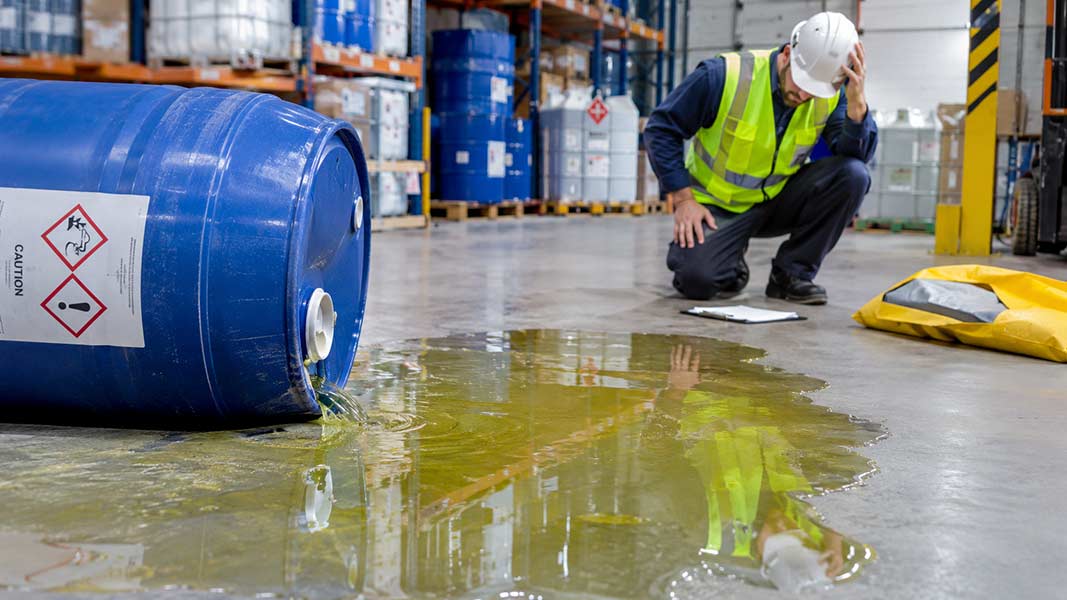
Chemical hazards cause more workplace injuries and long-term illnesses than most employers realize because exposure often happens quietly through skin contact, inhalation or repeated low-dose contact over months and
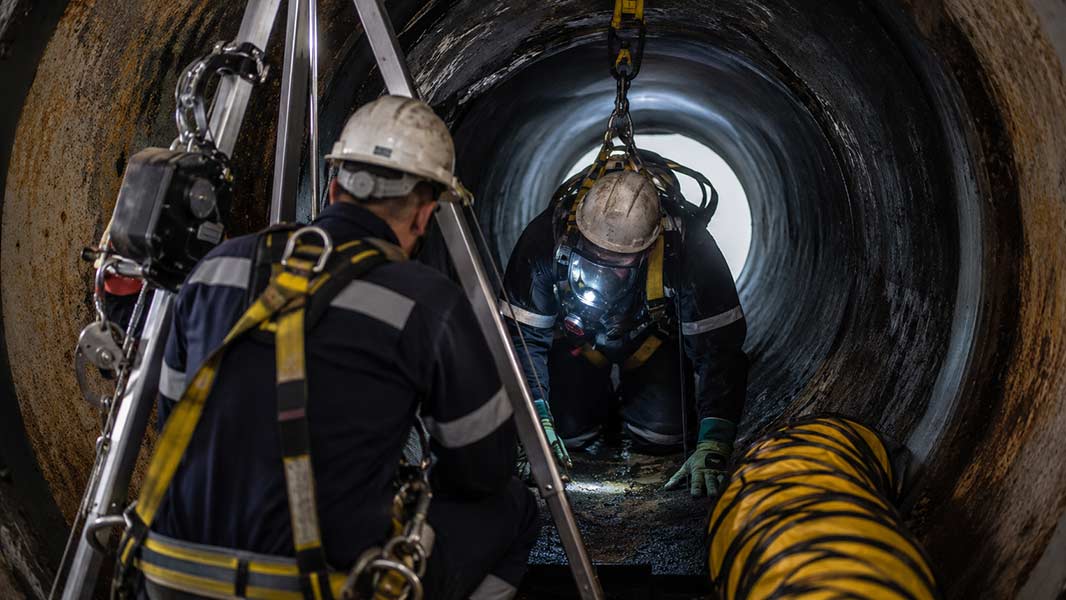
Confined Space Hazards cause more workplace deaths every year than most employers realize, often because the risks stay invisible until someone is already inside. A space doesn't need to

Manual handling hazards exists in almost every workplace, from warehouses to hospitals and it remains one of the leading causes of workplace injury worldwide. According to the UK Health

Heat stress vs heat stroke confuses more workers than it should, and that confusion costs lives every summer. The Bureau of Labor Statistics recorded 48 work-related deaths due to

A slip, trip and falls risk assessment is the single most effective tool employers have for catching hazards before they turn into injuries. Because falls remain one of the

Line of fire hazards occur when a worker's body is positioned where it could be struck, crushed, pinned, or caught by moving equipment, falling objects, or released energy and
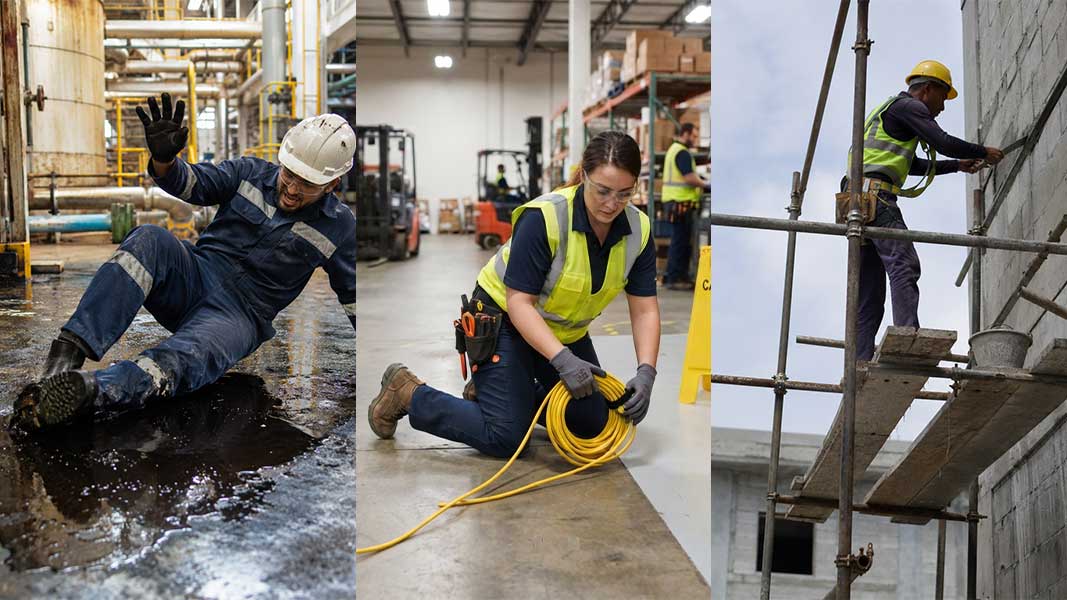
Slip, trip and fall hazards remain one of the most underestimated risks inside any workplace, largely because they hide in plain sight, a wet floor here, a loose cable

Repetitive strain injury at Workplace affects millions of workers every year and most of them do not realize the damage is building until pain becomes constant. According to the

Heat Stress Awareness starts with a simple fact: the human body can only handle so much heat before it starts to fail and most workers never see the warning

HIRA in the workplace is not a paperwork exercise. It is the single most important process that stands between your workers and a serious injury, a fatality or a

Forklift hazards and risk control is a critical responsibility in any workplace where powered industrial trucks operate daily. Warehouses, construction sites, manufacturing plants and logistics hubs rely on forklifts
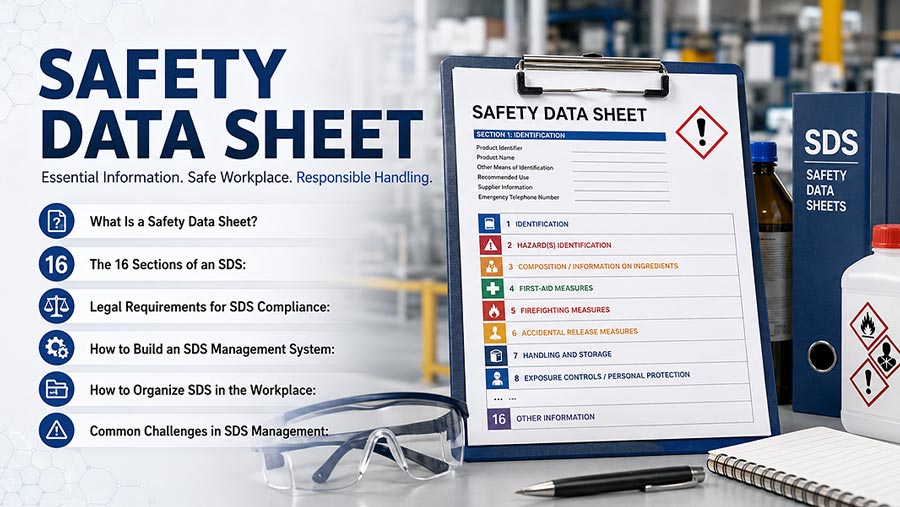
Every year, thousands of workplace chemical incidents happen not because the hazard was unknown, but because the right information was not where it needed to be. A Safety Data
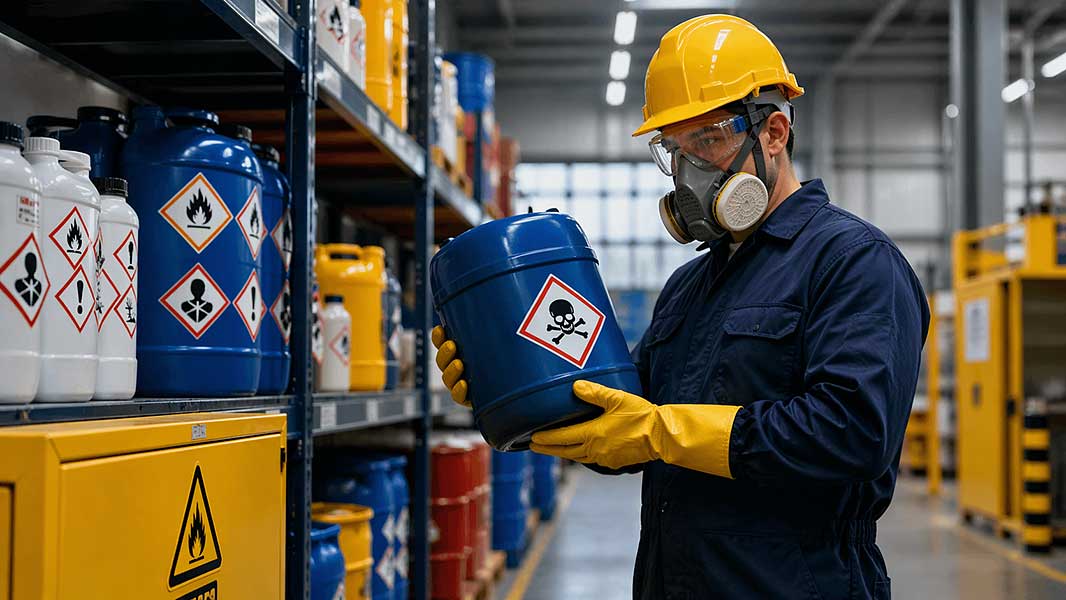
Hazardous Materials Safety is the line between controlled operations and catastrophic failure because one mismanaged chemical, one incompatible storage condition or one missed warning label can trigger injuries, fires,

Emergency Preparedness in UAE is no longer optional because a single unplanned incident can shut down operations, cause serious injuries and expose businesses to legal consequences. In high-risk sectors,

ISO 14001 Environmental Management Lead Auditor in UAE is a highly respected role because organizations rely on qualified professionals to assess environmental management systems (EMS), ensure ISO 14001:2015 compliance

Fall protection for work at height remains one of the most critical safety priorities across construction, oil and gas, manufacturing and maintenance industries because even a minor lapse can

Key requirements of ISO 9001 Certification in UAE define how organizations build a structured, consistent and performance-driven ISO 9001 Quality Management System that meets customer expectations and regulatory demands.
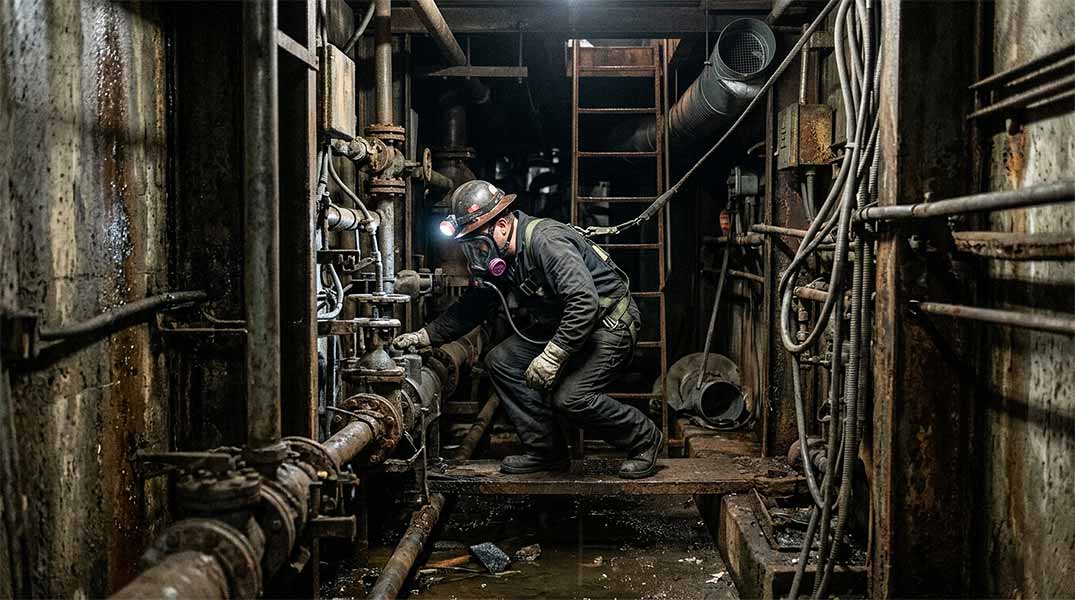
Confined Space Hazards remain one of the most critical risks in industrial workplaces because they combine limited access, poor ventilation and unpredictable conditions that can turn routine tasks into

The benefits of ISO 45001 lead auditor training are becoming increasingly important for safety professionals in the UAE because industries such as construction, oil and gas, manufacturing, logistics and
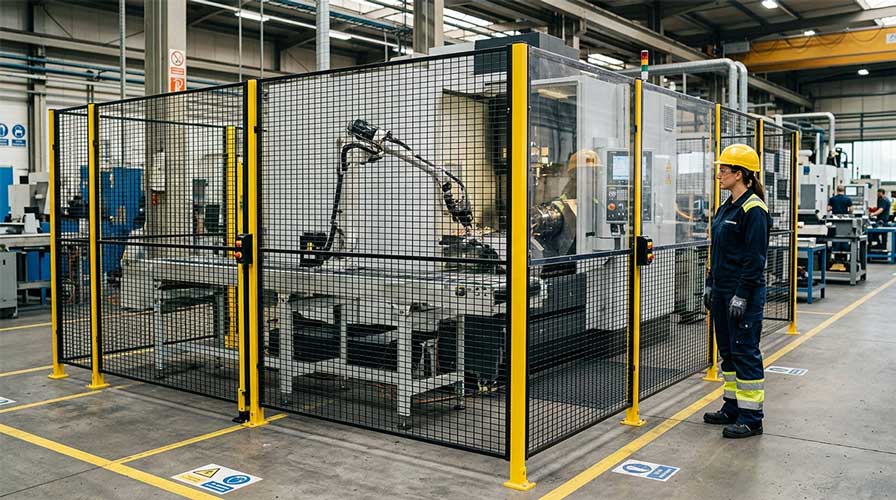
Machine Guarding Safety protects workers from dangerous moving parts, mechanical hazards and high-risk machine operations that exist across industrial workplaces. Manufacturing equipment, conveyor systems, cutting machines, presses and rotating

The ISO 14001 Certification Process provides organizations with a structured method to establish an effective Environmental Management System (EMS) that identifies environmental aspects, evaluates potential environmental impacts and implements

Digital LOTO Systems are becoming an essential part of modern industrial safety programs because traditional paper-based lockout tagout procedures often create gaps in documentation, communication and verification of hazardous

The benefits of ISO 9001 Lead Auditor Course in UAE are clear for professionals who want authority in quality management, because this qualification proves you can plan, conduct and

Employee Assistance Programs for workplace safety strengthen risk control because mental health, personal stress and financial pressure directly affect concentration, judgment and safe behavior at work. Many incident investigations

ISO 45001 clause 5.1 leadership and commitment requirements determine whether an Occupational Health and Safety Management System truly works in practice. Under the ISO 45001 framework, top management is

Bullying and harassment prevention in the workplace is a critical part of occupational health, legal compliance and organizational risk management. When disrespectful conduct is ignored, employee morale declines and

The benefits of ISO 14001 Lead Auditor Training in UAE extend far beyond earning a professional credential. This advanced qualification by Eduskills Training equips you to plan, conduct and

Workplace violence prevention is not limited to reacting after an incident occurs but instead focuses on identifying risks early and controlling them before harm happens. Violence at the workplace

HSE KPIs are the backbone of effective health, safety and environmental performance measurement because they turn policies, procedures and controls into measurable outcomes. When defined and used correctly, KPIs

ISO 45001 Implementation is the process of building a structured occupational health and safety management system that actually works on the ground, therefore reducing risks, preventing incidents and protecting

Fatigue management at the workplace has become a critical safety concern because fatigue directly affects alertness, judgment, reaction time and decision-making. When workers are fatigued, the likelihood of errors

Guide to ISO 45001 Lead Auditor Course is the starting point for professionals who want to upgrade from “knowing safety” to auditing occupational health and safety systems with confidence

Ergonomics and Musculoskeletal Health sit at the center of injury prevention because most work-related pain develops from everyday tasks rather than sudden accidents. When jobs are designed without considering
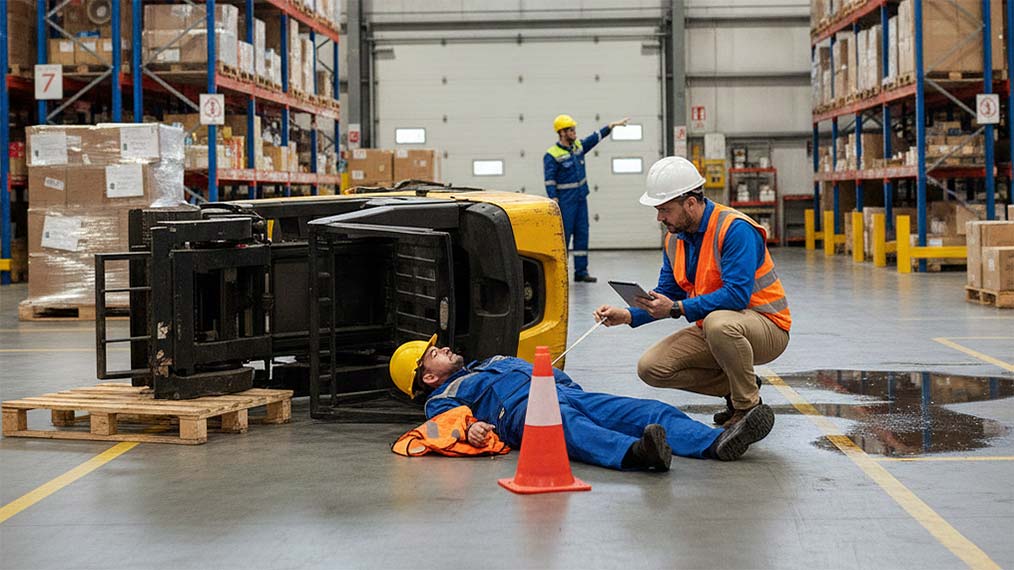
Incident investigation is the backbone of effective occupational health and safety, because it focuses on understanding why an incident occurred rather than who was involved. When done properly, it

ISO 14001 Gap Analysis is a structured assessment that helps organizations measure their current Environmental Management System against ISO 14001 requirements because even small compliance gaps can lead to

Choosing the right professional certification depends on career goals, industry exposure and long-term relevance. Many professionals choose ISO 9001 Lead Auditor Course in UAE because organizations across the region
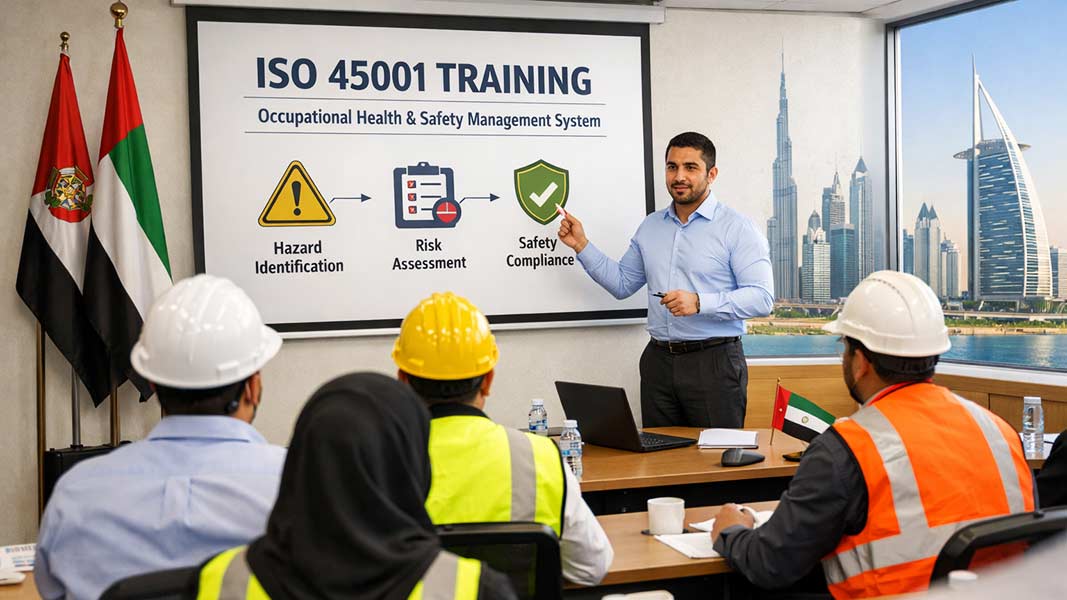
ISO 45001 Training in the UAE is no longer optional for professionals responsible for workplace safety, compliance and operational control. Organizations are under increasing pressure to reduce incidents, meet

ISO 45001 Implementation and Certification for SMEs in UAE has become a direct path for small and medium businesses to strengthen safety performance because it brings structure, accountability and

ISO 14001 Environmental Policy and Leadership set the foundation for how an organization turns environmental intent into measurable action. When both elements work in sync, teams move from declarations

Mental health in workplace safety is a critical factor that decides how consistently people follow procedures, recognize hazards and respond under pressure. When employees feel overwhelmed, their ability to

An ISO 45001 Gap Analysis gives you a realistic picture of how your current safety practices measure against the requirements of the ISO 45001 Occupational Health and Safety Management

Psychosocial hazards in the workplace influence how people think, behave and respond to risks because they directly affect mental wellbeing long before a physical incident occurs. When pressure builds,

Behavior based safety plays a defining role in how workplace safety culture grows, matures and stays consistent across daily operations. When organizations pay attention to the way people act
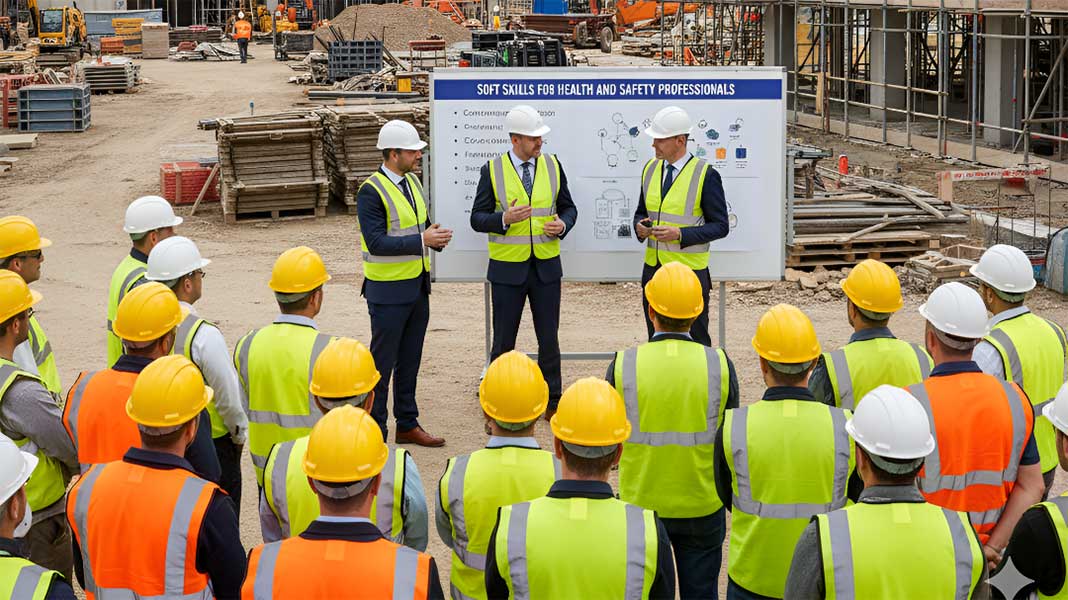
Soft skills for HSE professionals shape how effectively they communicate, influence and guide people on site, therefore they matter just as much as technical expertise. I’ve seen many safety

ISO 9001 digital transformation is reshaping how organizations in the UAE manage quality, safety and efficiency. Companies across Dubai, Abu Dhabi and Sharjah are moving beyond traditional paperwork and
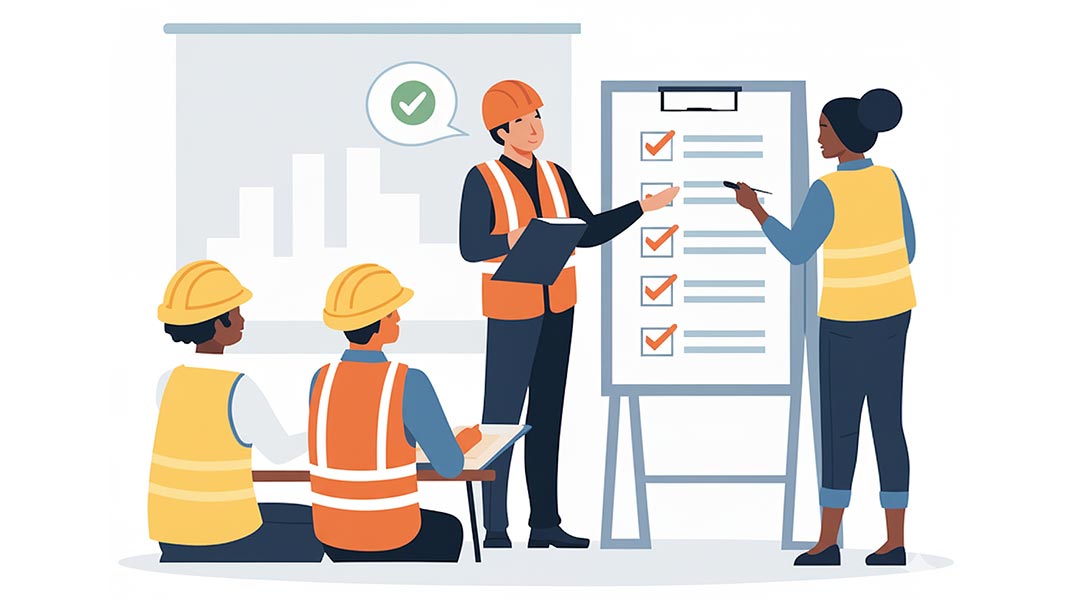
An HSE Implementation Plan is the foundation of every safe and responsible workplace. It provides a structured framework for managing health, safety and environmental risks so that daily operations
