How to Prevent Slip, Trip and Fall Hazards at the Workplace?
Slip, trip and fall hazards remain one of the most underestimated risks inside any workplace, largely because they hide in plain sight, a wet floor here, a loose cable
Slip, trip and fall hazards remain one of the most underestimated risks inside any workplace, largely because they hide in plain sight, a wet floor here, a loose cable there, nothing that looks dangerous until someone actually falls. These incidents don’t discriminate by industry, because whether it’s a warehouse floor, a hospital corridor or a construction site, the same workplace safety gaps keep repeating year after year. Most of these accidents are preventable, so the real question is whether your organization has taken the right hazard prevention steps before they happen. At Eduskills Training, we’ve seen how a single overlooked occupational hazard can turn into a costly injury claim or a life-altering accident for an employee. Building a workplace where slip and fall prevention becomes a habit, not an afterthought, starts with understanding where these risks come from and how to shut them down early. That’s what this guide breaks down, step by step.
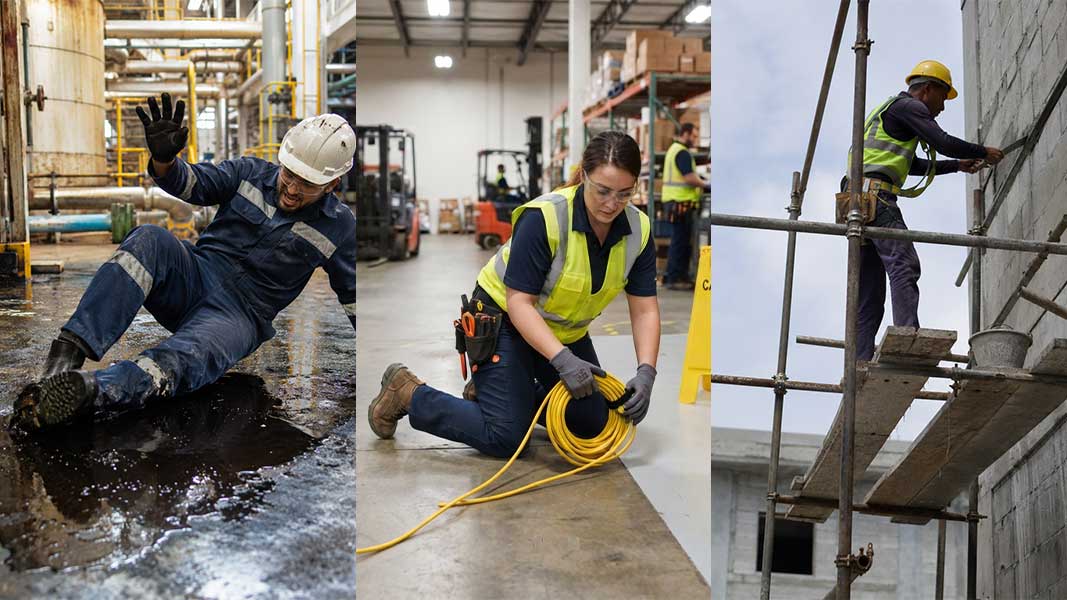
Before you can prevent something, you need to define it properly because vague definitions lead to vague safety programs. Slip, trip and fall hazards refer to any workplace condition that can cause a worker to lose balance and fall, whether that’s from the same level or from height. Slips happen when there’s too little friction between footwear and the walking surface, usually from moisture, oil or polished flooring. Trips occur when a foot catches an object or an uneven surface, interrupting a person’s stride. Falls, on the other hand, cover both same-level falls and falls from elevation, such as ladders, platforms or loading docks. Understanding this distinction matters because each one requires a different risk control approach and treating them as one generic problem is exactly why so many prevention programs fail.
Regulatory bodies like OSHA classify slip, trip and fall hazards under the broader category of “walking-working surfaces,” which sounds technical but simply means any floor, platform or walkway an employee uses to move through their workday. A “near miss” in this context refers to an incident where no injury occurred, but the conditions for one existed and these are often the most ignored data points in a safety program even though they predict future accidents with striking accuracy. Terms like “housekeeping hazard” and “structural hazard” also show up frequently in incident reports and knowing the difference helps safety teams assign responsibility and fix the right root cause instead of guessing.
Here’s the uncomfortable truth: most workers don’t report a wet floor or a loose cable until someone actually gets hurt, because these hazards feel too ordinary to flag. Unlike a malfunctioning machine or an exposed wire, a slippery tile doesn’t trigger the same alarm in people’s minds, even though the injury outcomes can be just as severe, sometimes fatal. According to the National Safety Council, falls account for a significant share of all workplace injury claims each year, yet they rarely get the same budget or attention as high-visibility hazards like chemical exposure or machinery accidents. That gap between perceived risk and actual risk is exactly where hazard prevention programs need to focus first because you can’t fix what your team doesn’t take seriously in the first place.
“Preventing slip, trip and fall hazards isn’t just about reacting faster, it’s about spotting the warning signs long before an incident happens. This means shifting from a reactive mindset to a proactive one, where identifying risk becomes a routine part of daily operations rather than something triggered only after someone gets hurt.”
Most slip, trip and fall hazards trace back to a handful of repeat offenders and once you know what they are, spotting them becomes second nature. Below, we’ve grouped the most common causes by category because a slip hazard and a fall hazard rarely call for the same fix.
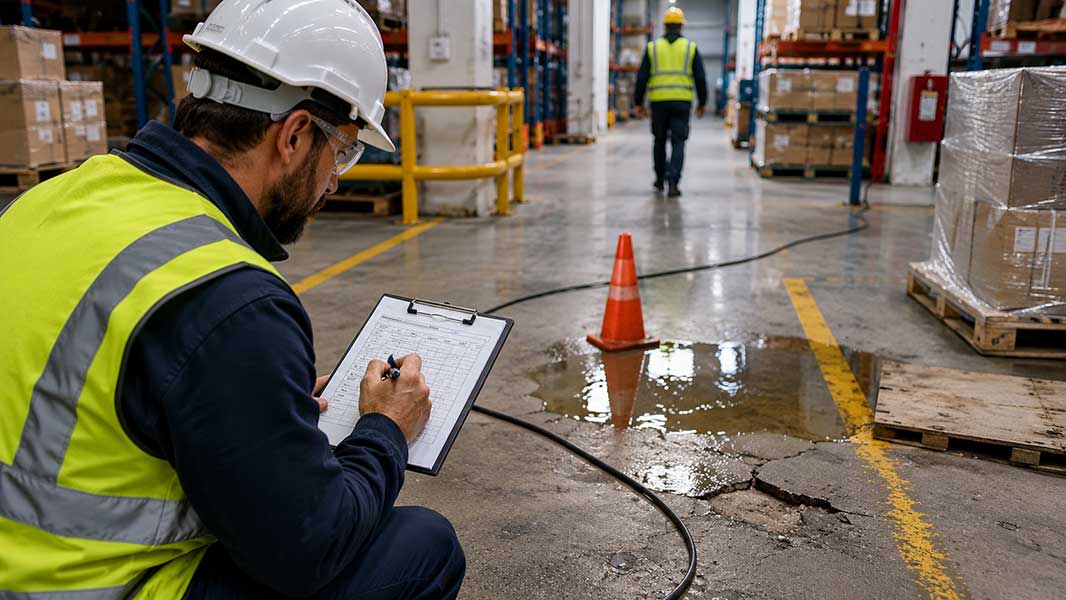
Water is the single most common trigger behind workplace slips, whether it’s from mopping, rain tracked in through an entrance or a leaking pipe nobody noticed yet. What makes this hazard tricky is timing because a floor can look dry within minutes of being cleaned while still holding enough moisture underfoot to cause a fall. Without proper wet floor signage or a designated drying period, even a well-intentioned cleaning routine can end up causing the exact injury it was meant to prevent.
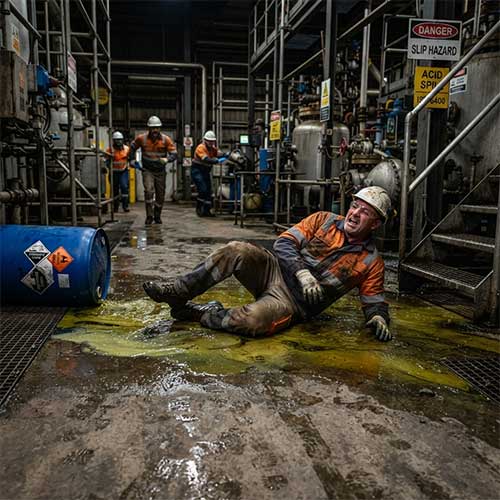
In industrial and food service environments, oil and grease spills create a slip risk that’s arguably worse than water, since these substances are thicker and harder to notice on darker flooring. A spill left unattended for even ten minutes near a busy walkway is often enough to cause a fall and because these substances don’t evaporate the way water does, the hazard can linger for hours if cleanup protocols aren’t followed immediately. This is why spill response procedures need to be fast, visible and non-negotiable, not something left to whoever notices first.
Trip hazards often come down to poor space management, because boxes left in aisles, tools scattered on the floor or cables running across a walkway all interrupt a worker’s natural stride. What’s frustrating about this category is that it’s entirely preventable through basic housekeeping standards, yet it remains one of the top causes of trip incidents across nearly every industry. A cable that seems harmless to the person who laid it down can easily become the reason someone else ends up in urgent care.
Aging infrastructure creates trip risks that are easy to overlook until an incident forces attention onto them because cracked tiles, curling mats and torn carpet edges tend to blend into the background of daily operations. These hazards are particularly dangerous in high-traffic areas like entryways and hallways, where workers move quickly and rarely look down. Routine facility inspections catch these issues early, but only if flooring conditions are actually part of the checklist rather than an assumption that everything’s fine.
Fall hazards escalate quickly once elevation enters the picture and unstable ladders or improperly assembled scaffolding are two of the most common reasons behind serious fall injuries. According to OSHA, falls from elevation consistently rank among the leading causes of workplace fatalities, which makes ladder safety protocols one of the highest-leverage areas for prevention. A ladder placed on an uneven surface or scaffolding missing a locking pin, doesn’t look dangerous until the moment it fails.
Open-sided platforms, mezzanines and loading docks without proper guardrails leave workers exposed to fall risks that are entirely structural rather than behavioral, meaning no amount of caution fully compensates for a missing physical barrier. This is often where compliance gaps show up most clearly, because guardrail height, spacing and load capacity are all governed by specific regulatory standards. Without consistent fall protection systems in place, even experienced workers remain one misstep away from a serious injury.
You might be interested in reading
Identifying slip, trip and fall hazards is only half the job because the real impact comes from acting on what you find. Below are the strategies that consistently reduce incidents across industries, organized by hazard type so you can apply them where they matter most.
Investing in anti-slip flooring or applying slip-resistant coatings to existing surfaces addresses the root cause rather than just managing symptoms after the fact. High-traffic areas like kitchens, entryways and washrooms benefit most from this upgrade, since these are the zones where moisture and foot traffic overlap constantly. It costs more upfront than a mop and a warning sign, but it also removes the hazard permanently instead of managing it day by day.
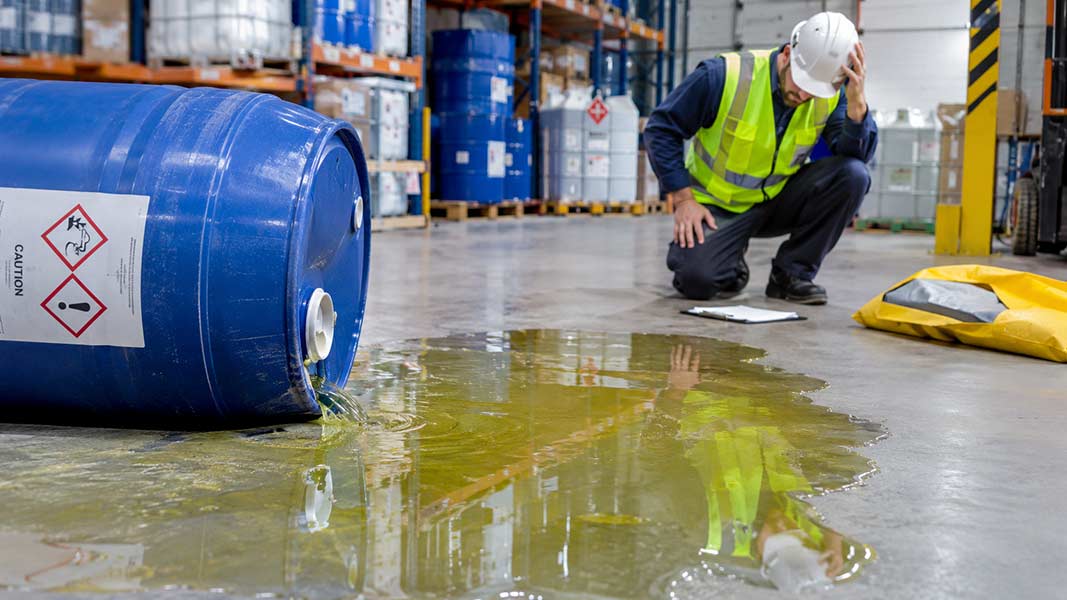
A spill left unattended for even a few minutes turns a minor mess into a serious hazard, so spill response procedures need to be immediate and non-negotiable. This means training every employee, not just cleaning staff, to either clean a spill on the spot or cordon it off instantly if they can’t. Speed matters more than perfection here because a quick barrier and a five-minute delay is far safer than a spotless cleanup that takes twenty.
Entryways collect rain, mud and debris faster than almost any other part of a facility, which makes anti-slip mats one of the simplest yet most overlooked prevention tools available. These mats need regular maintenance too because a soaked or curling mat becomes its own trip hazard, defeating the purpose it was installed for in the first place. Placing them at both entrances and transition zones, like near loading docks, extends protection to the areas people forget about most.
Trip hazards drop significantly once clear housekeeping standards become part of daily routine rather than an occasional cleanup effort. This means designated storage for tools and materials, scheduled walkway checks and a workplace culture where clutter gets addressed immediately instead of “later.” The simplicity of this fix is exactly why it works because it doesn’t require new equipment, just consistent enforcement.
Loose cables running across floors are one of the easiest trip hazards to fix, yet one of the most common ones found during inspections. Cable covers, overhead routing and designated cord pathways solve this permanently, while a quick fix like tucking a cord under a mat only hides the problem temporarily. Facilities with heavy equipment or frequent temporary setups, like event spaces or construction sites, need this addressed as a standing protocol, not an afterthought.
When flooring can’t be fixed immediately, such as a step-down that’s part of a building’s original design, clear floor marking gives workers the visual cue they need to adjust their stride. High-visibility tape, contrasting paint or reflective markers work especially well in low-light areas where uneven surfaces are hardest to spot. This is a low-cost, high-impact fix that bridges the gap between a structural issue and a full renovation.
For elevated platforms, mezzanines and loading docks, fall protection systems like guardrails aren’t optional extras, they’re a structural requirement that prevents fall hazards entirely rather than just reducing their likelihood. Regular checks on guardrail height, spacing and stability matter just as much as the initial installation because a damaged or loosened barrier offers a false sense of security that’s arguably worse than having none at all.
When guardrails alone aren’t enough, particularly for roof work, scaffolding or tasks requiring mobility at height, a proper fall arrest system becomes essential. This includes harnesses, anchor points and lanyards rated for the specific weight and height involved because using mismatched or outdated equipment defeats the purpose entirely. Training workers to inspect their own gear before each use catches equipment failures before they become safety incidents.
Ladder safety protocols need to be treated as a checklist, not a formality, covering everything from surface stability to weight limits to proper three-point contact while climbing. Scaffolding requires the same rigor, with locking pins, base plates and load capacity checked before every use, not just during initial setup. Most ladder and scaffolding incidents happen not because the equipment failed, but because a shortcut was taken during setup or use.
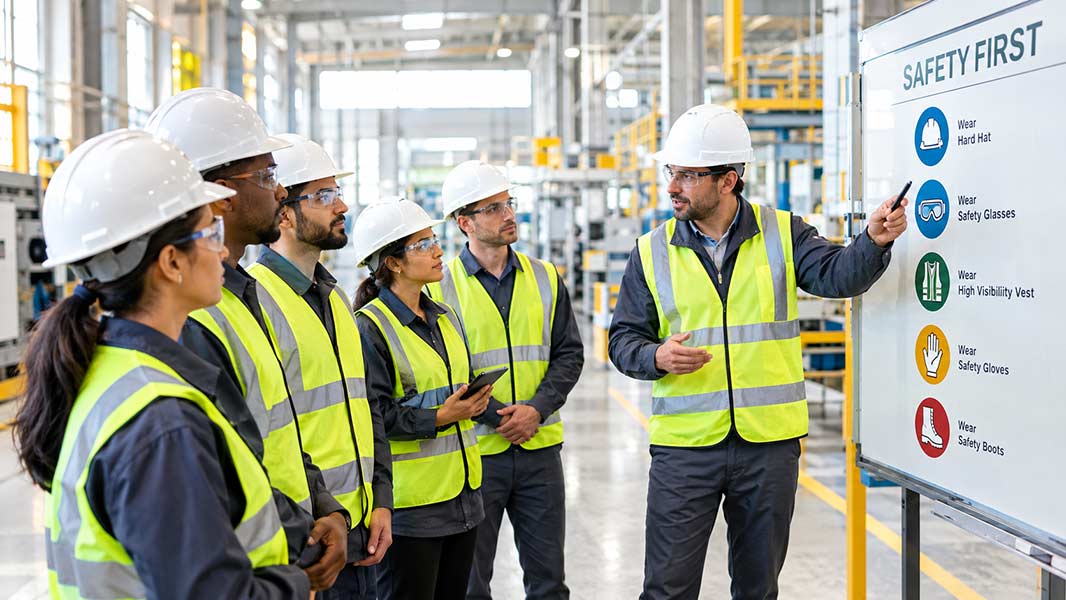
None of these strategies hold up without genuine buy-in from the people using them every day, which is why workplace safety training needs to go beyond a one-time onboarding session. Regular refreshers, real incident case studies and open discussions about near misses build a culture where hazard awareness becomes instinct rather than a rule someone follows reluctantly.
Even the best prevention measures degrade over time if nobody checks on them, so scheduled facility inspections and safety audits close the loop by catching wear, damage or drift from protocol before it causes harm. These audits work best when they’re unannounced or randomized because a hazard that only gets fixed before a scheduled inspection isn’t actually fixed, it’s just temporarily hidden. Consistency here is what separates a safety program that looks good on paper from one that actually protects people.
A single round of fixes won’t keep slip, trip and fall hazards away for good because workplaces change constantly, new hires join, layouts shift and equipment ages. Long-term prevention means building systems that catch problems automatically, rather than relying on memory or good intentions.
A written safety checklist turns hazard prevention from a mental note into a repeatable process that doesn’t depend on who’s on shift that day. This checklist should cover every hazard type we’ve discussed, flooring conditions, walkway clearance, guardrail integrity and ladder stability, so nothing gets skipped during a routine walkthrough. The most effective checklists are specific rather than generic, asking “is the loading dock guardrail secure” instead of a vague “check for hazards,” because specificity is what actually gets inspected.
Every near miss and injury report holds information that’s wasted if it’s just filed away because patterns in incident reports often reveal a recurring hazard long before it causes a serious injury. Tracking data like which locations, shifts or conditions show up repeatedly helps safety teams target their risk control efforts instead of spreading resources evenly across low and high risk areas. This turns safety from a guessing game into a data-driven practice, one where each incident, however minor, makes the next prevention decision a little sharper.
You might be interested in reading
Slip, trip and fall hazards will always exist in some form because floors get wet, cables need to run somewhere and elevation is unavoidable in most industries. What separates a safe workplace from a dangerous one isn’t the absence of hazards, but how consistently they’re identified, addressed and monitored over time. Every strategy covered here, from anti-slip flooring to proper hazard reporting systems, works best when it’s part of a routine rather than a one-time fix rolled out after an accident.
At Eduskills Training, we believe workplace safety isn’t a checklist you complete once and forget, it’s a culture that gets stronger every time a hazard gets caught before it causes harm. Building that culture takes consistent training, honest reporting and leadership that treats prevention as seriously as production because in the end, protecting your people is what actually keeps operations running smoothly.
A slip happens when there’s insufficient friction between footwear and a walking surface, usually due to moisture or contamination. A trip occurs when a foot contacts an object or elevation change, interrupting stride. Both fall under the same OSHA category but require different control measures.
OSHA doesn’t mandate a specific static coefficient of friction (SCOF) value, but industry consensus, based on ASTM standards, generally recommends a minimum SCOF of 0.5 for level walking surfaces to reduce slip risk.
It follows the standard hierarchy: elimination, substitution, engineering controls (like guardrails), administrative controls (like signage and training) and personal protective equipment (like harnesses) as the last line of defense.
Quarterly assessments are considered best practice for high-traffic or high-risk facilities, though any change in layout, equipment or weather conditions should trigger an additional review.
A near miss is an incident where hazardous conditions existed but no injury occurred. Tracking near misses helps identify patterns before they escalate into actual injuries.
A guardrail is a passive engineering control that physically prevents access to a fall hazard. A fall arrest system is an active control, involving harnesses and anchor points, designed to stop a fall already in progress.
Generally, any elevation change greater than a quarter inch without proper tapering, marking or handrail support is flagged as a trip hazard risk during compliance inspections.
No, most anti-slip coatings degrade with foot traffic and cleaning chemicals over time, requiring reapplication typically every one to three years depending on usage intensity.
Studies consistently show that facilities with recurring, scenario-based safety training report significantly fewer slip, trip and fall incidents compared to those relying on one-time onboarding sessions alone.
Slip, trip and fall hazards remain one of the most underestimated risks inside any workplace, largely because they hide in plain sight, a wet floor here, a loose cable
Repetitive strain injury at Workplace affects millions of workers every year and most of them do not realize the damage is building until pain becomes constant. According to the
Heat Stress Awareness starts with a simple fact: the human body can only handle so much heat before it starts to fail and most workers never see the warning
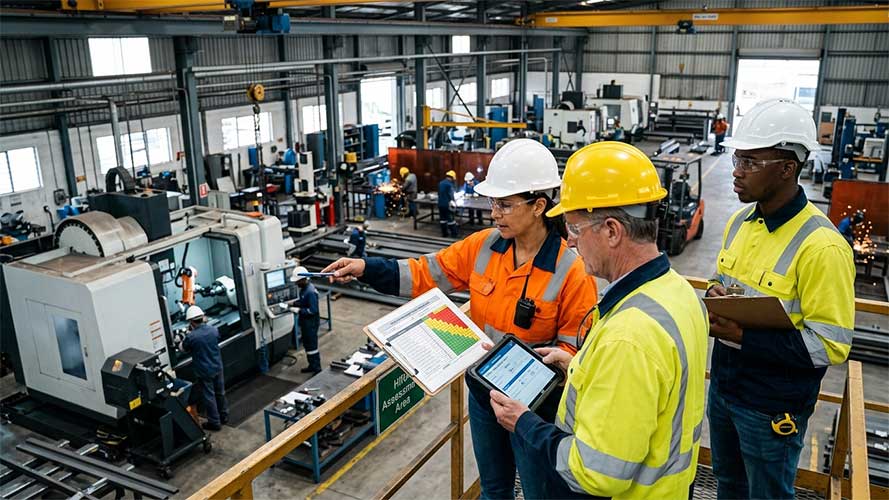
HIRA in the workplace is not a paperwork exercise. It is the single most important process that stands between your workers and a serious injury, a fatality or a
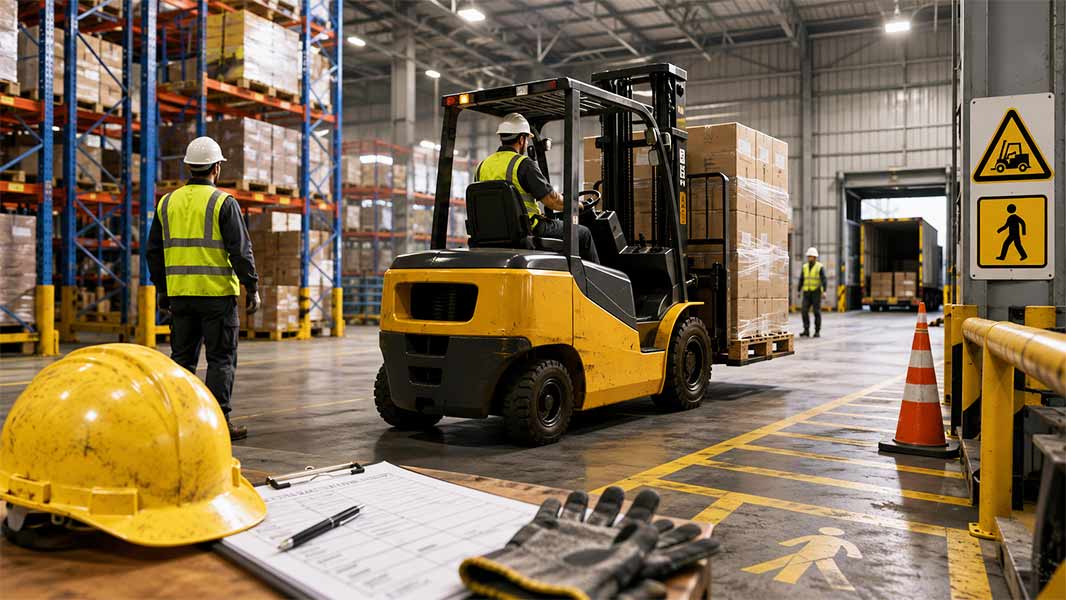
Forklift hazards and risk control is a critical responsibility in any workplace where powered industrial trucks operate daily. Warehouses, construction sites, manufacturing plants and logistics hubs rely on forklifts
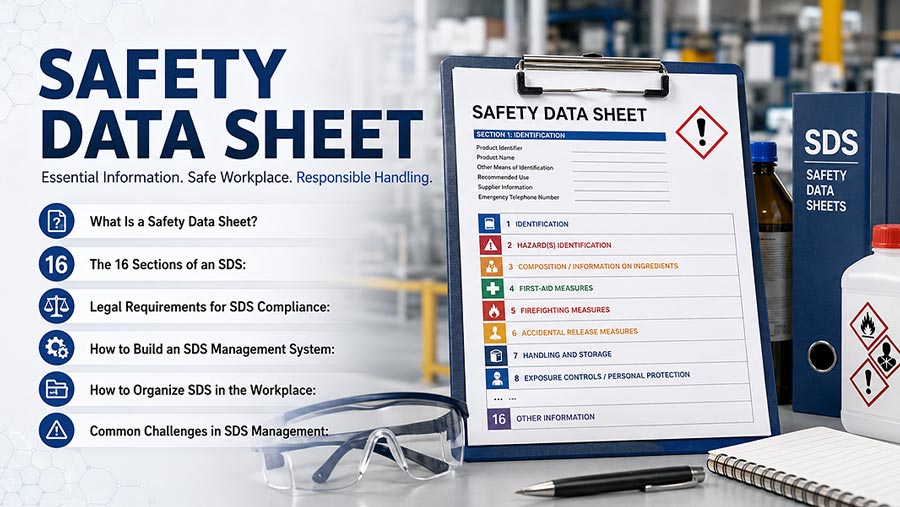
Every year, thousands of workplace chemical incidents happen not because the hazard was unknown, but because the right information was not where it needed to be. A Safety Data
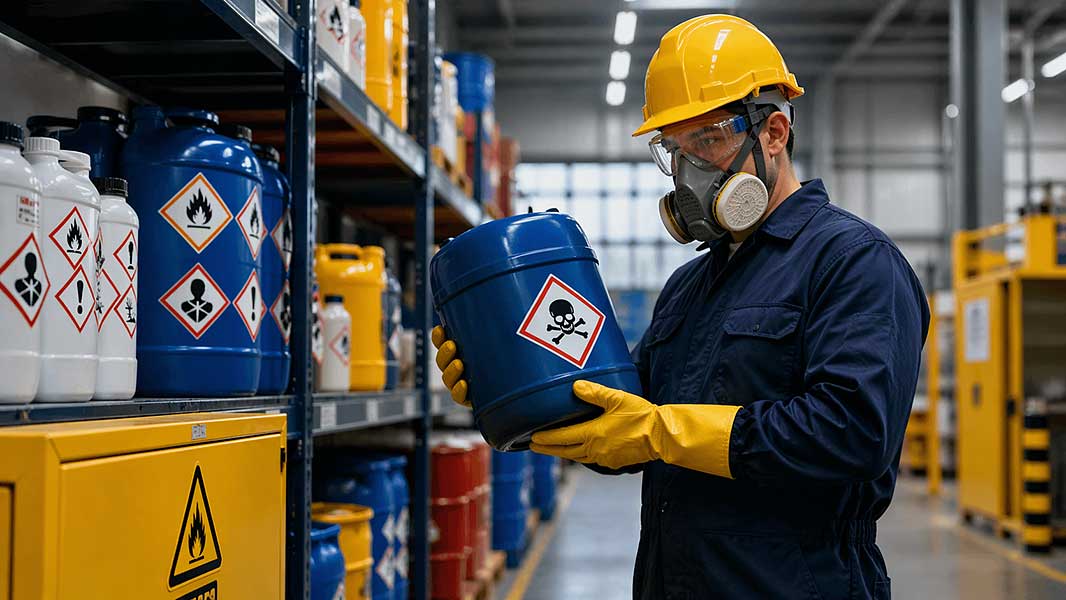
Hazardous Materials Safety is the line between controlled operations and catastrophic failure because one mismanaged chemical, one incompatible storage condition or one missed warning label can trigger injuries, fires,

Emergency Preparedness in UAE is no longer optional because a single unplanned incident can shut down operations, cause serious injuries and expose businesses to legal consequences. In high-risk sectors,

ISO 14001 Environmental Management Lead Auditor in UAE is a highly respected role because organizations rely on qualified professionals to assess environmental management systems (EMS), ensure ISO 14001:2015 compliance
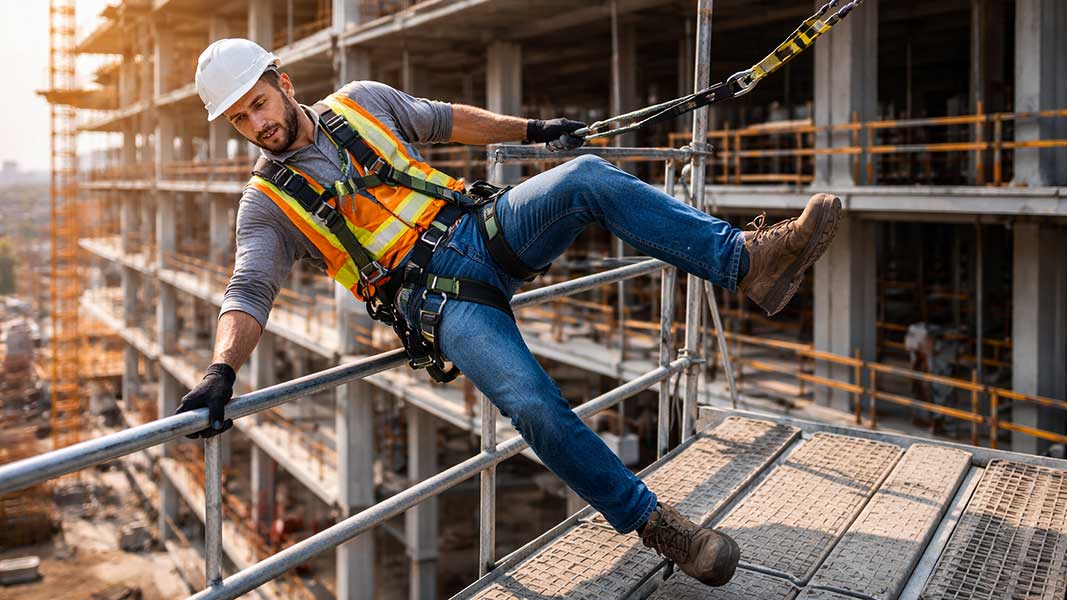
Fall protection for work at height remains one of the most critical safety priorities across construction, oil and gas, manufacturing and maintenance industries because even a minor lapse can

Key requirements of ISO 9001 Certification in UAE define how organizations build a structured, consistent and performance-driven ISO 9001 Quality Management System that meets customer expectations and regulatory demands.
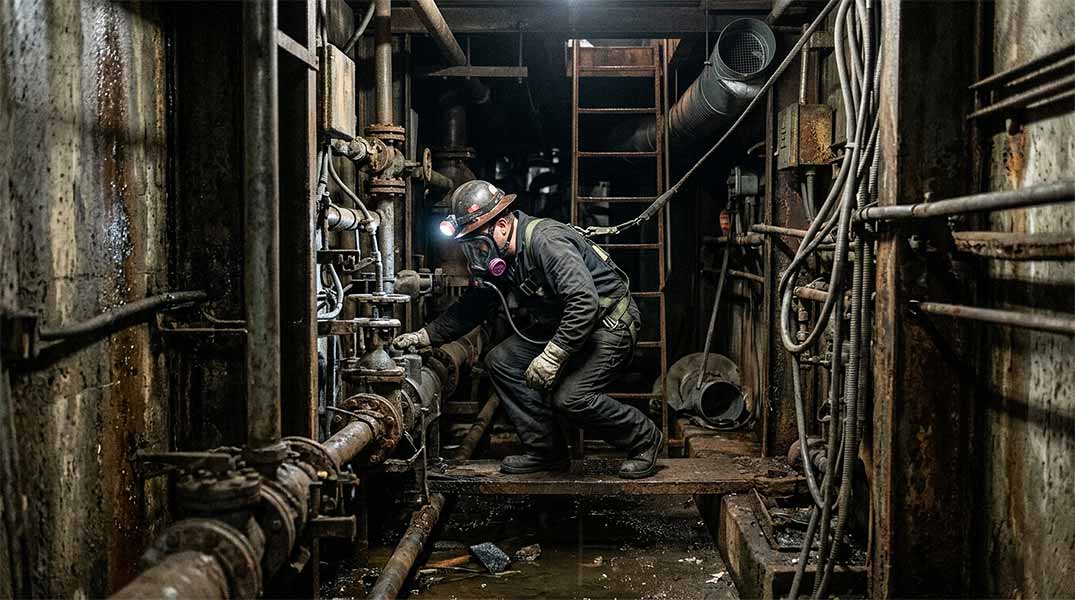
Confined Space Hazards remain one of the most critical risks in industrial workplaces because they combine limited access, poor ventilation and unpredictable conditions that can turn routine tasks into

The benefits of ISO 45001 lead auditor training are becoming increasingly important for safety professionals in the UAE because industries such as construction, oil and gas, manufacturing, logistics and
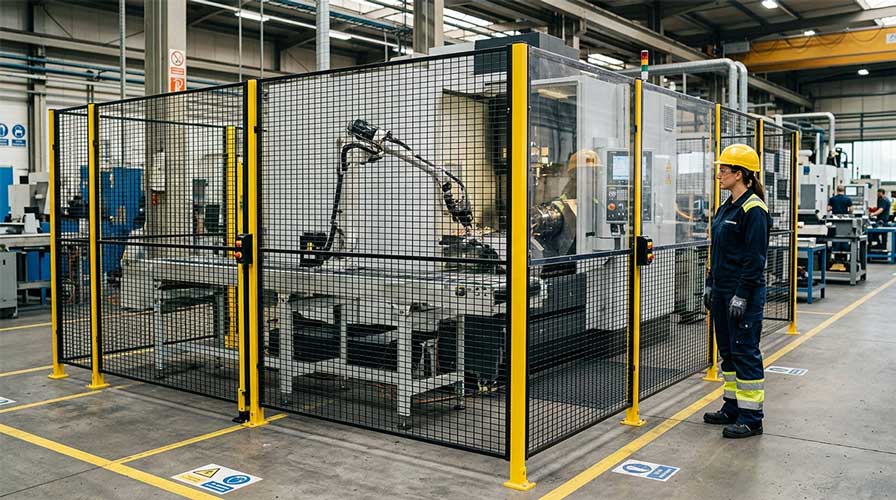
Machine Guarding Safety protects workers from dangerous moving parts, mechanical hazards and high-risk machine operations that exist across industrial workplaces. Manufacturing equipment, conveyor systems, cutting machines, presses and rotating

The ISO 14001 Certification Process provides organizations with a structured method to establish an effective Environmental Management System (EMS) that identifies environmental aspects, evaluates potential environmental impacts and implements
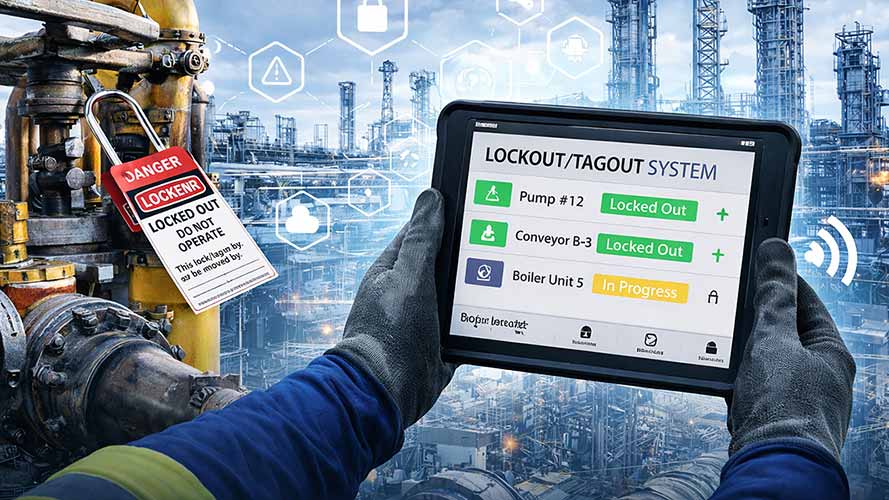
Digital LOTO Systems are becoming an essential part of modern industrial safety programs because traditional paper-based lockout tagout procedures often create gaps in documentation, communication and verification of hazardous

The benefits of ISO 9001 Lead Auditor Course in UAE are clear for professionals who want authority in quality management, because this qualification proves you can plan, conduct and

Employee Assistance Programs for workplace safety strengthen risk control because mental health, personal stress and financial pressure directly affect concentration, judgment and safe behavior at work. Many incident investigations
ISO 45001 clause 5.1 leadership and commitment requirements determine whether an Occupational Health and Safety Management System truly works in practice. Under the ISO 45001 framework, top management is

Bullying and harassment prevention in the workplace is a critical part of occupational health, legal compliance and organizational risk management. When disrespectful conduct is ignored, employee morale declines and

The benefits of ISO 14001 Lead Auditor Training in UAE extend far beyond earning a professional credential. This advanced qualification by Eduskills Training equips you to plan, conduct and

Workplace violence prevention is not limited to reacting after an incident occurs but instead focuses on identifying risks early and controlling them before harm happens. Violence at the workplace
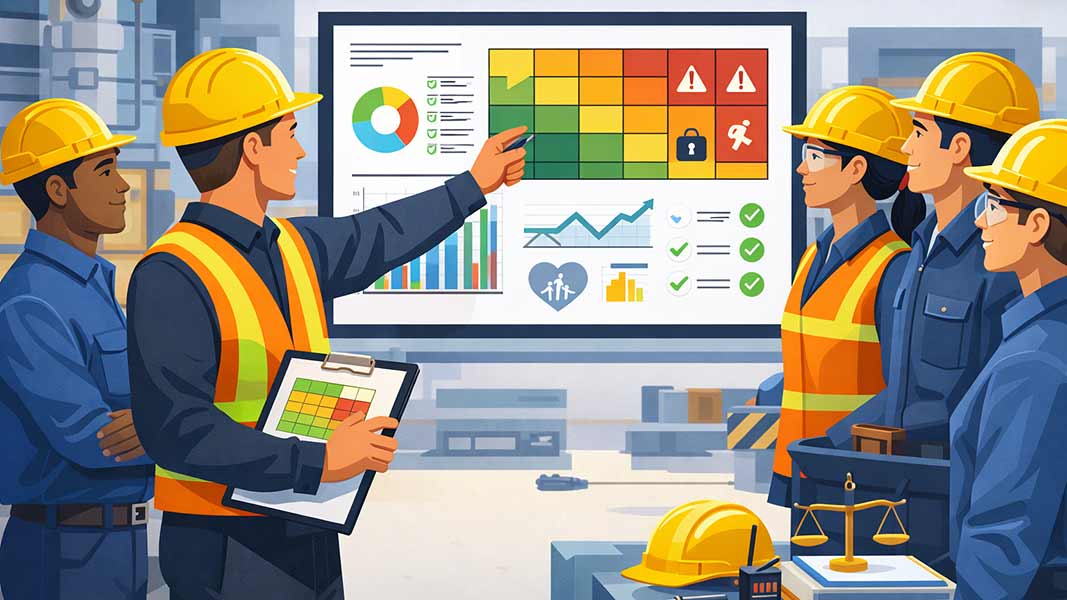
HSE KPIs are the backbone of effective health, safety and environmental performance measurement because they turn policies, procedures and controls into measurable outcomes. When defined and used correctly, KPIs

ISO 45001 Implementation is the process of building a structured occupational health and safety management system that actually works on the ground, therefore reducing risks, preventing incidents and protecting
Fatigue management at the workplace has become a critical safety concern because fatigue directly affects alertness, judgment, reaction time and decision-making. When workers are fatigued, the likelihood of errors
Guide to ISO 45001 Lead Auditor Course is the starting point for professionals who want to upgrade from “knowing safety” to auditing occupational health and safety systems with confidence
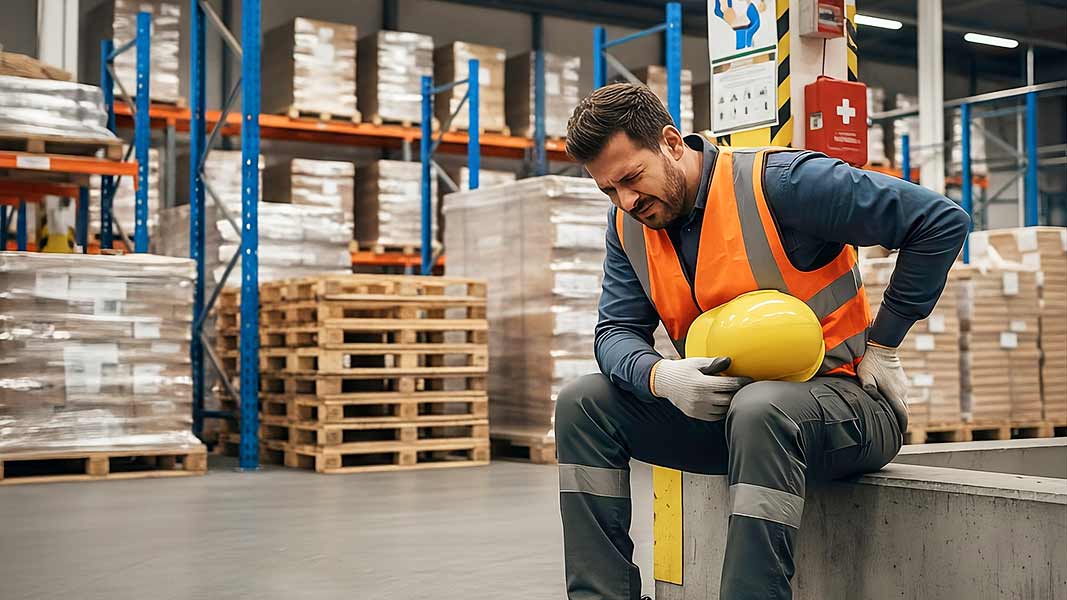
Ergonomics and Musculoskeletal Health sit at the center of injury prevention because most work-related pain develops from everyday tasks rather than sudden accidents. When jobs are designed without considering
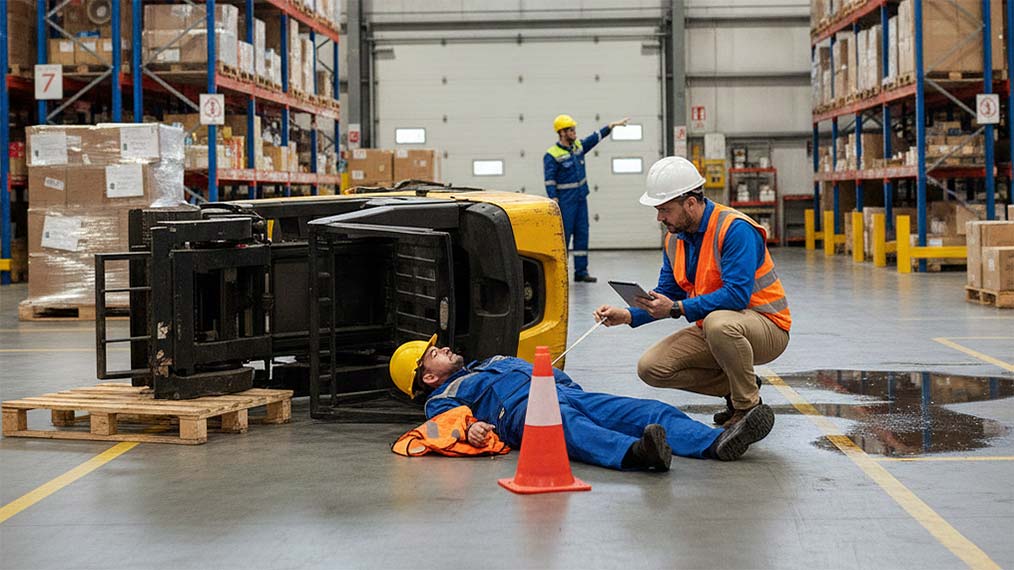
Incident investigation is the backbone of effective occupational health and safety, because it focuses on understanding why an incident occurred rather than who was involved. When done properly, it

ISO 14001 Gap Analysis is a structured assessment that helps organizations measure their current Environmental Management System against ISO 14001 requirements because even small compliance gaps can lead to

Choosing the right professional certification depends on career goals, industry exposure and long-term relevance. Many professionals choose ISO 9001 Lead Auditor Course in UAE because organizations across the region
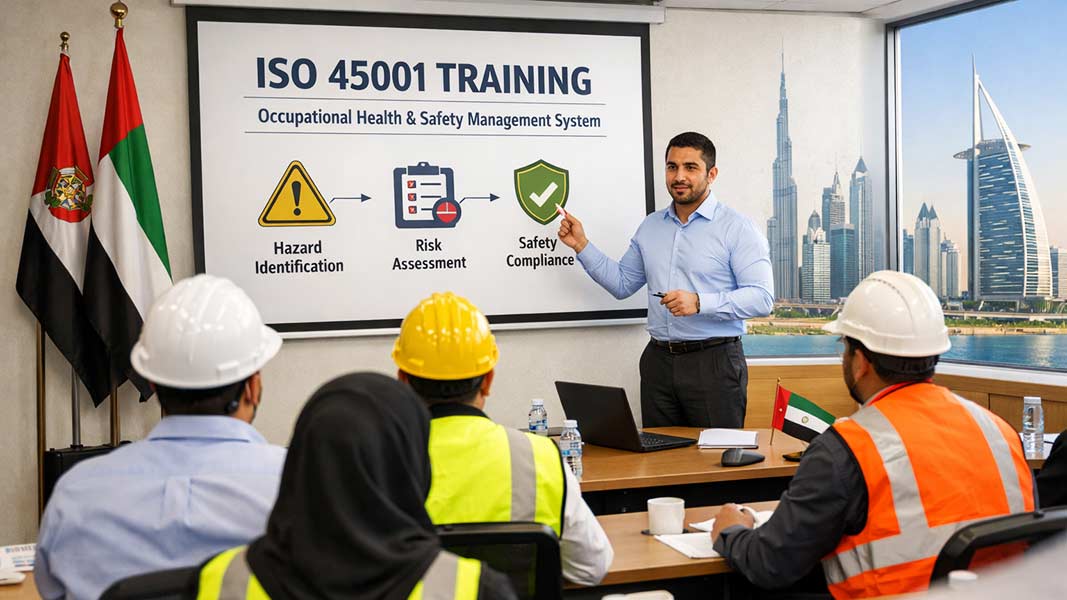
ISO 45001 Training in the UAE is no longer optional for professionals responsible for workplace safety, compliance and operational control. Organizations are under increasing pressure to reduce incidents, meet

ISO 45001 Implementation and Certification for SMEs in UAE has become a direct path for small and medium businesses to strengthen safety performance because it brings structure, accountability and

ISO 14001 Environmental Policy and Leadership set the foundation for how an organization turns environmental intent into measurable action. When both elements work in sync, teams move from declarations
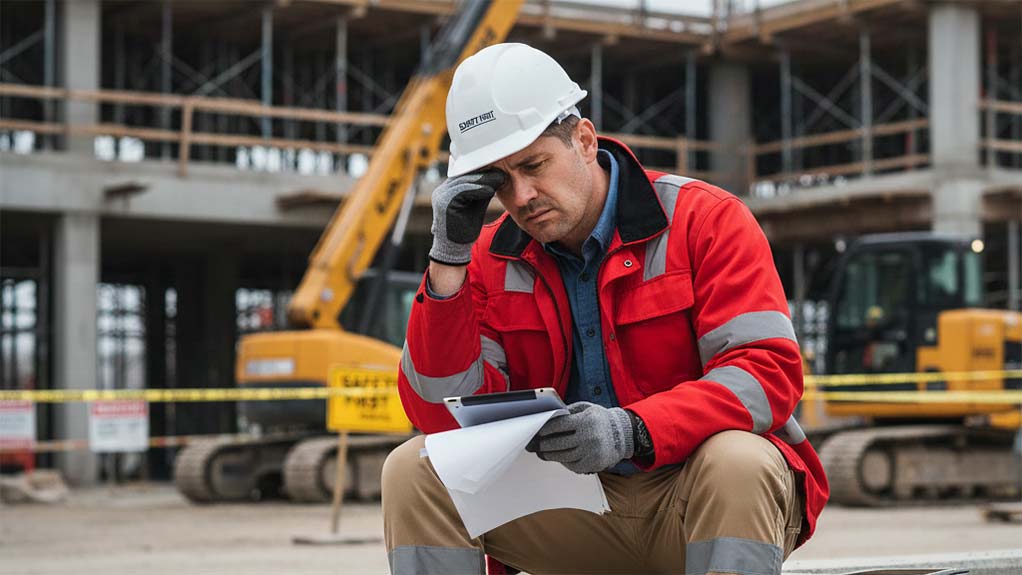
Mental health in workplace safety is a critical factor that decides how consistently people follow procedures, recognize hazards and respond under pressure. When employees feel overwhelmed, their ability to

An ISO 45001 Gap Analysis gives you a realistic picture of how your current safety practices measure against the requirements of the ISO 45001 Occupational Health and Safety Management
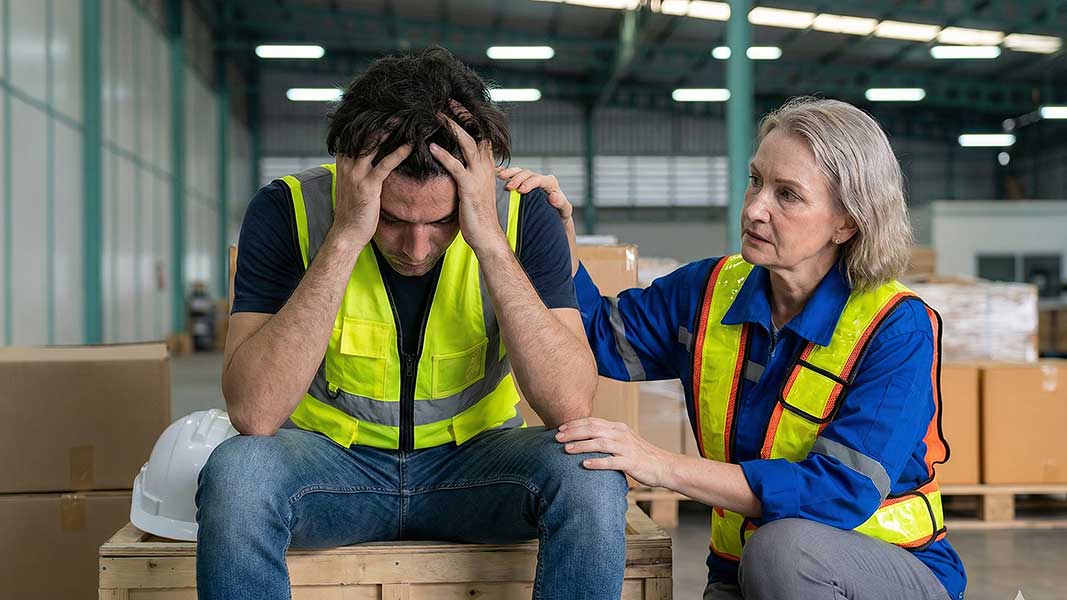
Psychosocial hazards in the workplace influence how people think, behave and respond to risks because they directly affect mental wellbeing long before a physical incident occurs. When pressure builds,

Behavior based safety plays a defining role in how workplace safety culture grows, matures and stays consistent across daily operations. When organizations pay attention to the way people act
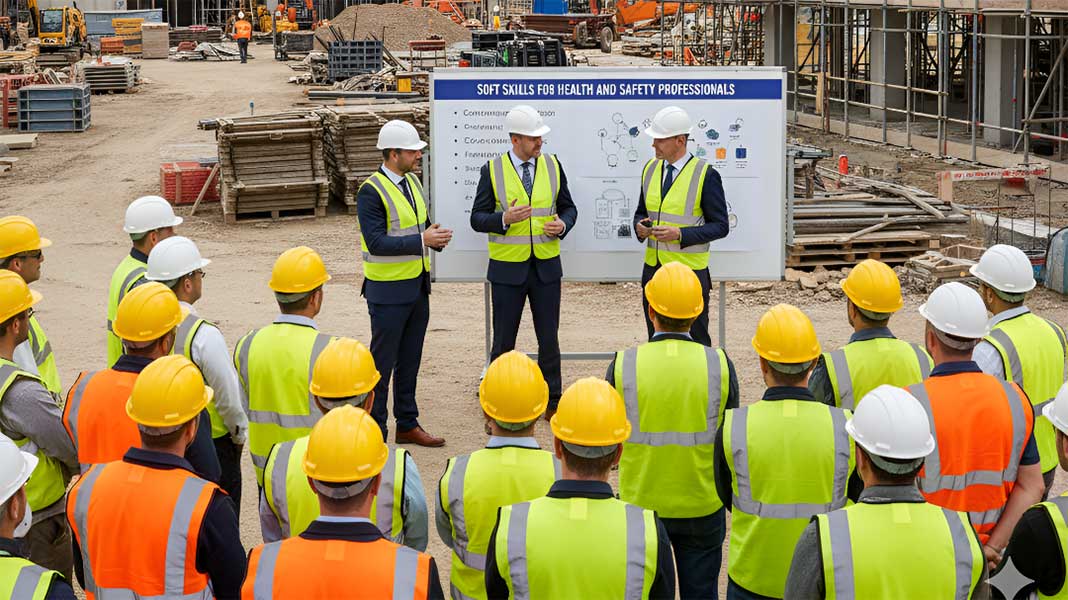
Soft skills for HSE professionals shape how effectively they communicate, influence and guide people on site, therefore they matter just as much as technical expertise. I’ve seen many safety

ISO 9001 digital transformation is reshaping how organizations in the UAE manage quality, safety and efficiency. Companies across Dubai, Abu Dhabi and Sharjah are moving beyond traditional paperwork and
An HSE Implementation Plan is the foundation of every safe and responsible workplace. It provides a structured framework for managing health, safety and environmental risks so that daily operations
ISO 45001 nonconformities are among the most common challenges organizations face during health and safety audits. We’ve seen many businesses struggle with recurring gaps that delay certification, affect compliance,
Leadership in ISO 9001 Certification success is the single most decisive factor that determines whether an organization truly achieves quality excellence or merely collects a certificate. ISO 9001:2015 places
An ISO 45001 audit preparation is far more than gathering documents and hoping for the best. It’s a disciplined process that tests your organization’s true commitment to occupational health
Common ISO 14001 implementation mistakes can quietly derail even the most well-intentioned environmental management plans. Many organizations across the UAE especially in Dubai, Abu Dhabi or Sharjah start with
ISO 9001 audit nonconformities reveal where a quality management system falls short of meeting the standard’s requirements. They highlight gaps in consistency, documentation, or process control that can impact
Achieving ISO 45001 certification is more than a compliance milestone, it’s a strategic commitment to protecting people and building a culture of safety across all levels of an organization.
Continuous improvement is the backbone of every high-performing organization. It’s not just about fixing what’s broken — it’s about building a culture that keeps evolving, learning and improving every
NVQ Level 6 Career Progression has become a defining step for health and safety professionals aiming to move from technical roles to senior leadership positions. The ProQual NVQ Level
Both the NVQ Level 7 SHSLM and NVQ Level 6 OHSP are highly respected health and safety qualifications, but they serve a little different career stages and objectives. As
A Health and Safety Internal Audit Report is more than a document; it’s the foundation for maintaining a safe, compliant, and accountable workplace. Every organization, whether operating in construction,