
HSE Policy: The Complete Guide, Template & How to Write
An HSE Policy is the written backbone of how a company protects its people, because it sets out exactly who is responsible for what when something goes wrong on

An HSE Policy is the written backbone of how a company protects its people, because it sets out exactly who is responsible for what when something goes wrong on site. Most businesses already have a health and safety policy buried somewhere in a shared drive, but few treat it as a living document that shapes daily decisions. A strong HSE policy statement does more than satisfy an auditor, since it tells every worker, contractor, and visitor what standard of care to expect and who to call when a hazard appears. Behind that statement sit the HSE procedures that turn intent into action, from risk assessments to emergency drills. Get the HSE policy content right, and you are not just ticking a compliance box, but building a workplace where accidents are the exception, not the routine.
An HSE Policy is a formal written statement that spells out how an organization manages health, safety, and environmental risk across its operations. It names who holds responsibility, what standards apply, and how the business intends to prevent harm before it happens.
A well-built HSE policy statement gives every employee, contractor, and site visitor a shared reference point. When a new hire asks who to call after a near miss, or a supervisor needs to justify pausing work over a blocked fire exit, the policy is where that authority comes from.
Scope varies by organization size and risk profile. A small office might need two pages covering fire safety, first aid, and evacuation routes. A construction contractor juggling multiple live sites needs a document broad enough to cover excavation work, working at height, plant machinery, and subcontractor management, while staying specific enough that nobody can claim they didn’t know the rule applied to them. The scope should always match the actual hazards a business faces, never a generic template copied from somewhere else.
People use these terms interchangeably and that mix-up causes real confusion during audits. An HSE Policy is a statement of intent, usually one to three pages, that declares what the organization commits to and who owns that commitment. A safety management system is the operational machinery built to deliver on that promise: procedures, training matrices, permit-to-work systems, incident databases, audit schedules, and the day-to-day routines that keep a site running safely.
Think of it this way. The policy is the destination a company says it’s heading toward. The management system is the vehicle, the fuel, and the road map that actually gets it there. ISO 45001 requires both, but treats them as distinct elements precisely because a policy without a system behind it is just a wall poster.
A risk assessment is a working document tied to a specific task, area, or piece of equipment. It identifies hazards, rates likelihood and severity, and lists controls. It changes constantly as work conditions change.
An HSE Policy, on the other hand, sits above all of that. It doesn’t assess a single ladder or a single chemical. It sets the principle that risk assessments must happen, defines who is competent to write them, and states how often they get reviewed. Confusing the two is common among new safety officers, but the distinction matters at audit time, since an assessor asking for your policy wants the umbrella document, not a stack of task-specific paperwork.
In most jurisdictions, yes, though the exact threshold and wording differ by country. The underlying principle stays consistent worldwide: an employer that directs work has a duty of care toward the people doing that work, and a written policy is treated as documented proof that the duty is being taken seriously.
Regulators rarely accept “we handle safety informally” as an answer, because informal systems collapse under pressure, during a labor shortage, a tight deadline, or a change in management, exactly when workers need protection the most. A documented HSE Policy survives those pressure points because it doesn’t depend on one person remembering what was agreed verbally three years ago.
ISO 45001, the international standard for occupational health and safety management, requires a documented policy signed by top management as a foundational clause, not an optional extra. It expects the policy to commit to eliminating hazards, complying with legal obligations, consulting workers, and continually improving performance. Auditors checking for certification will ask to see the policy before they look at anything else, because everything downstream, risk registers, training records, incident logs, is supposed to trace back to it.
Even businesses that never pursue formal certification benefit from following the same logic. Insurers, major clients, and tender committees increasingly ask to see a current HSE policy statement before signing a contract, particularly in construction, logistics, and industrial sectors where a subcontractor’s safety failure creates liability for the main contractor too.
In the UAE, Federal Decree-Law No. 33 of 2021 on the Regulation of Labour Relations places a general duty on employers to provide a safe working environment, and MOHRE inspectors can request evidence of safety systems during workplace visits, especially in construction and manufacturing.
Abu Dhabi adds another layer through OSHAD, whose EHSMS framework requires businesses registered under it to maintain documented HSE procedures covering risk management and emergency preparedness. Dubai runs a parallel structure through Dubai Municipality, applying its own codes to construction and public-health-adjacent sectors. The practical takeaway is that you need to check which authority governs your emirate and sector before assuming a generic template will satisfy an inspector
You might be interested in reading
Strip away the industry-specific detail, and nearly every credible HSE Policy in the world follows the same three-part skeleton. Regulators recognize it, auditors expect it, and workers can navigate it without needing a legal background. Skipping one of the three parts is the single most common reason a policy gets rejected during a compliance review.
This is the opening declaration, typically no more than a page, where the most senior person in the organization puts their name behind a commitment to health and safety. It states the company’s broad aims (protect employees, comply with law, reduce incidents) and, ideally, a few measurable objectives tied to a timeframe.
The statement of intent should avoid vague language like “we take safety seriously.” Auditors have heard that line too many times to find it convincing. Better phrasing names specific commitments: reducing lost-time incidents by a stated percentage, achieving a certain training completion rate, or eliminating a known recurring hazard within a set period. It must be signed and dated by the CEO or managing director, because that signature is what gives the rest of the document its authority.
This section names names. Not just “management is responsible,” but specific roles: who conducts risk assessments, who investigates incidents, who manages contractor inductions, who has stop-work authority. Larger organizations often use an organizational chart here, while smaller ones can list responsibilities against job titles in a simple table.
Employees carry responsibilities too, and the policy should say so plainly: follow safe systems of work, use provided protective equipment, and report hazards without fear of blame. A policy that only assigns duties downward, from management to workers, misses half the picture. Safety works best as a shared obligation, and the document should reflect that balance rather than reading like a one-way instruction sheet.
This is usually the longest section, and it holds the practical detail: how risk assessments get carried out and reviewed, how incidents get reported and investigated, what training is mandatory and how often it repeats, how personal protective equipment gets issued and replaced, and what the emergency response plan covers, from fire evacuation to first aid coverage.
The arrangements section is where HSE policy content earns its keep or falls apart. A vague arrangements section forces employees to guess at procedure during an actual emergency, which is precisely when guessing gets people hurt. Strong arrangements sections reference supporting documents by name (the specific risk assessment template, the incident report form, the training matrix) rather than describing them in the abstract, so anyone reading the policy can find the actual tool they need.
Writing a policy from a blank page feels harder than it is. Follow this order and the document builds itself logically, section by section.
Follow these eight steps in order and the finished HSE Policy will read like it was built for the business it governs, not adapted from one that governs somewhere else.
A well-structured template of HSE Policy contains the sections regulators expect to see, so it saves hours of drafting time and lowers the odds of forgetting something an auditor will later ask for. The one condition that makes it work is customization, because a policy copied word for word rarely survives real scrutiny.
Eduskills Training has put together a free, editable HSE Policy template that follows the three-part structure covered above: statement of intent, responsibilities, and arrangements. It comes in both Word and PDF formats, so teams can adapt the wording to match their actual operations rather than submitting a document that reads like it belongs to someone else.
One warning worth repeating: a template is a starting point, not a finished product. Regulators and auditors can usually tell within a paragraph or two when a policy has been copied unedited from a generic source, because the hazards described don’t match the business submitting it. Use the template to save time on structure and formatting, then spend that saved time on the details that actually reflect your workplace.
The same three-part structure looks different depending on what the business actually does. The examples below show how the arrangements section shifts by sector, while the underlying framework stays constant.
A construction firm’s arrangements section typically centers on permit-to-work systems for high-risk tasks like excavation and working at height, daily toolbox talks before shift start, mandatory PPE by trade, subcontractor safety induction requirements, and clear escalation for stop-work authority when conditions turn unsafe. Given how frequently site conditions change, many construction HSE policies also require a documented daily or weekly site safety walk, with findings logged and closed out on a set timeline rather than left open indefinitely.
Hospitality operations face a different risk profile: kitchen burns and cuts, manual handling in housekeeping, slips on wet floors, fire safety across guest-occupied buildings, and food hygiene overlapping with general safety obligations. A hotel’s policy usually places heavy weight on fire evacuation procedures given the number of non-employees present at any time, plus training for night staff who may be working with reduced supervision.
Oil and gas operations carry some of the highest-consequence risks in any industry: confined space entry, hydrogen sulfide exposure, process safety around pressurized systems, and remote-site emergency response where help may be hours away. Policies in this sector typically reference process safety management explicitly, alongside standard occupational safety measures, and require far more rigorous permit-to-work documentation than lower-risk industries.
Warehousing introduces forklift and manual handling risk at scale, along with racking safety and loading dock traffic management. Retail floors focus more on slip and trip prevention, safe use of step stools and ladders for stock work, and till-area security procedures that intersect with personal safety. Both sectors benefit from an arrangements section that separates warehouse-specific hazards from customer-facing floor hazards, since treating them identically usually leaves gaps in one area or the other.
Annual review is the widely accepted minimum and most standards frameworks, including ISO 45001, expect it explicitly. But treating the calendar as the only trigger misses the point.
A policy should also get revisited immediately after a serious incident, a near miss that could have escalated, a change in relevant legislation, a shift in operations such as a new site or new equipment, or feedback from an external audit.
Reviewing a policy doesn’t always mean rewriting it. Sometimes the review confirms the existing document still fits and that confirmation itself gets documented and dated, since an unreviewed policy eventually looks abandoned even if nothing in it is technically wrong.
The review should involve more than one person, because a policy reviewed solely by the person who wrote it tends to miss its own blind spots. Bringing in a supervisor, a worker representative, or an external HSE consultant surfaces issues an insider might overlook simply from familiarity.
Even well-intentioned businesses repeat the same handful of errors, and each one carries a real cost, whether that’s a failed audit, a rejected tender, or worse, an incident a proper policy might have prevented.
Each mistake on this list is fixable in an afternoon. What makes them dangerous is how easily they go unnoticed until an inspector, a client auditor, or an incident investigation brings them to light.
A strong HSE Policy earns its value the day something goes wrong, not the day it gets filed for an audit. It gives a supervisor the authority to stop work, gives a new hire a clear answer during induction, and gives a business the paper trail it needs when a regulator or client asks hard questions.
None of that comes from length or polish. It comes from a document that actually reflects how the business operates, gets reviewed on a real schedule, and gets communicated to the people who need to follow it. The three-part structure covered in this guide, statement of intent, responsibilities, and arrangements, works across industries and jurisdictions precisely because it forces clarity at each stage.
Eduskills Training helps organizations build, review, and train teams on health and safety systems that hold up under real scrutiny, not just paperwork that looks good until someone asks a follow-up question. Whether you’re writing your first policy or fixing one that’s been gathering dust, the goal stays the same: a document people actually use.
An HSE Policy is a short statement of intent, usually one to three pages, that declares a company’s commitment to health, safety, and environmental management. An HSE manual is a much longer operational document containing the detailed procedures, forms, and instructions that put that commitment into practice on a daily basis.
There’s no fixed page count, but most effective policies run between two and six pages. The statement of intent should stay under a page. Length should come from genuine detail in the arrangements section, not padding, since a bloated HSE Policy is often harder for employees to actually use than a short, clear one.
The most senior person in the organization, typically the CEO, managing director, or equivalent, should sign the HSE policy statement. This isn’t a formality. Auditors and regulators treat the signature as evidence that safety commitments carry real authority rather than sitting with a compliance team that has no power to enforce them.
Annually, at minimum, and most standards frameworks including ISO 45001 expect this explicitly. A policy should also be reviewed immediately after a serious incident, a change in legislation, a shift in operations such as a new site, or findings from an external audit, rather than waiting for the calendar date to arrive.
A code of practice gives detailed technical guidance on how to carry out a specific task or manage a specific hazard safely. An HSE Policy sits above that level entirely. It establishes the organization’s overall commitment and structure, and then points toward the relevant codes of practice as supporting reference material.
Yes. ISO 45001 lists a documented policy, signed by top management, as a foundational requirement before certification can proceed. Auditors typically review the policy first, since the standard expects every other element, including risk registers and training records, to trace directly back to the commitments made in it.
Posting it on a noticeboard isn’t enough. Effective communication includes walking new hires through the HSE Policy during induction, referencing key points during toolbox talks, and making sure contractors receive a briefing before starting work, not just a copy of the document to file away unread.
Eduskills Training offers a free, editable HSE Policy template built around the statement of intent, responsibilities, and arrangements structure covered in this guide. It’s available in Word and PDF format, though it should always be customized to reflect the specific hazards and structure of the business using it.
An HSE Policy is the written backbone of how a company protects its people, because it sets out exactly who is responsible for what when something goes wrong on

A HAZOP study stands between a process design that looks fine on paper and one that actually survives contact with real operating conditions. It exists because most process failures

Risk Based Process Safety decides whether a plant runs for decades without incident or ends up in a Chemical Safety Board report. Most facilities already track hazards on paper

Health and safety culture determines whether a workplace merely follows rules or genuinely protects the people inside it. Because most incidents trace back to attitudes and habits rather than

Process Safety Management exists because a single overlooked valve, a skipped inspection or an ignored warning sign can turn a chemical plant into a disaster site within minutes. Companies
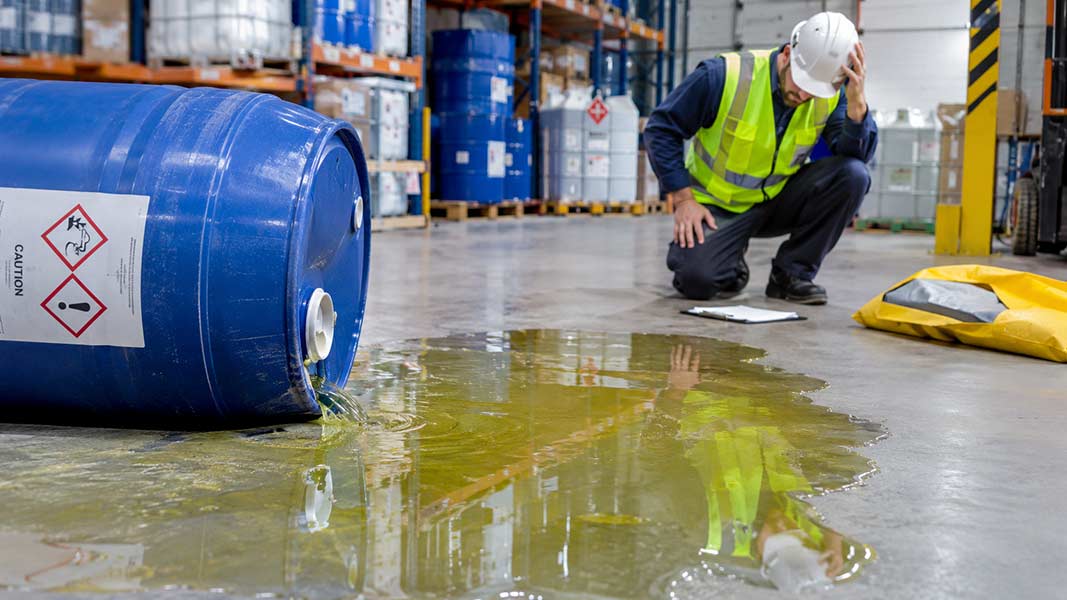
Chemical hazards cause more workplace injuries and long-term illnesses than most employers realize because exposure often happens quietly through skin contact, inhalation or repeated low-dose contact over months and
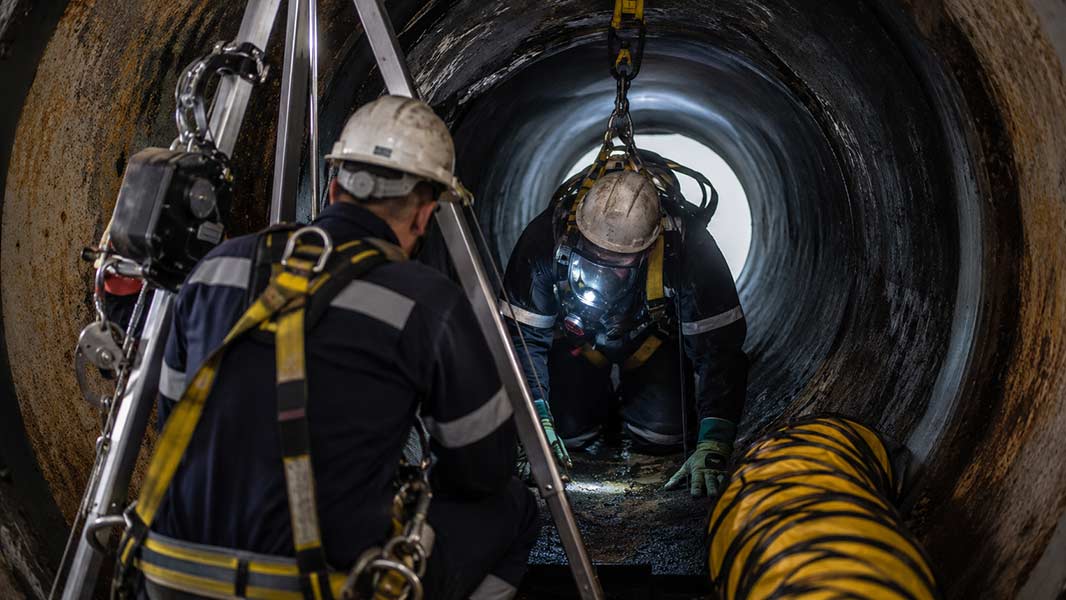
Confined Space Hazards cause more workplace deaths every year than most employers realize, often because the risks stay invisible until someone is already inside. A space doesn't need to

Manual handling hazards exists in almost every workplace, from warehouses to hospitals and it remains one of the leading causes of workplace injury worldwide. According to the UK Health

Heat stress vs heat stroke confuses more workers than it should, and that confusion costs lives every summer. The Bureau of Labor Statistics recorded 48 work-related deaths due to

A slip, trip and falls risk assessment is the single most effective tool employers have for catching hazards before they turn into injuries. Because falls remain one of the

Line of fire hazards occur when a worker's body is positioned where it could be struck, crushed, pinned, or caught by moving equipment, falling objects, or released energy and
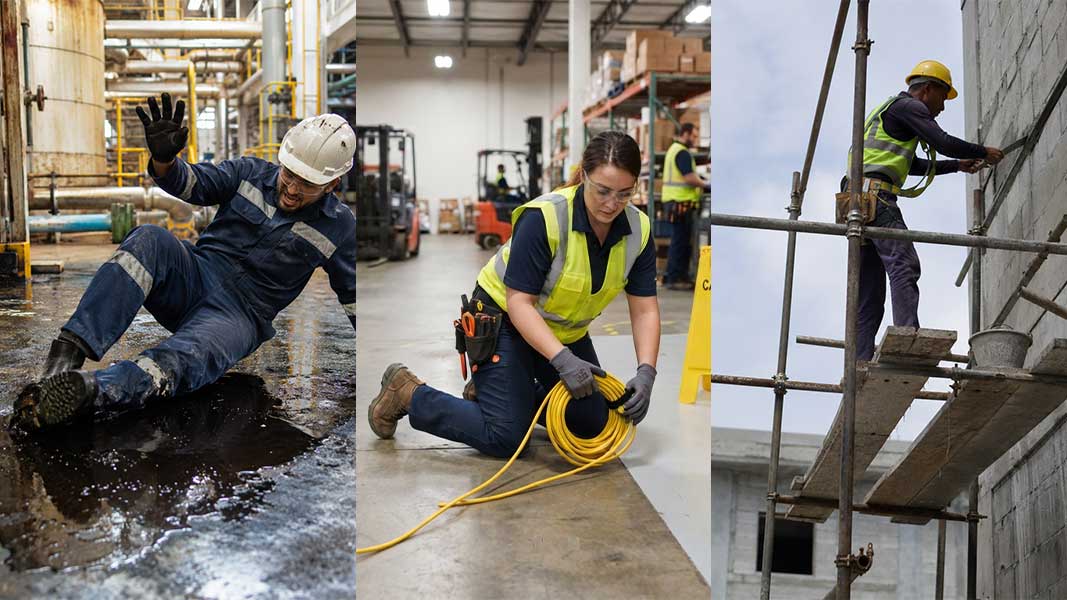
Slip, trip and fall hazards remain one of the most underestimated risks inside any workplace, largely because they hide in plain sight, a wet floor here, a loose cable

Repetitive strain injury at Workplace affects millions of workers every year and most of them do not realize the damage is building until pain becomes constant. According to the

Heat Stress Awareness starts with a simple fact: the human body can only handle so much heat before it starts to fail and most workers never see the warning

HIRA in the workplace is not a paperwork exercise. It is the single most important process that stands between your workers and a serious injury, a fatality or a

Forklift hazards and risk control is a critical responsibility in any workplace where powered industrial trucks operate daily. Warehouses, construction sites, manufacturing plants and logistics hubs rely on forklifts
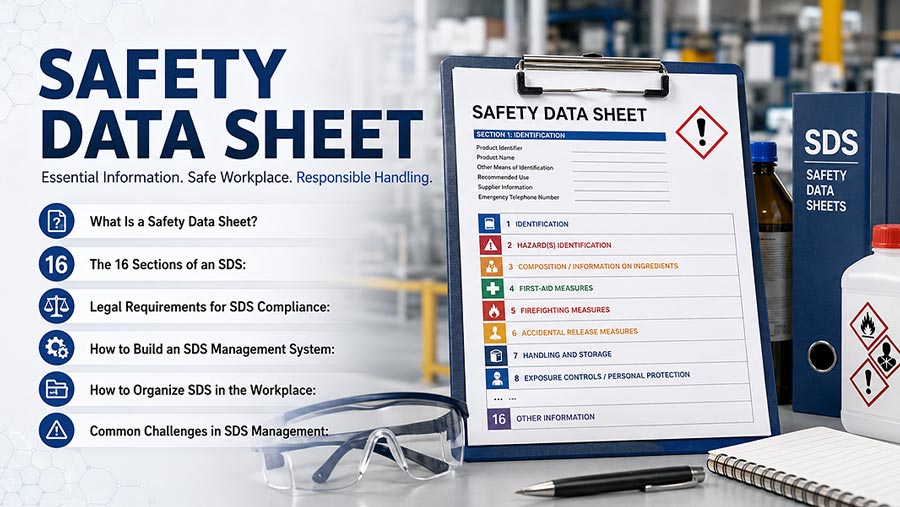
Every year, thousands of workplace chemical incidents happen not because the hazard was unknown, but because the right information was not where it needed to be. A Safety Data
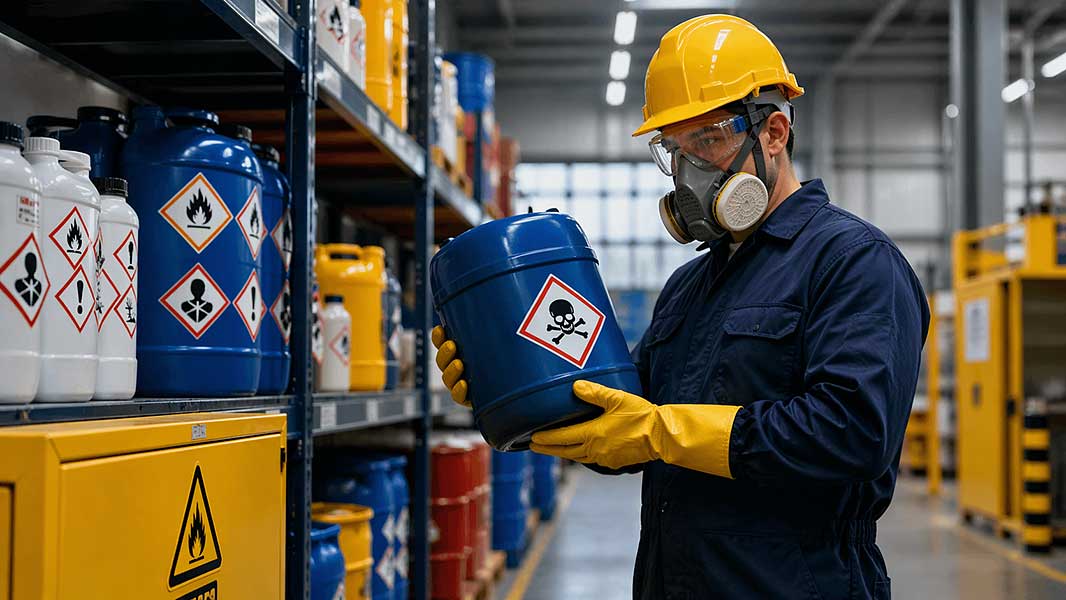
Hazardous Materials Safety is the line between controlled operations and catastrophic failure because one mismanaged chemical, one incompatible storage condition or one missed warning label can trigger injuries, fires,

Emergency Preparedness in UAE is no longer optional because a single unplanned incident can shut down operations, cause serious injuries and expose businesses to legal consequences. In high-risk sectors,

ISO 14001 Environmental Management Lead Auditor in UAE is a highly respected role because organizations rely on qualified professionals to assess environmental management systems (EMS), ensure ISO 14001:2015 compliance

Fall protection for work at height remains one of the most critical safety priorities across construction, oil and gas, manufacturing and maintenance industries because even a minor lapse can

Key requirements of ISO 9001 Certification in UAE define how organizations build a structured, consistent and performance-driven ISO 9001 Quality Management System that meets customer expectations and regulatory demands.
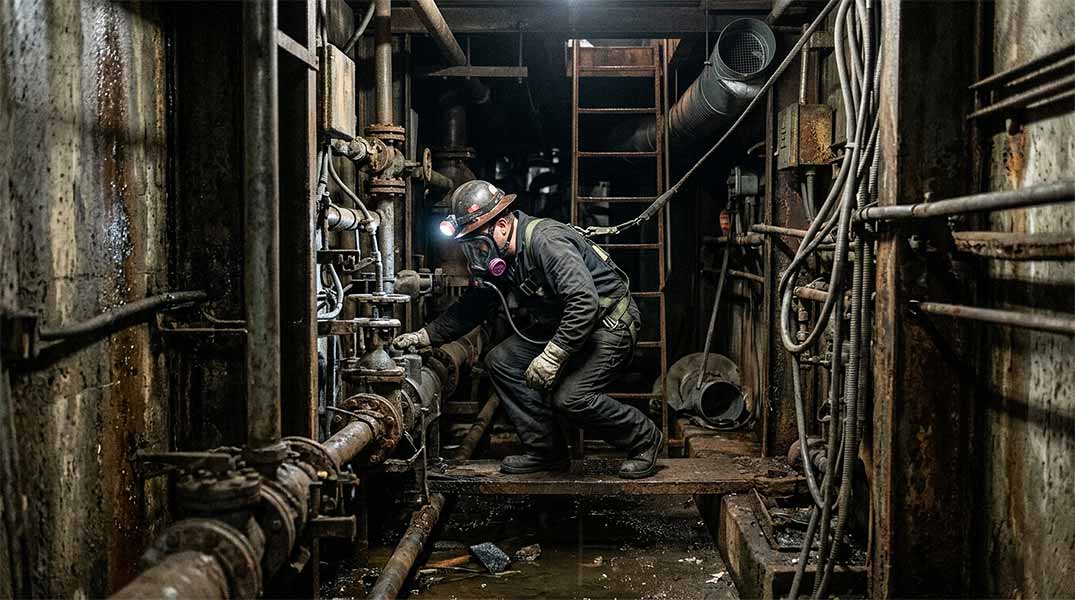
Confined Space Hazards remain one of the most critical risks in industrial workplaces because they combine limited access, poor ventilation and unpredictable conditions that can turn routine tasks into

The benefits of ISO 45001 lead auditor training are becoming increasingly important for safety professionals in the UAE because industries such as construction, oil and gas, manufacturing, logistics and
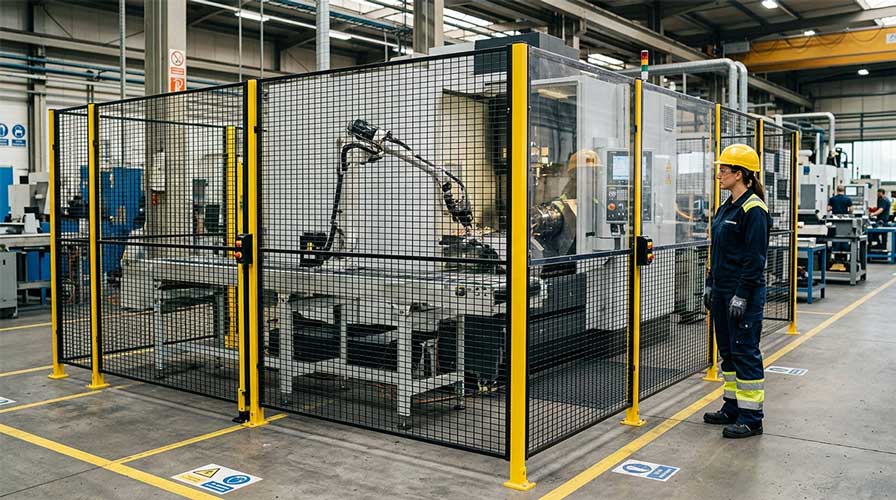
Machine Guarding Safety protects workers from dangerous moving parts, mechanical hazards and high-risk machine operations that exist across industrial workplaces. Manufacturing equipment, conveyor systems, cutting machines, presses and rotating

The ISO 14001 Certification Process provides organizations with a structured method to establish an effective Environmental Management System (EMS) that identifies environmental aspects, evaluates potential environmental impacts and implements

Digital LOTO Systems are becoming an essential part of modern industrial safety programs because traditional paper-based lockout tagout procedures often create gaps in documentation, communication and verification of hazardous

The benefits of ISO 9001 Lead Auditor Course in UAE are clear for professionals who want authority in quality management, because this qualification proves you can plan, conduct and

Employee Assistance Programs for workplace safety strengthen risk control because mental health, personal stress and financial pressure directly affect concentration, judgment and safe behavior at work. Many incident investigations

ISO 45001 clause 5.1 leadership and commitment requirements determine whether an Occupational Health and Safety Management System truly works in practice. Under the ISO 45001 framework, top management is

Bullying and harassment prevention in the workplace is a critical part of occupational health, legal compliance and organizational risk management. When disrespectful conduct is ignored, employee morale declines and

The benefits of ISO 14001 Lead Auditor Training in UAE extend far beyond earning a professional credential. This advanced qualification by Eduskills Training equips you to plan, conduct and

Workplace violence prevention is not limited to reacting after an incident occurs but instead focuses on identifying risks early and controlling them before harm happens. Violence at the workplace

HSE KPIs are the backbone of effective health, safety and environmental performance measurement because they turn policies, procedures and controls into measurable outcomes. When defined and used correctly, KPIs

ISO 45001 Implementation is the process of building a structured occupational health and safety management system that actually works on the ground, therefore reducing risks, preventing incidents and protecting

Fatigue management at the workplace has become a critical safety concern because fatigue directly affects alertness, judgment, reaction time and decision-making. When workers are fatigued, the likelihood of errors

Guide to ISO 45001 Lead Auditor Course is the starting point for professionals who want to upgrade from “knowing safety” to auditing occupational health and safety systems with confidence

Ergonomics and Musculoskeletal Health sit at the center of injury prevention because most work-related pain develops from everyday tasks rather than sudden accidents. When jobs are designed without considering
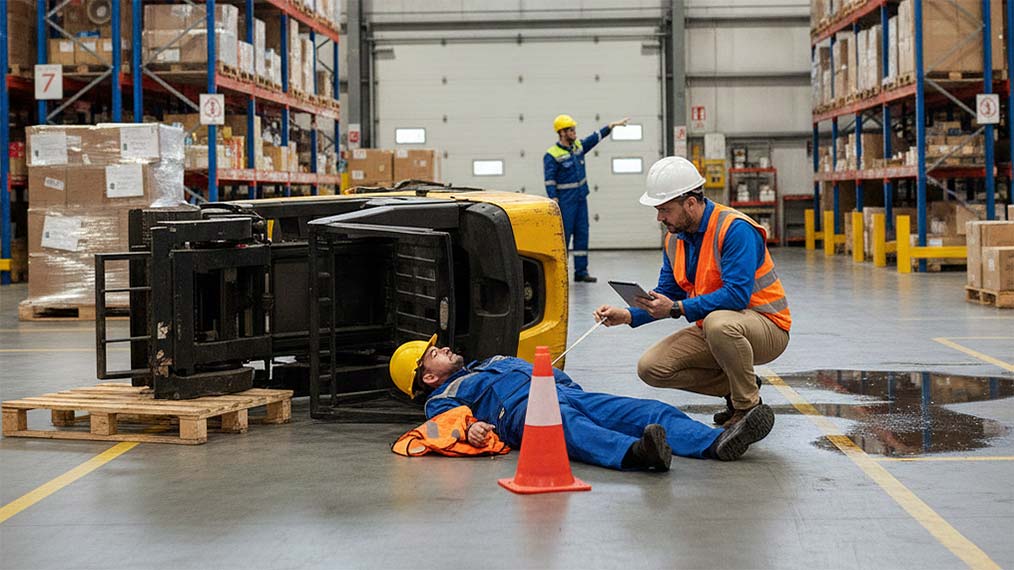
Incident investigation is the backbone of effective occupational health and safety, because it focuses on understanding why an incident occurred rather than who was involved. When done properly, it

ISO 14001 Gap Analysis is a structured assessment that helps organizations measure their current Environmental Management System against ISO 14001 requirements because even small compliance gaps can lead to

Choosing the right professional certification depends on career goals, industry exposure and long-term relevance. Many professionals choose ISO 9001 Lead Auditor Course in UAE because organizations across the region
ISO 45001 Training in the UAE is no longer optional for professionals responsible for workplace safety, compliance and operational control. Organizations are under increasing pressure to reduce incidents, meet

ISO 45001 Implementation and Certification for SMEs in UAE has become a direct path for small and medium businesses to strengthen safety performance because it brings structure, accountability and
ISO 14001 Environmental Policy and Leadership set the foundation for how an organization turns environmental intent into measurable action. When both elements work in sync, teams move from declarations

Mental health in workplace safety is a critical factor that decides how consistently people follow procedures, recognize hazards and respond under pressure. When employees feel overwhelmed, their ability to

An ISO 45001 Gap Analysis gives you a realistic picture of how your current safety practices measure against the requirements of the ISO 45001 Occupational Health and Safety Management

Psychosocial hazards in the workplace influence how people think, behave and respond to risks because they directly affect mental wellbeing long before a physical incident occurs. When pressure builds,

Behavior based safety plays a defining role in how workplace safety culture grows, matures and stays consistent across daily operations. When organizations pay attention to the way people act

Soft skills for HSE professionals shape how effectively they communicate, influence and guide people on site, therefore they matter just as much as technical expertise. I’ve seen many safety

ISO 9001 digital transformation is reshaping how organizations in the UAE manage quality, safety and efficiency. Companies across Dubai, Abu Dhabi and Sharjah are moving beyond traditional paperwork and
