Confined Space Hazards: Types, Risks and Control Measures
Confined Space Hazards cause more workplace deaths every year than most employers realize, often because the risks stay invisible until someone is already inside. A space doesn't need to
Confined Space Hazards cause more workplace deaths every year than most employers realize, often because the risks stay invisible until someone is already inside. A space doesn’t need to look dangerous to become fatal; low oxygen, trapped confined space gases or a sudden structural collapse can turn a routine task into an emergency within minutes. That’s why confined space safety depends on more than common sense, it requires trained personnel, tested air quality and a documented confined space entry process before anyone steps in. Workers who skip these steps or rush through them under deadline pressure, are the ones who end up in accident reports. This blog breaks down the real hazards behind confined space work and the practical control measures, from proper confined space equipment to a reliable confined space emergency procedure, that actually prevent injuries instead of just documenting them after the fact.
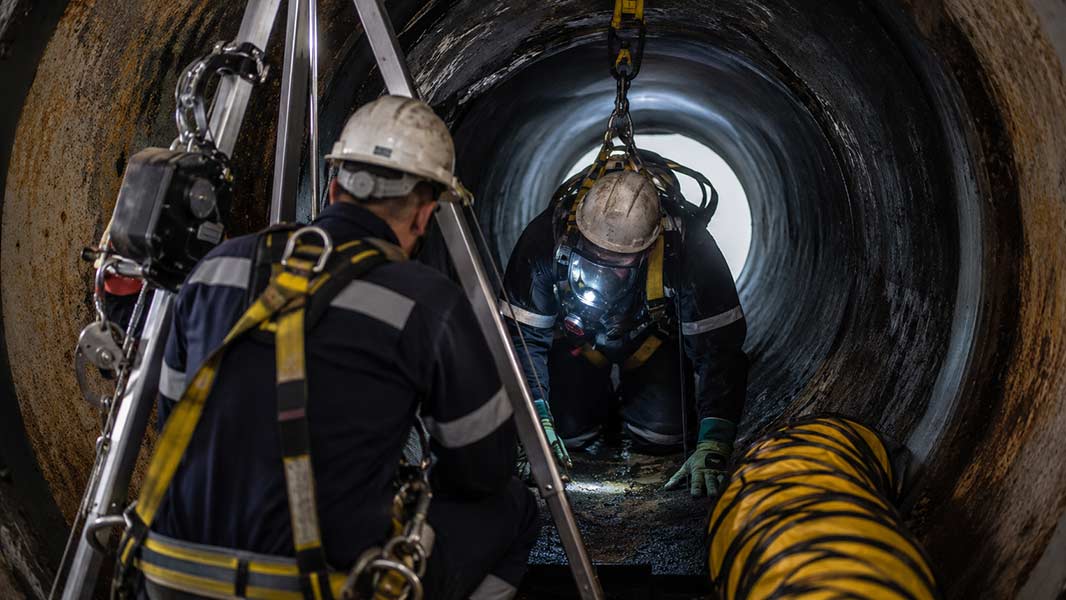
A confined space is any area large enough for a worker to enter and perform a task, but not designed for continuous human occupancy and often has limited entry or exit points. Think storage tanks, sewer lines, silos, boilers or utility vaults. These spaces exist in nearly every industry, from manufacturing to construction to oil and gas, which is why understanding Confined Space Hazards matters regardless of the sector you work in. OSHA reports that confined space incidents claim over 90 lives annually in the US alone and most of these deaths happen not to the original victim, but to untrained coworkers who rush in to help without proper confined space equipment or a rescue plan. That single statistic explains why definitions matter here, because misidentifying a space can mean skipping safety steps that would have prevented a fatality.
People often use these terms interchangeably, but they aren’t the same thing and that confusion causes real safety gaps on job sites. An enclosed space is simply an area with walls and a roof, like a warehouse or a small office room, where normal ventilation and movement are unaffected. A confined space, however, has restricted entry or exit, isn’t built for regular occupancy and can trap hazardous atmospheres inside it. So while every confined space is technically enclosed, not every enclosed space qualifies as confined. Getting this distinction wrong on a job site risk assessment can lead a supervisor to treat a genuinely dangerous space as low-risk simply because it “looks like a normal room.”
Not all confined spaces carry the same level of risk, which is why OSHA splits them into two categories. A non-permit confined space has no serious hazards, meaning the atmosphere is safe and there’s no risk of engulfment or entrapment. A permit-required confined space, on the other hand, may contain hazardous gases, engulfment risks or any condition that could seriously injure or kill an entrant and therefore requires a written permit before anyone enters. This permit process is central to confined space entry, since it forces a documented check of atmospheric conditions, isolation of energy sources and confirmation that rescue support is in place. Skipping this step, even for a space that “seemed fine yesterday,” is one of the most common causes of confined space fatalities, because atmospheres can change without warning between shifts.
Not every confined space presents the same danger, which is why categorizing Confined Space Hazards correctly matters more than most workers realize. A tank that held water yesterday could hold a lethal gas pocket today, so treating every entry as unique, rather than routine, is the mindset that actually keeps people alive. Below are the four hazard categories every worker, supervisor and safety officer needs to recognize before authorizing entry.
Atmospheric hazards kill more confined space workers than any other category, because they’re invisible until symptoms appear and by then it’s often too late. Oxygen deficiency, anything below 19.5%, can cause unconsciousness within minutes, while oxygen enrichment above 23.5% turns the space into a fire hazard. Add toxic confined space gases like hydrogen sulfide, carbon monoxide or methane into the mix and a single unmonitored entry can become fatal. This is exactly why continuous air monitoring isn’t optional; it’s the single control measure that catches problems before a worker ever steps inside.
Physical hazards are the ones people picture first when they think of confined spaces and for good reason. Grain silos, sand pits and material storage bins can engulf a worker in seconds, since flowing material behaves like quicksand once it starts moving. Entrapment happens when a worker gets physically stuck due to space constraints or equipment positioning, while falls occur through unguarded openings, unstable footing or vertical entry points like manholes and shafts. These hazards demand physical safeguards, not just awareness, things like harnesses, barriers and controlled material flow before entry begins.
Mechanical and electrical hazards often get overlooked because they’re not as dramatic as gas exposure or engulfment, but they’re just as deadly. Augers, mixers, conveyors and rotating shafts inside tanks or silos can activate unexpectedly if lockout-tagout procedures aren’t followed correctly. Similarly, energized electrical systems inside confined spaces pose shock and arc-flash risks, especially in damp or metal-lined environments where conductivity increases. Proper isolation of all mechanical and electrical energy sources, verified before entry and not just assumed, is what separates a controlled workspace from an accident waiting to happen.
Biological and thermal hazards tend to get less attention, but they carry real long-term and immediate risks. Sewers, wastewater tanks and animal enclosures can expose workers to bacteria, mold spores and pathogens that cause infections or respiratory illness well after the shift ends. Thermal hazards, meanwhile, show up in boilers, furnaces and cold storage vaults, where extreme heat causes heat exhaustion and extreme cold triggers hypothermia, sometimes within the same facility depending on the space. Both categories require space-specific confined space safety protocols, because a one-size-fits-all approach won’t protect a worker from a sewage line the same way it protects them from a walk-in freezer.
You might be interested in reading
Most confined space accidents don’t happen because the danger was unknown, they happen because a preventable step got skipped, rushed or assumed to be someone else’s responsibility. Understanding these root causes matters just as much as understanding the hazards themselves, because fixing a cause prevents the next incident before it starts. Here are the three failures behind the majority of confined space accident reports.
Atmospheric testing isn’t a one-time checklist item, but many worksites treat it that way, testing once before entry and never again during the task. Air quality inside a confined space can shift within minutes due to work activity, chemical off-gassing or a ventilation system that quietly fails mid-shift. When continuous monitoring isn’t in place or when ventilation equipment isn’t properly maintained, workers end up exposed to oxygen deficiency or toxic confined space gases without any warning sign. This single gap, treating air testing as a formality rather than an ongoing safeguard, is behind a significant share of atmospheric fatalities every year.
A worker who doesn’t fully understand confined space risks is far more likely to underestimate them and that gap in knowledge is where most accidents originate. Training isn’t just about knowing the hazards; it’s about recognizing early warning signs, understanding when to stop work and knowing exactly how to use confined space equipment correctly under pressure. Many incidents also involve untrained coworkers attempting a rescue after seeing someone collapse inside, which is why over half of confined space deaths involve would-be rescuers, not just the original entrant. Without structured, recurring training, even experienced workers can develop dangerous shortcuts simply because nothing went wrong the last ten times.
Equipment failure isn’t limited to gas monitors, it also includes harnesses, retrieval systems, ventilation blowers and communication devices that haven’t been inspected or maintained on schedule. When this equipment fails mid-task, the consequences escalate fast, because there’s often no backup plan in place. An equally dangerous gap is rescue planning that exists on paper but was never tested in practice, meaning the designated rescue team doesn’t actually know how to execute a confined space emergency procedure under real conditions. A rescue plan that hasn’t been drilled is, in practical terms, not a rescue plan at all and that gap has cost lives in incidents where help was technically available but not actually ready.
Identifying Confined Space Hazards is only half the job, because hazards that aren’t controlled will eventually cause an incident regardless of how well they’re understood. Effective control measures work in layers, so if one safeguard fails, another catches the gap before it becomes an injury. The following three areas form the backbone of any serious confined space safety program.
Testing the air before entry is the baseline, but it’s not enough on its own, since conditions inside a confined space can change the moment work begins. A proper protocol tests for oxygen levels, flammability and toxic confined space gases in that specific order, because oxygen deficiency alone can incapacitate a worker faster than any other atmospheric threat. Continuous monitoring throughout the task, not just a pre-entry check, is what catches a slow gas leak or a ventilation dip before symptoms appear. Calibrated, well-maintained gas detectors are non-negotiable here, because a monitor that hasn’t been calibrated recently can give a false “safe” reading at the worst possible time.
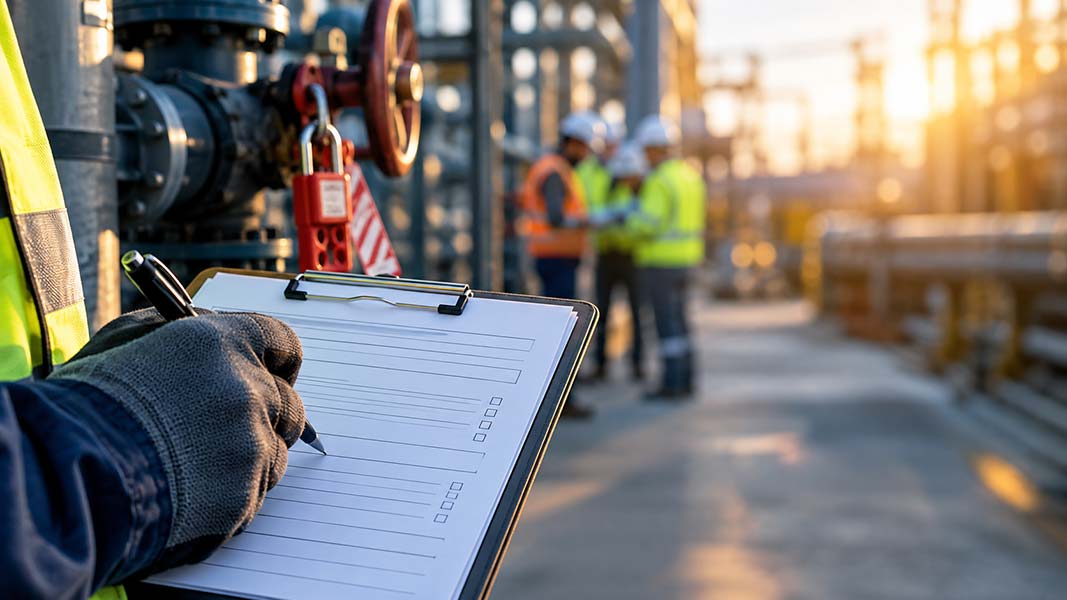
Mechanical ventilation, whether natural or forced-air, keeps oxygen levels stable and disperses hazardous gases before they accumulate to dangerous concentrations. But ventilation alone doesn’t address every risk, so isolation procedures are equally critical, physically disconnecting or blanking off pipes, valves and lines that could introduce hazardous substances into the space during work. Lockout-tagout takes this a step further by de-energizing mechanical and electrical systems and it must be verified, not just applied, before any worker enters. Skipping verification, assuming a system is locked out simply because a tag is present, has led to serious injuries when equipment activated unexpectedly during entry.
The right confined space equipment depends entirely on the hazards identified during the risk assessment, so a one-size-fits-all PPE approach doesn’t hold up in practice. Respiratory protection, ranging from air-purifying respirators to supplied-air systems, becomes essential when atmospheric hazards can’t be fully eliminated through ventilation alone. Harnesses connected to retrieval lines allow for quick, non-entry rescue if a worker becomes incapacitated, which is often faster and safer than sending a second person inside. Beyond the obvious gear, communication devices, proper lighting and flame-resistant clothing round out a PPE setup that actually matches the space’s real risk profile, rather than a generic checklist pulled from an unrelated job site.
You might be interested in reading
Confined Space Hazards aren’t rare edge cases, they’re a daily reality for workers in construction, manufacturing, utilities and industrial maintenance, which is exactly why treating them as routine is the mistake that costs lives. Real confined space safety doesn’t come from a checklist filled out once and filed away; it comes from continuous air monitoring, verified isolation procedures, trained personnel and rescue plans that have actually been tested under realistic conditions. Every incident referenced throughout this blog traces back to a step that was skipped, assumed or rushed and that pattern is preventable once a workplace commits to doing confined space entry correctly every single time, not just when an inspector is watching.
At Eduskills Training, we work with organizations to close exactly these gaps, through hands-on training that cover atmospheric testing, proper use of confined space equipment and rescue drills that prepare teams for real emergencies rather than theoretical ones. Building safe culture takes ongoing effort, but the alternative, waiting for an incident to force the change, is a cost no workplace should be willing to pay.
OSHA 1910.146, also called the Permit-Required Confined Spaces standard, governs general industry. Construction follows a separate but similar standard, 1926 Subpart AA.
An oxygen concentration below 16% is considered immediately dangerous to life or health (IDLH), while OSHA sets the minimum acceptable level at 19.5% for safe entry.
Test for oxygen first, then flammability or combustible gases and finally toxic contaminants. This sequence exists because oxygen deficiency can incapacitate a worker faster than any other atmospheric threat.
LEL stands for Lower Explosive Limit, the minimum concentration of a gas or vapor in air that can ignite. Entry is generally prohibited once readings exceed 10% of the LEL.
A trained entrant, an attendant stationed outside and an entry supervisor who authorizes and oversees the operation are all required under confined space safety protocols.
Non-entry rescue uses a harness and retrieval line to pull an incapacitated worker out without anyone else entering the space. Entry rescue requires trained personnel to physically go in, which carries significantly higher risk.
A common industry guideline is a minimum of 20 air changes per hour, though the exact rate depends on space volume, contaminant type and the ventilation equipment being used.
Attendants must be trained to monitor conditions outside the space, maintain communication with entrants, recognize hazard symptoms and initiate a confined space emergency procedure without entering themselves.
Confined Space Hazards cause more workplace deaths every year than most employers realize, often because the risks stay invisible until someone is already inside. A space doesn't need to
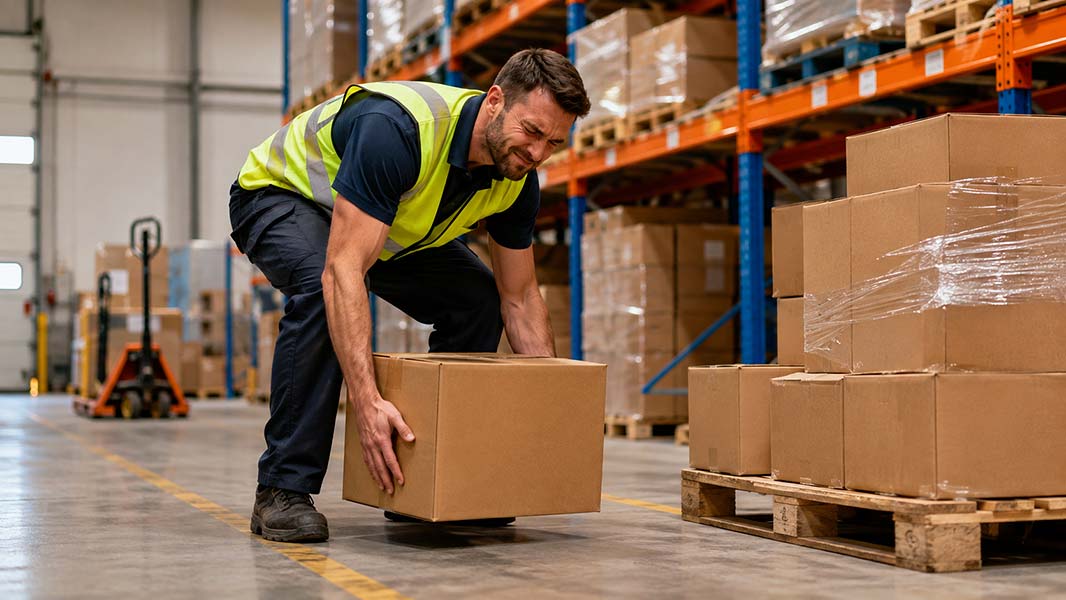
Manual handling hazards exists in almost every workplace, from warehouses to hospitals and it remains one of the leading causes of workplace injury worldwide. According to the UK Health
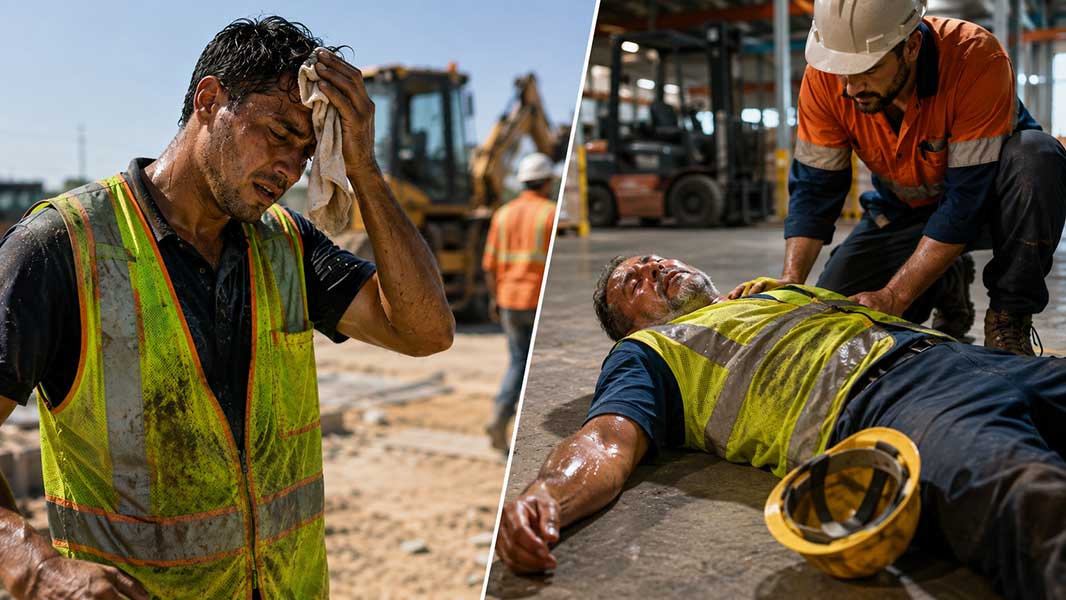
Heat stress vs heat stroke confuses more workers than it should, and that confusion costs lives every summer. The Bureau of Labor Statistics recorded 48 work-related deaths due to
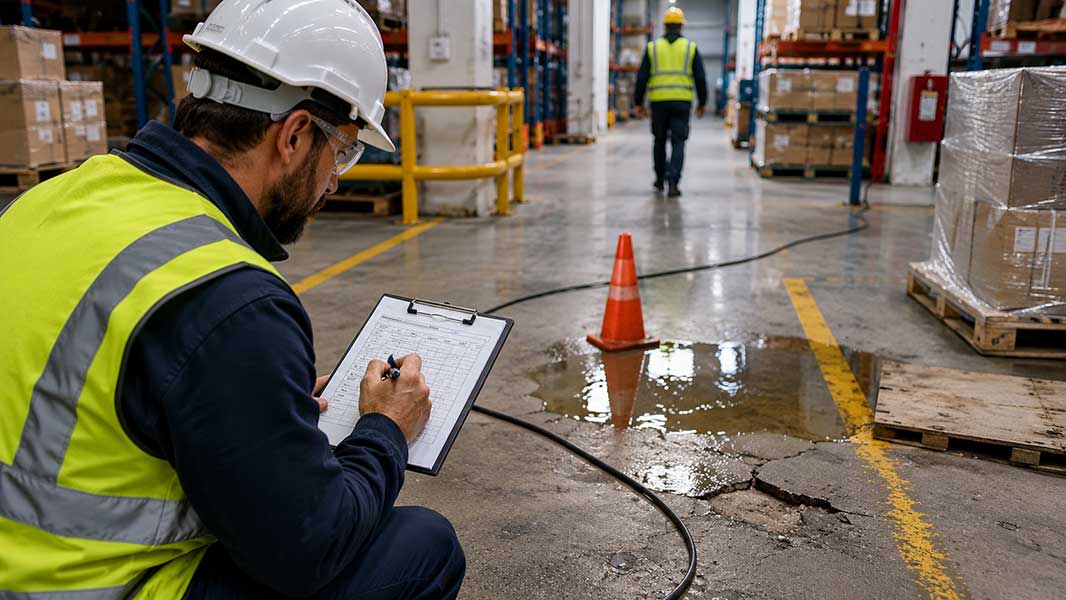
A slip, trip and falls risk assessment is the single most effective tool employers have for catching hazards before they turn into injuries. Because falls remain one of the
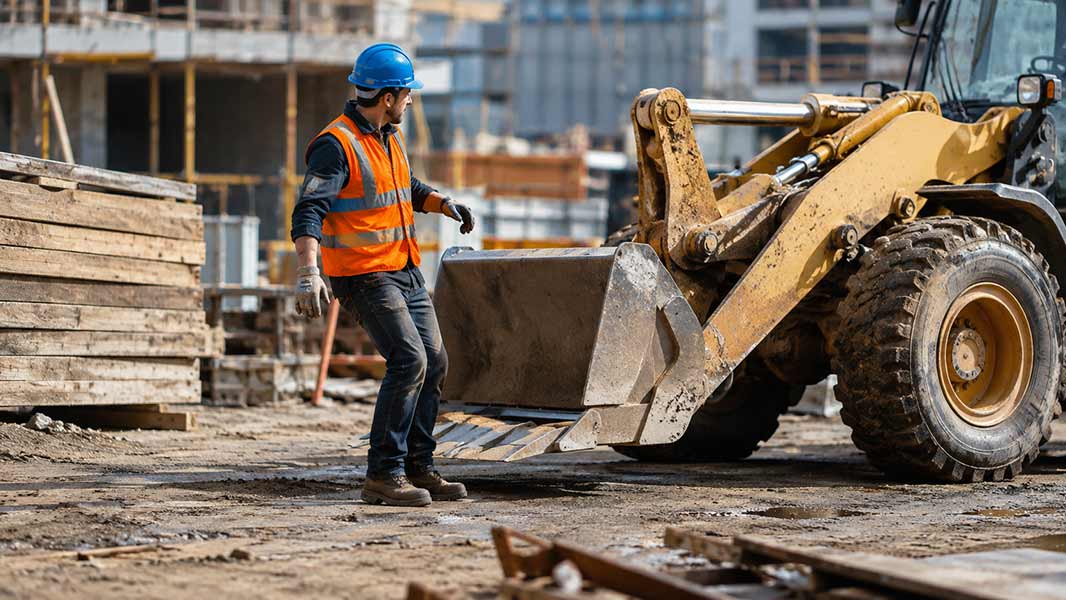
Line of fire hazards occur when a worker's body is positioned where it could be struck, crushed, pinned, or caught by moving equipment, falling objects, or released energy and
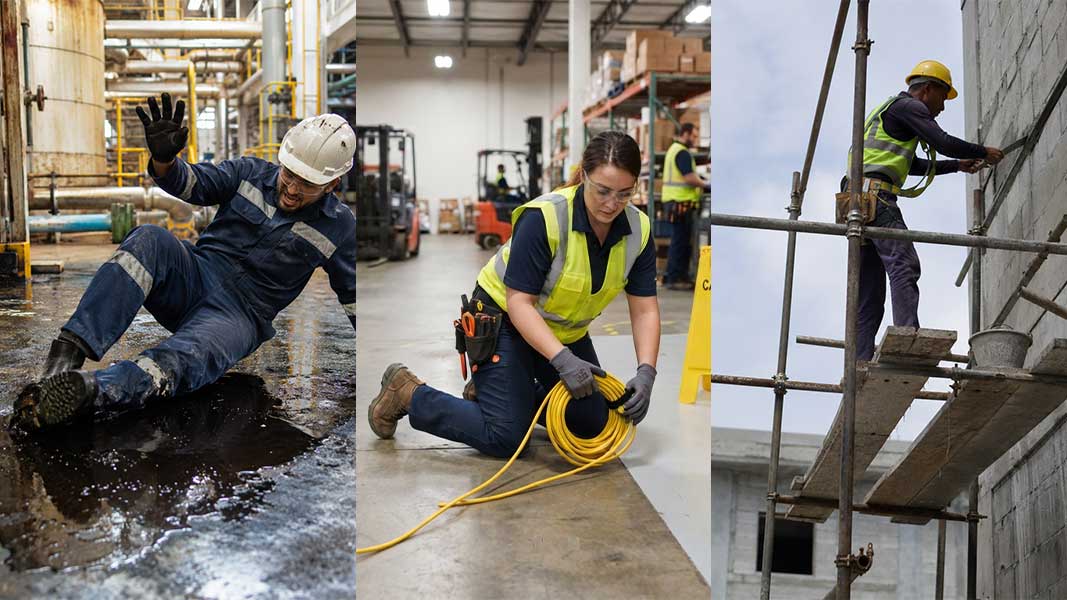
Slip, trip and fall hazards remain one of the most underestimated risks inside any workplace, largely because they hide in plain sight, a wet floor here, a loose cable
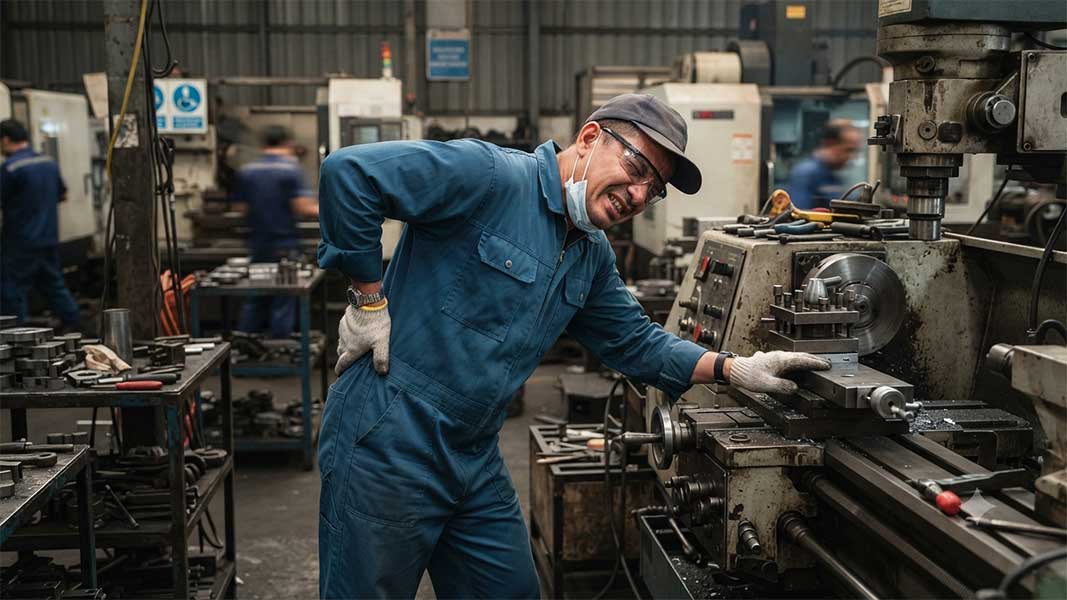
Repetitive strain injury at Workplace affects millions of workers every year and most of them do not realize the damage is building until pain becomes constant. According to the
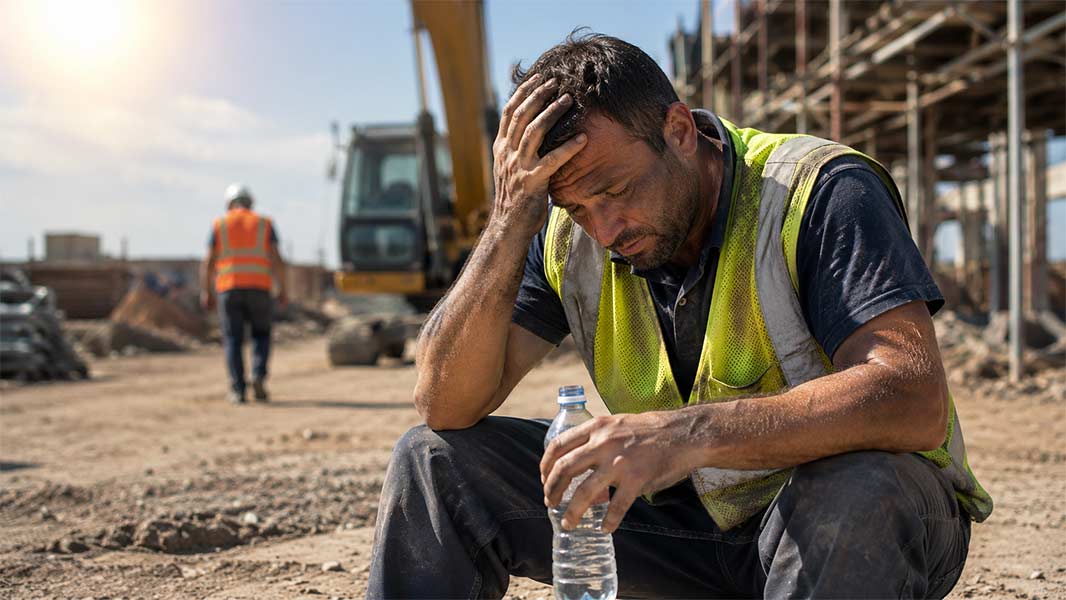
Heat Stress Awareness starts with a simple fact: the human body can only handle so much heat before it starts to fail and most workers never see the warning
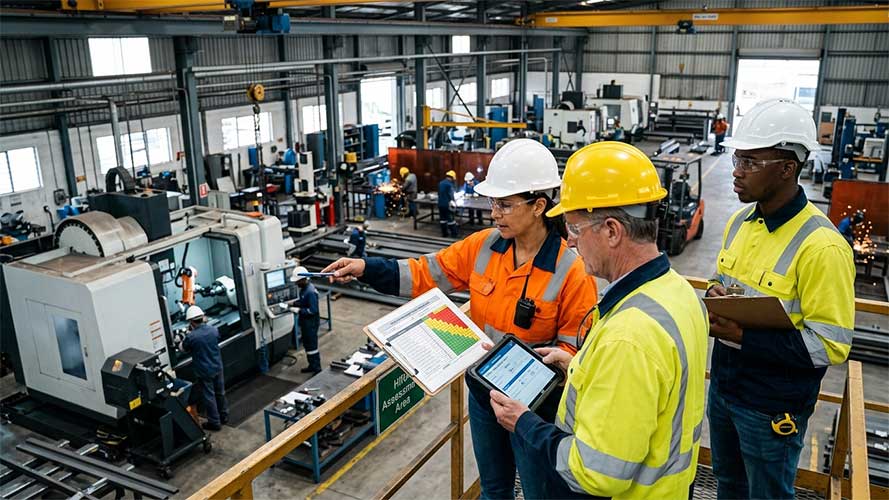
HIRA in the workplace is not a paperwork exercise. It is the single most important process that stands between your workers and a serious injury, a fatality or a
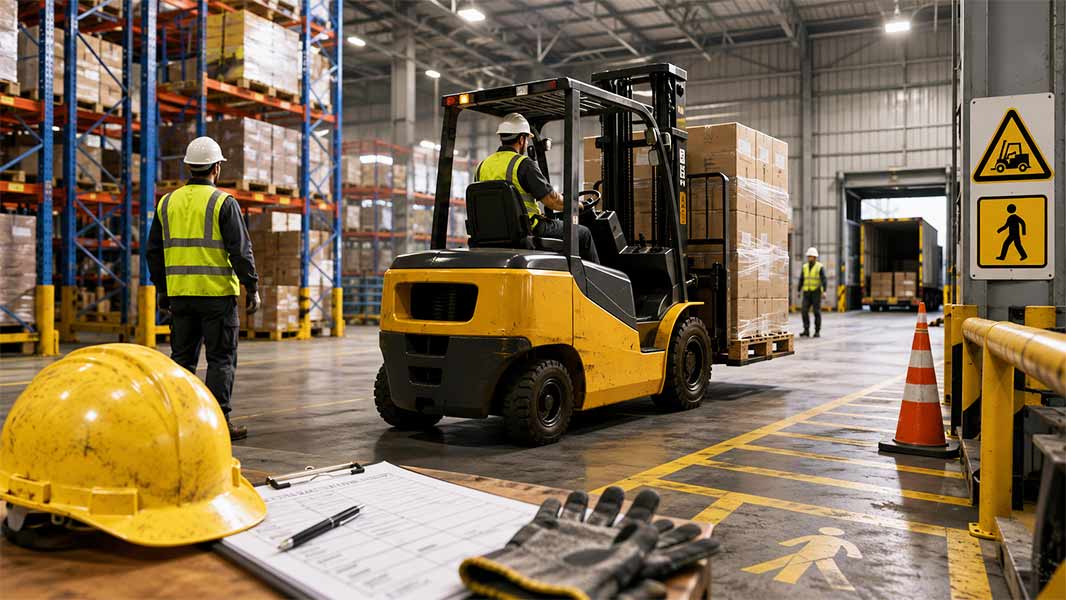
Forklift hazards and risk control is a critical responsibility in any workplace where powered industrial trucks operate daily. Warehouses, construction sites, manufacturing plants and logistics hubs rely on forklifts
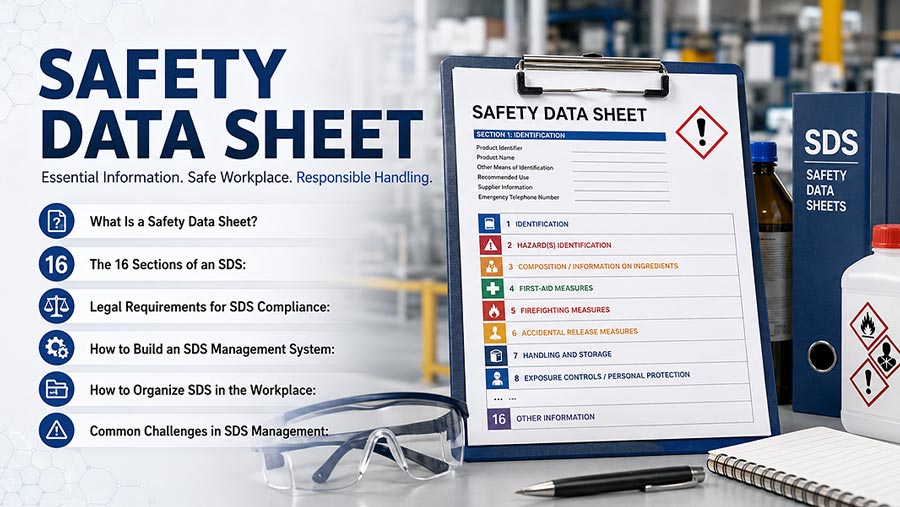
Every year, thousands of workplace chemical incidents happen not because the hazard was unknown, but because the right information was not where it needed to be. A Safety Data
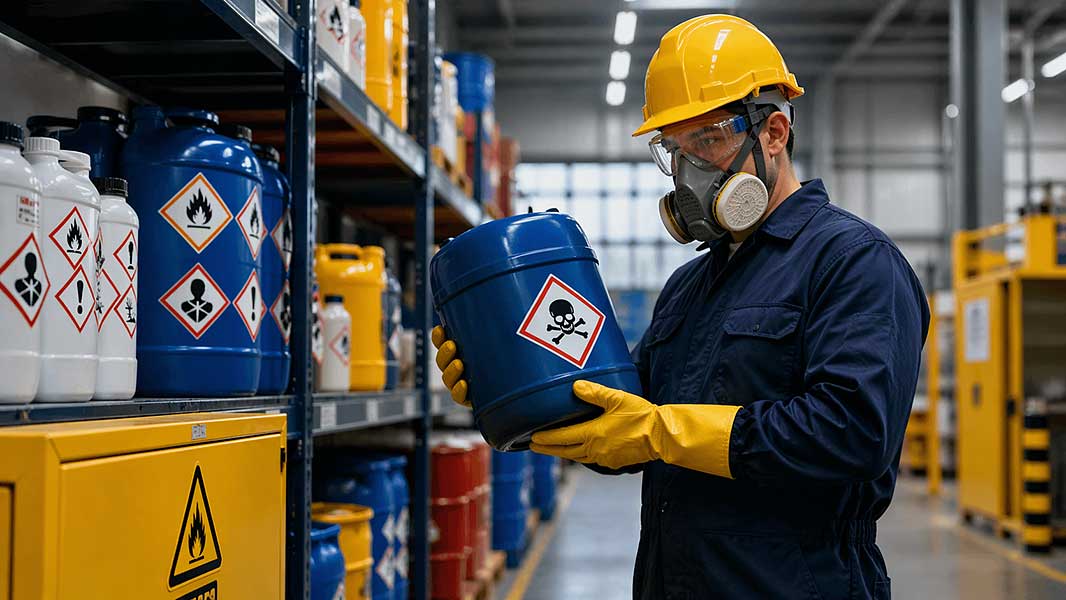
Hazardous Materials Safety is the line between controlled operations and catastrophic failure because one mismanaged chemical, one incompatible storage condition or one missed warning label can trigger injuries, fires,
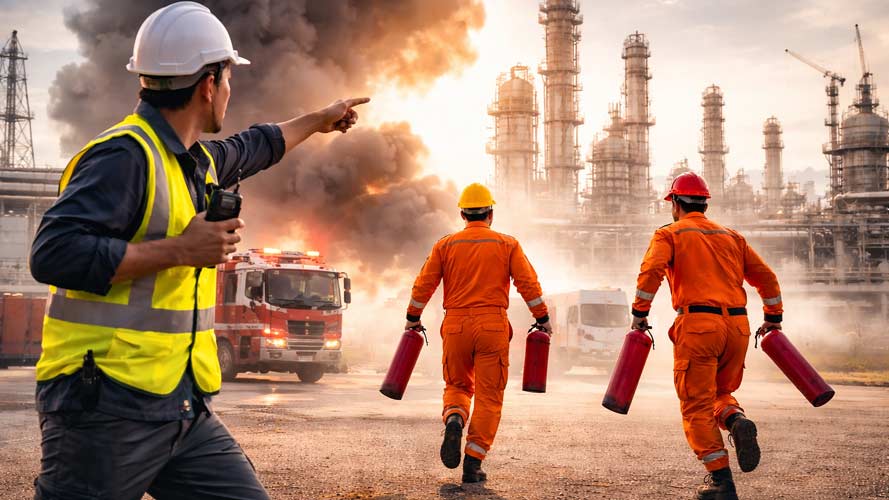
Emergency Preparedness in UAE is no longer optional because a single unplanned incident can shut down operations, cause serious injuries and expose businesses to legal consequences. In high-risk sectors,
ISO 14001 Environmental Management Lead Auditor in UAE is a highly respected role because organizations rely on qualified professionals to assess environmental management systems (EMS), ensure ISO 14001:2015 compliance
Fall protection for work at height remains one of the most critical safety priorities across construction, oil and gas, manufacturing and maintenance industries because even a minor lapse can
Key requirements of ISO 9001 Certification in UAE define how organizations build a structured, consistent and performance-driven ISO 9001 Quality Management System that meets customer expectations and regulatory demands.
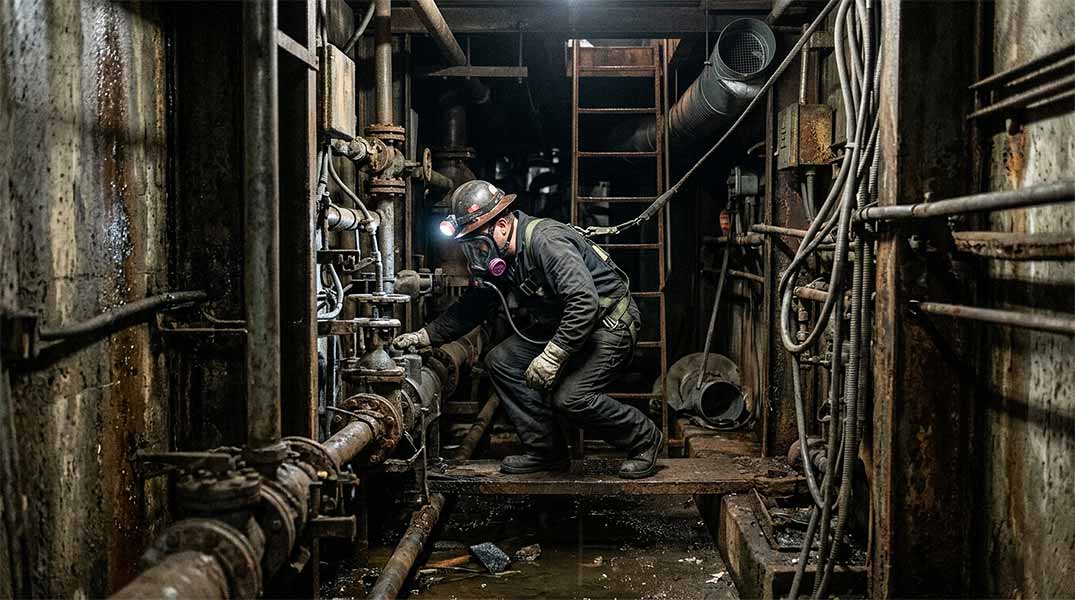
Confined Space Hazards remain one of the most critical risks in industrial workplaces because they combine limited access, poor ventilation and unpredictable conditions that can turn routine tasks into
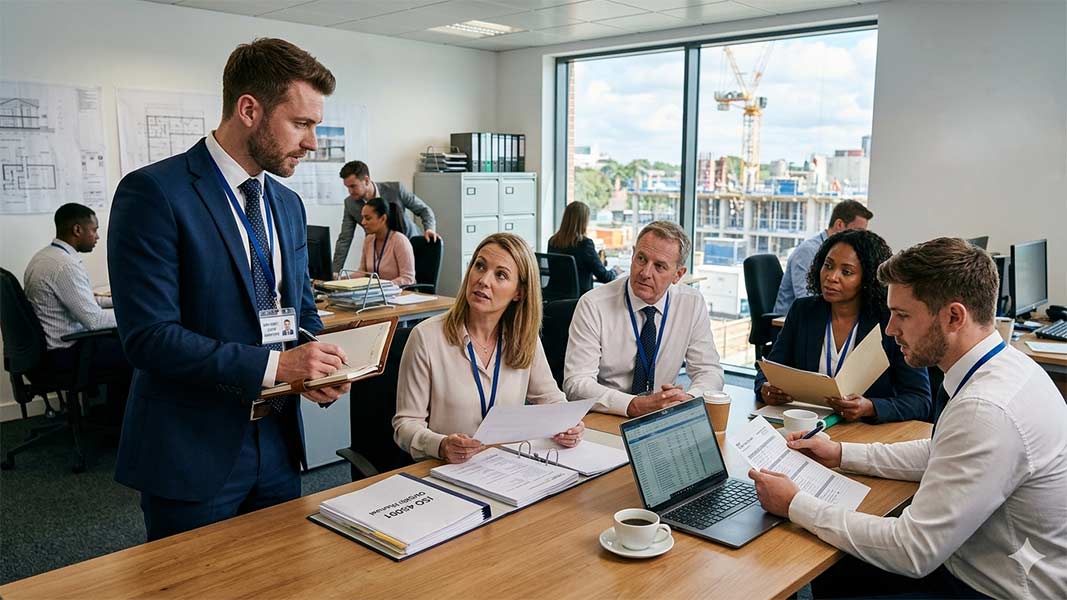
The benefits of ISO 45001 lead auditor training are becoming increasingly important for safety professionals in the UAE because industries such as construction, oil and gas, manufacturing, logistics and
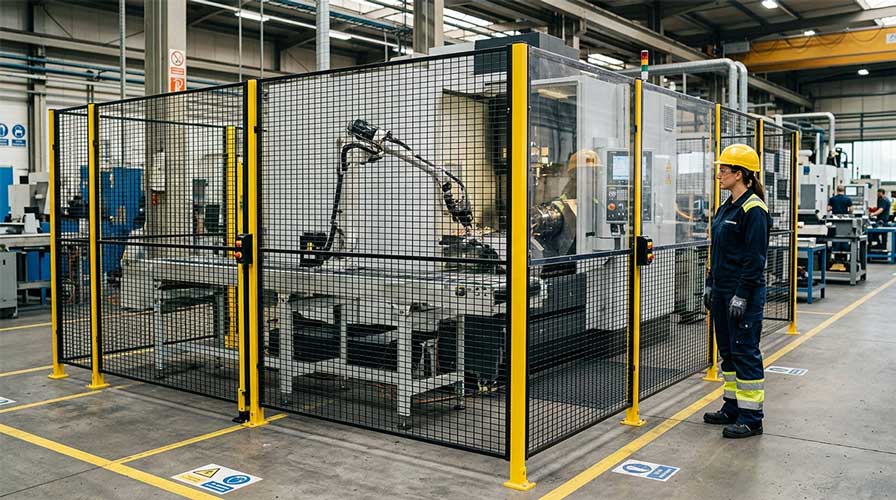
Machine Guarding Safety protects workers from dangerous moving parts, mechanical hazards and high-risk machine operations that exist across industrial workplaces. Manufacturing equipment, conveyor systems, cutting machines, presses and rotating

The ISO 14001 Certification Process provides organizations with a structured method to establish an effective Environmental Management System (EMS) that identifies environmental aspects, evaluates potential environmental impacts and implements
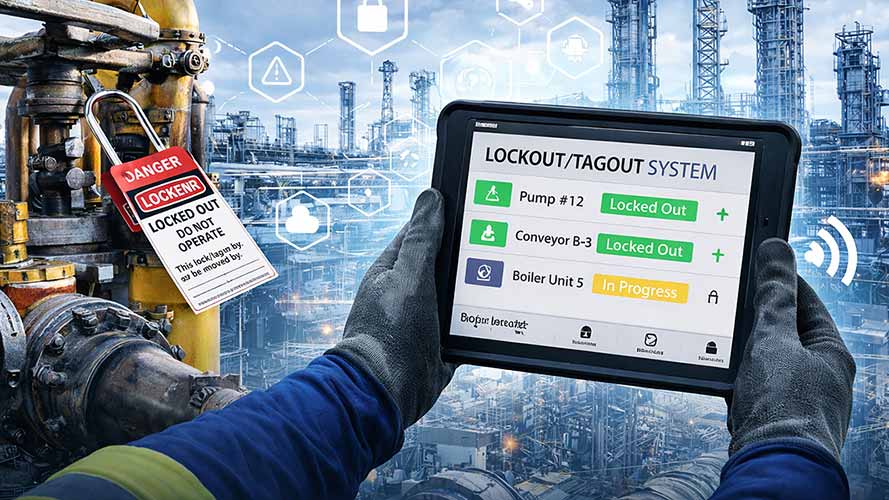
Digital LOTO Systems are becoming an essential part of modern industrial safety programs because traditional paper-based lockout tagout procedures often create gaps in documentation, communication and verification of hazardous
The benefits of ISO 9001 Lead Auditor Course in UAE are clear for professionals who want authority in quality management, because this qualification proves you can plan, conduct and

Employee Assistance Programs for workplace safety strengthen risk control because mental health, personal stress and financial pressure directly affect concentration, judgment and safe behavior at work. Many incident investigations
ISO 45001 clause 5.1 leadership and commitment requirements determine whether an Occupational Health and Safety Management System truly works in practice. Under the ISO 45001 framework, top management is

Bullying and harassment prevention in the workplace is a critical part of occupational health, legal compliance and organizational risk management. When disrespectful conduct is ignored, employee morale declines and
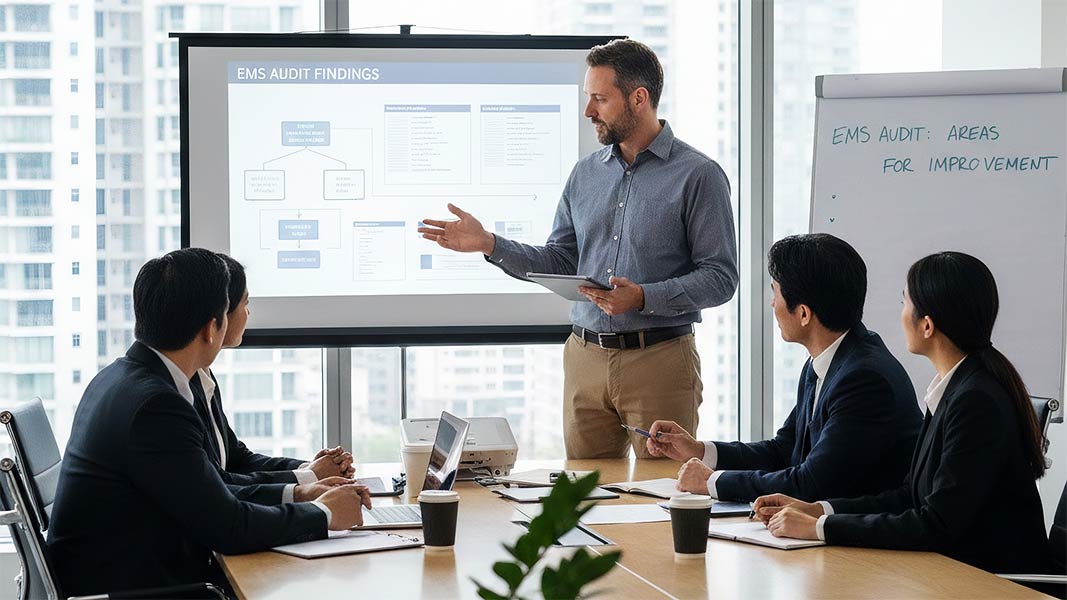
The benefits of ISO 14001 Lead Auditor Training in UAE extend far beyond earning a professional credential. This advanced qualification by Eduskills Training equips you to plan, conduct and
Workplace violence prevention is not limited to reacting after an incident occurs but instead focuses on identifying risks early and controlling them before harm happens. Violence at the workplace
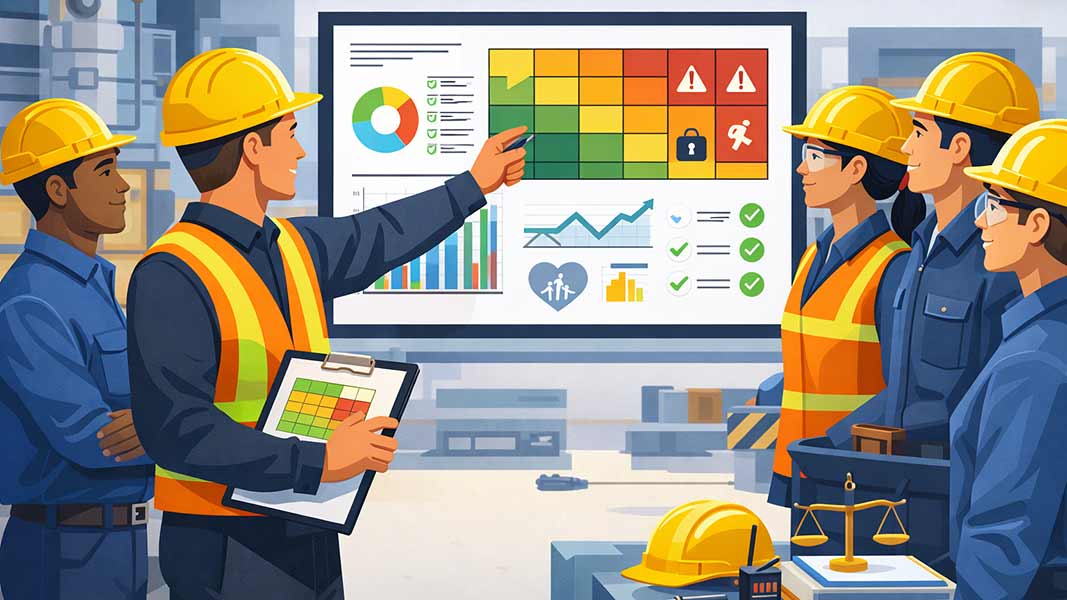
HSE KPIs are the backbone of effective health, safety and environmental performance measurement because they turn policies, procedures and controls into measurable outcomes. When defined and used correctly, KPIs

ISO 45001 Implementation is the process of building a structured occupational health and safety management system that actually works on the ground, therefore reducing risks, preventing incidents and protecting
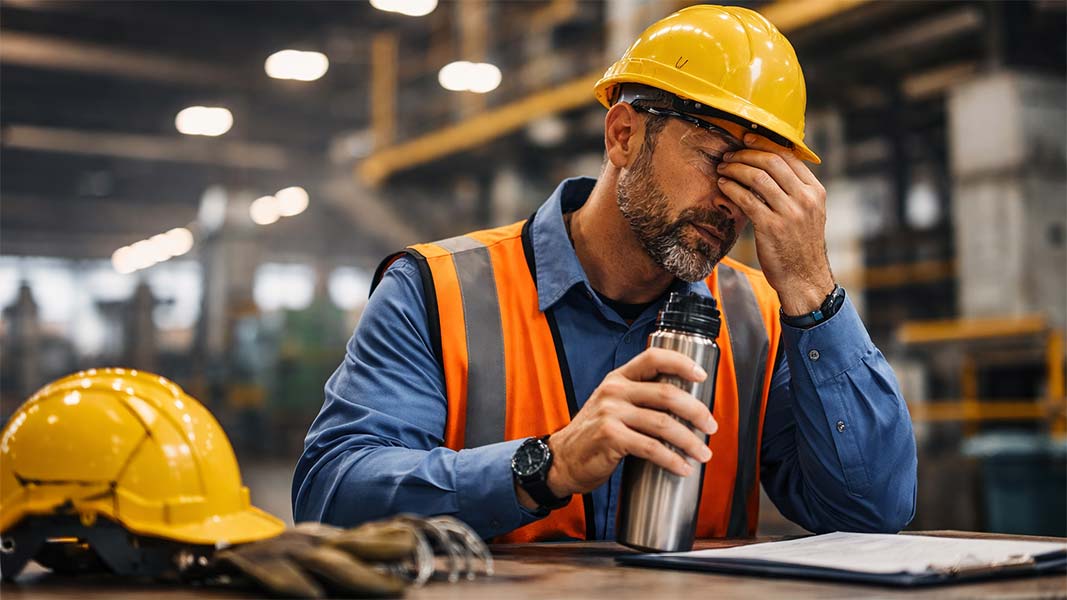
Fatigue management at the workplace has become a critical safety concern because fatigue directly affects alertness, judgment, reaction time and decision-making. When workers are fatigued, the likelihood of errors
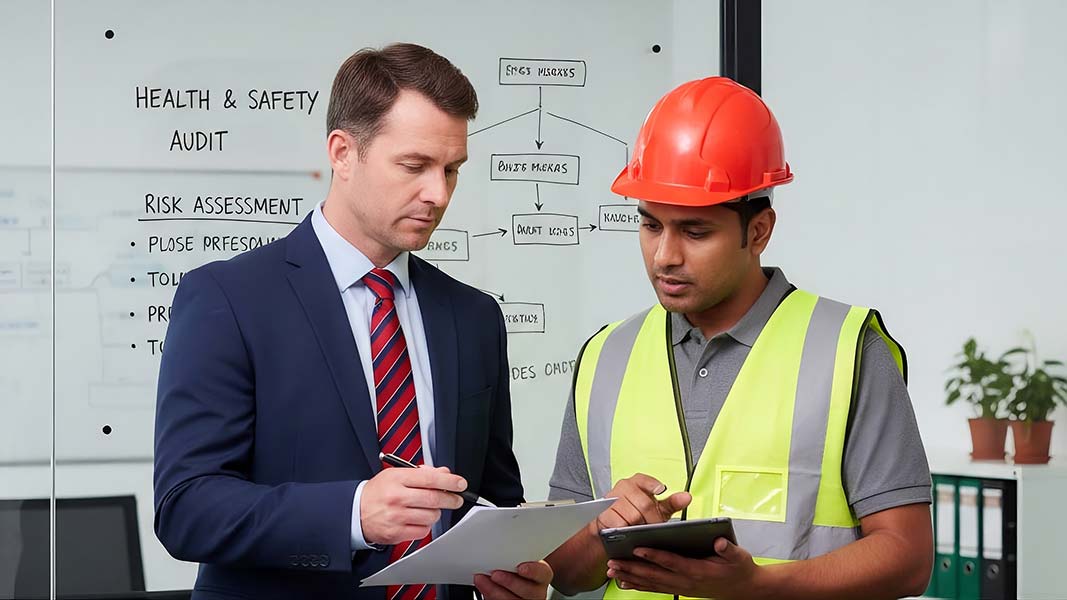
Guide to ISO 45001 Lead Auditor Course is the starting point for professionals who want to upgrade from “knowing safety” to auditing occupational health and safety systems with confidence
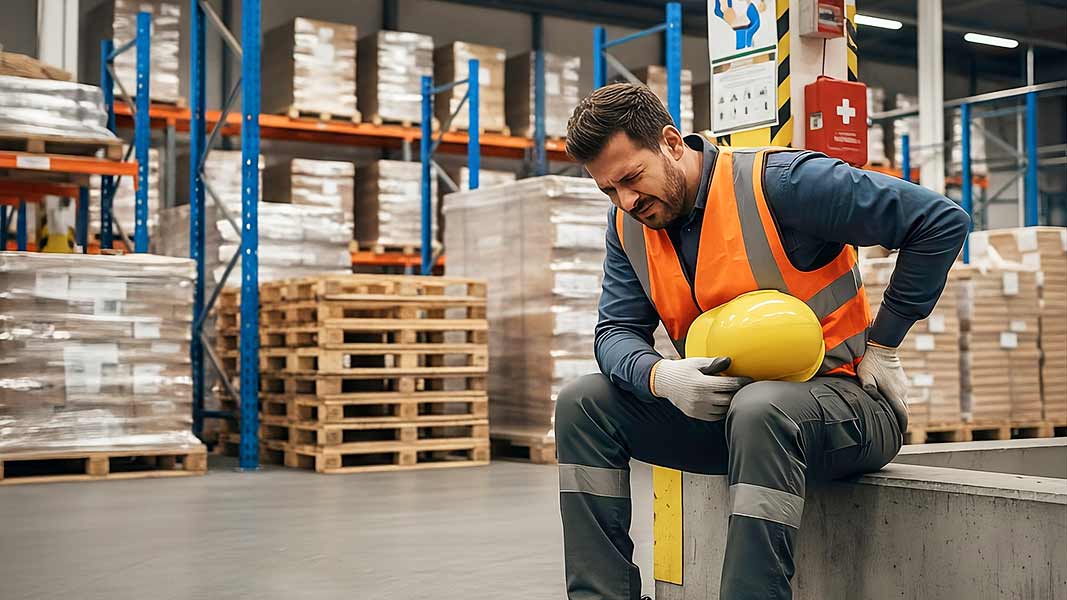
Ergonomics and Musculoskeletal Health sit at the center of injury prevention because most work-related pain develops from everyday tasks rather than sudden accidents. When jobs are designed without considering
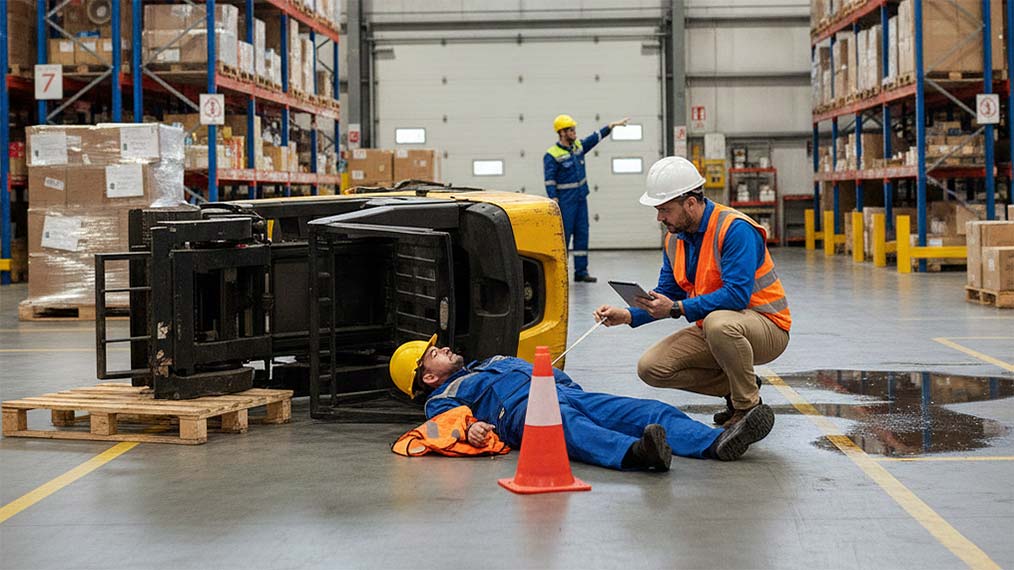
Incident investigation is the backbone of effective occupational health and safety, because it focuses on understanding why an incident occurred rather than who was involved. When done properly, it
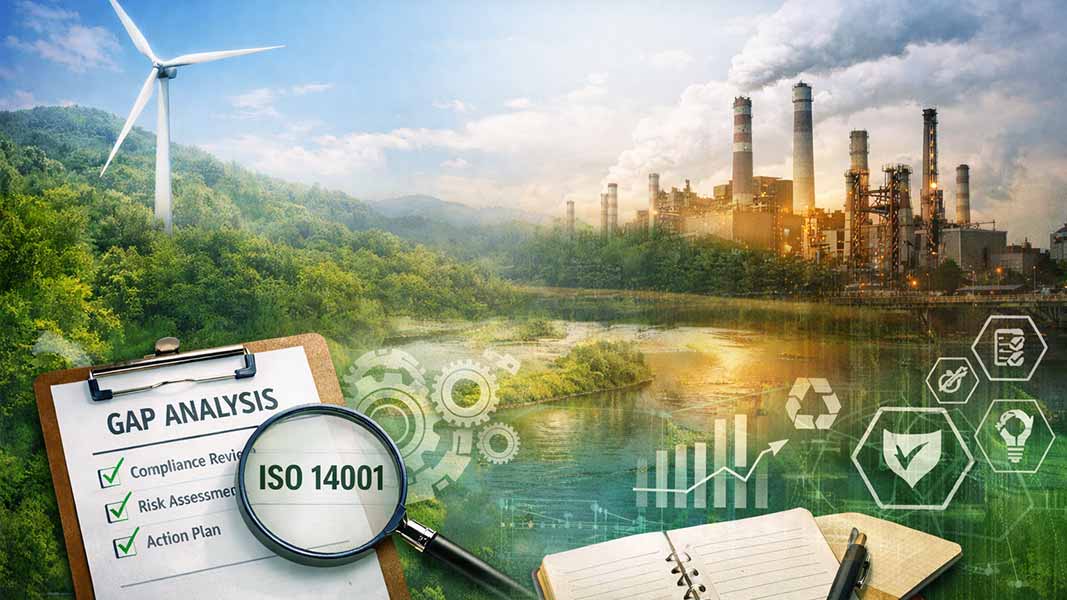
ISO 14001 Gap Analysis is a structured assessment that helps organizations measure their current Environmental Management System against ISO 14001 requirements because even small compliance gaps can lead to

Choosing the right professional certification depends on career goals, industry exposure and long-term relevance. Many professionals choose ISO 9001 Lead Auditor Course in UAE because organizations across the region
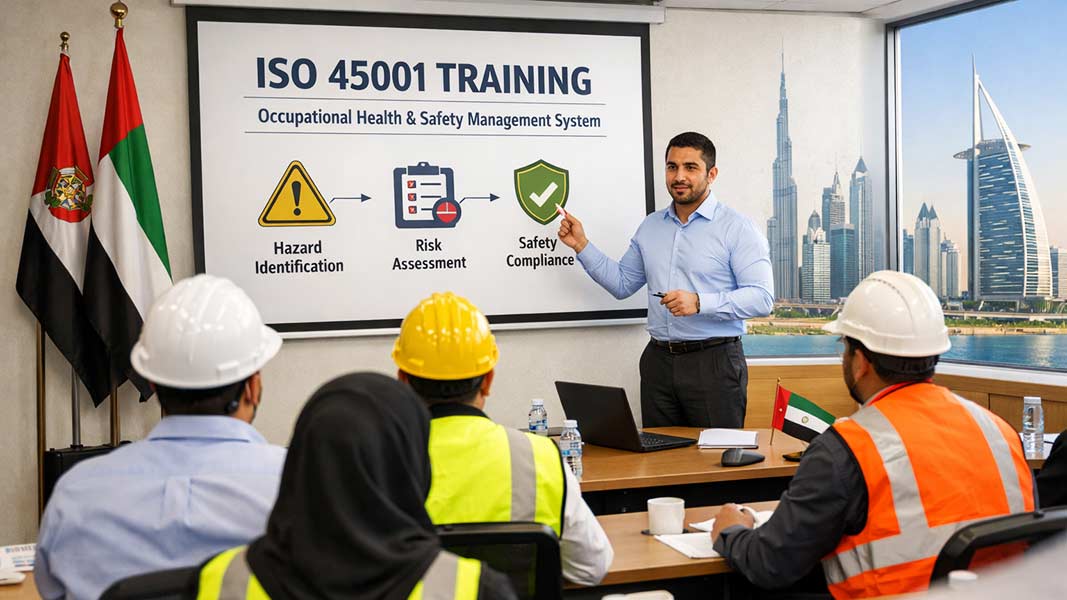
ISO 45001 Training in the UAE is no longer optional for professionals responsible for workplace safety, compliance and operational control. Organizations are under increasing pressure to reduce incidents, meet
ISO 45001 Implementation and Certification for SMEs in UAE has become a direct path for small and medium businesses to strengthen safety performance because it brings structure, accountability and
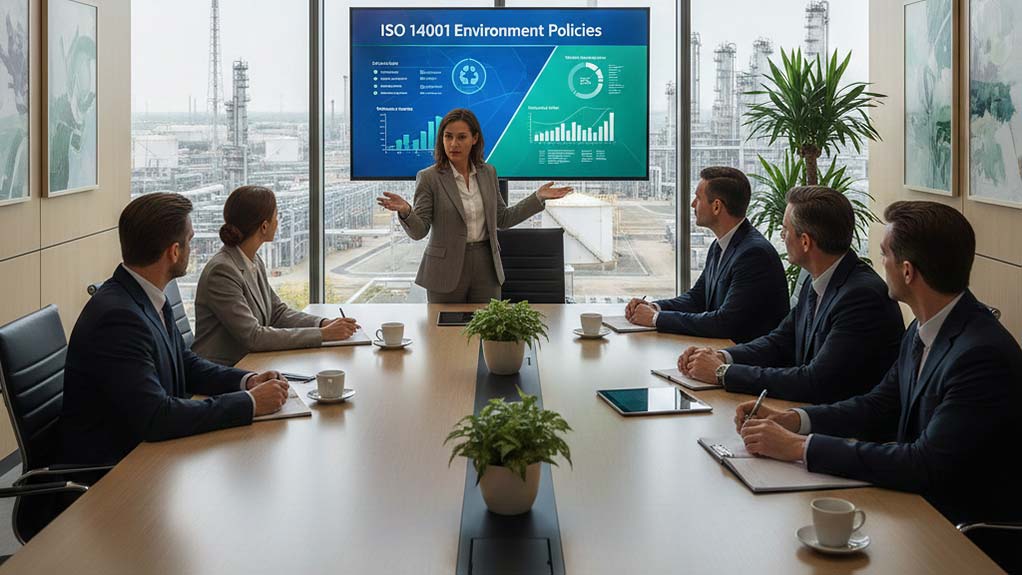
ISO 14001 Environmental Policy and Leadership set the foundation for how an organization turns environmental intent into measurable action. When both elements work in sync, teams move from declarations
Mental health in workplace safety is a critical factor that decides how consistently people follow procedures, recognize hazards and respond under pressure. When employees feel overwhelmed, their ability to
An ISO 45001 Gap Analysis gives you a realistic picture of how your current safety practices measure against the requirements of the ISO 45001 Occupational Health and Safety Management
Psychosocial hazards in the workplace influence how people think, behave and respond to risks because they directly affect mental wellbeing long before a physical incident occurs. When pressure builds,

Behavior based safety plays a defining role in how workplace safety culture grows, matures and stays consistent across daily operations. When organizations pay attention to the way people act
Soft skills for HSE professionals shape how effectively they communicate, influence and guide people on site, therefore they matter just as much as technical expertise. I’ve seen many safety
ISO 9001 digital transformation is reshaping how organizations in the UAE manage quality, safety and efficiency. Companies across Dubai, Abu Dhabi and Sharjah are moving beyond traditional paperwork and
An HSE Implementation Plan is the foundation of every safe and responsible workplace. It provides a structured framework for managing health, safety and environmental risks so that daily operations
ISO 45001 nonconformities are among the most common challenges organizations face during health and safety audits. We’ve seen many businesses struggle with recurring gaps that delay certification, affect compliance,
Leadership in ISO 9001 Certification success is the single most decisive factor that determines whether an organization truly achieves quality excellence or merely collects a certificate. ISO 9001:2015 places
An ISO 45001 audit preparation is far more than gathering documents and hoping for the best. It’s a disciplined process that tests your organization’s true commitment to occupational health
Common ISO 14001 implementation mistakes can quietly derail even the most well-intentioned environmental management plans. Many organizations across the UAE especially in Dubai, Abu Dhabi or Sharjah start with
ISO 9001 audit nonconformities reveal where a quality management system falls short of meeting the standard’s requirements. They highlight gaps in consistency, documentation, or process control that can impact