Emergency Response Plan (ERP): OHS Guide and Steps

An emergency response plan is the written set of actions that tells every person on site what to do in the first minutes of a fire, chemical release, injury or any other event that threatens life. Under occupational health and safety rules, this matters because people under stress default to what they have practiced, not what they have read. OSHA requires a written emergency action plan kept in the workplace, and ISO 45001 clause 8.2 expects a planned response, including first aid, that is trained and tested. Even so, a document alone protects nobody. The plan works when it names an incident commander, marks evacuation routes and assembly points, and rests on a real risk assessment of your site. This guide shows how to write one, test it through drills and keep it current.

What Is an Emergency Response Plan in Occupational Safety?

An emergency response plan in occupational safety is a site-specific document that explains how an organization detects, responds to and recovers from events that threaten people, property or operations. It covers fires, chemical hazards, medical crises and similar incidents, but it only works when it reflects your actual hazards, headcount and layout. A safety management system focuses on prevention, whereas the plan takes over when prevention fails. Therefore, it assigns roles and responsibilities, sets out alarm and evacuation procedures, and defines how information reaches workers and emergency services. Because people reach for habit under pressure, the plan also needs training behind it. The sections below clear up the terms that get mixed up, explain why a written version matters, and list the emergencies it should cover.

ERP vs Emergency Action Plan vs Emergency Response Team:

An emergency response plan is the broad document that covers the whole event, from detection to recovery. Besides evacuation, it adds incident command, hazmat operations and medical response, so it suits sites with hazardous materials, large crews or high-consequence work.

An emergency action plan (EAP) is the narrower document. Under OSHA 29 CFR 1910.38, it must be in writing, kept in the workplace and available to employees, although employers with 10 or fewer employees may communicate it orally. It centers on reporting emergencies, evacuation, accounting for people and rescue or medical duties. Meeting this standard keeps you compliant, but it does not prepare you for a chemical release or a rescue.

The emergency response team (ERT) is different again. The plan is the document, whereas the team is the group of trained people who carry it out, such as the incident commander, fire wardens and first aid responders.

ERP vs Business Continuity and Disaster Recovery Plans:

An emergency response plan protects life and health while the event is happening. It covers the alarm, evacuation, first aid and the handover to emergency services, so its focus is people, not production.

A business continuity plan keeps critical activities running through a disruption, such as the loss of a site, key staff or a supplier. It decides which functions matter most and how they continue, even if only at a reduced level.

A disaster recovery plan restores operations after large-scale damage, for example a major fire or a long outage. It sets out the order for repairing facilities and systems and returning to normal working.

These plans overlap, but NFPA 1600 treats emergency management and continuity as connected programs. Because all three draw on the same risk assessment, writing them together avoids contradictions, such as two documents giving different evacuation instructions.

Plan

Main question

Typical trigger

Emergency response plan

How do we protect people right now?

Fire, spill, injury, threat

Business continuity plan

How do we keep critical work going?

Loss of staff, site or supplier

Disaster recovery plan

How do we restore operations?

Major damage or long outage

Why Every Workplace Needs a Written Emergency Response Plan?

The International Labour Organization estimates that nearly three million workers die each year from work-related accidents and diseases, and about 395 million more suffer non-fatal injuries. Most of those deaths come from disease, but around 330,000 come from accidents, which are the events where minutes decide the outcome. The law adds its own pressure. OSHA requires most employers to keep a written emergency action plan at the workplace, and ISO 45001 clause 8.2 expects a planned response that is trained for and revised after drills and real events. Moreover, new starters, contractors and visitors do not know the unwritten routines, so they improvise. A written emergency response plan with dated drill records also answers an inspector’s first question.

Types of Workplace Emergencies Every ERP Should Cover:

Your risk assessment decides the list, but most sites need to plan for fire and explosion, chemical spills or gas leaks, medical emergencies, structural failure and utility or power failure. Add severe weather relevant to your region, and workplace violence or bomb threats where the site is open to the public. Industry matters too. A plant may need confined space rescue and process safety events, while a construction site may need work at height rescue. Where employees respond to hazardous substance releases, OSHA 1910.120 requires a written emergency response plan. Because likelihood and severity differ, rank each scenario, then give the most detail to the highest-risk ones. A plan that treats every event the same way ends up useful for none.

”Nearly 3 million workers die every year from work-related accidents and diseases. About 330,000 of those deaths come from accidents, the events where a tested emergency response plan decides the outcome.”

Hard hat and safety vest hanging on a railing in an industrial plant, showing why an emergency response plan matters.

Legal and Standards Requirements for Emergency Planning:

Emergency planning rules differ by country and industry, but they share one idea: employers must prepare for foreseeable emergencies before they happen. An emergency response plan is therefore both a safety tool and a compliance record. The sections below cover the standards most workplaces are measured against, starting with the US regulation that auditors often cite, then the international management system standard, national rules and the emergency management benchmark.

Source

What it asks for

OSHA 1910.38

Written emergency action plan with minimum elements

OSHA 1910.120

Written emergency response plan where employees respond to releases

ISO 45001 clause 8.2

Planned, trained, tested and reviewed emergency response

NFPA 1600

Programme for emergency, continuity and crisis management

OSHA 29 CFR 1910.38 Emergency Action Plan Requirements:

OSHA 29 CFR 1910.38 requires an emergency action plan whenever another OSHA standard in Part 1910 calls for one. The plan must be in writing, kept in the workplace and available to employees for review, but employers with 10 or fewer employees may communicate it orally.

At minimum, it covers procedures for reporting a fire or other emergency, emergency evacuation with exit route assignments, employees who stay behind to operate critical plant operations, accounting for everyone after evacuation, rescue and medical duties, and a named contact for questions. Employers must also review the plan with each employee when it is developed, when a job is first assigned, and when responsibilities or the plan change. Because 1910.38 is a minimum, a site with hazardous materials needs the fuller emergency response plan on top of it.

ISO 45001 Clause 8.2: Emergency Preparedness Explained:

Clause 8.2 of ISO 45001 asks the organization to establish, implement and maintain processes to prepare for and respond to potential emergency situations. That means a planned response that includes first aid, training for that response, and periodic testing and exercising of it. The organization must then evaluate performance and revise the plan, including after tests and, importantly, after real emergencies. Communication is part of the requirement too, so workers, contractors, visitors, emergency services and, where appropriate, the local community should receive relevant information. In short, the clause follows a plan, do, check, act cycle. Organisations pursuing certification can build their emergency response plan around it and Eduskills Training delivers ISO 45001 consultancy and internal auditor training for teams that want an auditor’s view of the result.

Employer Duties Under Other National OHS Regulations:

Most countries place a general duty on employers to prepare for emergencies, then add specifics through national or regional regulation. These rules often require consultation with the safety committee or worker representatives, and training for all workers, including temporary and part-time staff. In the United States, OSHA 1910.120 requires a written plan for hazardous waste operations and emergency response. In the UAE, the UAE Fire and Life Safety Code sets emergency requirements for buildings, and Abu Dhabi workplaces also work within the OSHAD framework. Because these rules change, check the current text for your jurisdiction, and record which requirement each section of your emergency response plan satisfies. That record speeds up audits and shows an inspector that the plan rests on the law, not on habit.

NFPA 1600 and Other Emergency Management Standards:

NFPA 1600 is a standard on continuity, emergency and crisis management. It describes a programme approach covering risk assessment, resource management, training and the validation of plans through drills and exercises, so it suits organisations that want one framework across emergency response and business continuity.

FEMA’s Comprehensive Preparedness Guide 101 supports an all-hazards approach, which means you plan for the functions every emergency needs, such as warning, evacuation and communication, instead of writing a separate plan for each threat. Where hazardous chemicals are stored or used, EPA rules under the Emergency Planning and Community Right-to-Know Act add reporting duties and coordination with local emergency planning committees. Used together, these references strengthen an emergency response plan without replacing the legal minimum.

“A plan nobody has rehearsed is an assumption. Drills expose the locked exit, the dead radio and the warden who was never briefed, before a real emergency does.”

Safety team reviewing a floor plan with exit routes while planning an emergency response plan drill.

Key Elements of an Effective Emergency Response Plan:

Strong plans share the same building blocks, but each one has to be tailored to the site. An emergency response plan is only as good as its weakest section, so these elements work as a set. Skip the risk assessment and the procedures guess at hazards. Skip the roles and nobody acts. Therefore, treat each element as a link in one chain, from the first alarm to the final headcount.

Risk Assessment and Emergency Scenario Identification:

Every plan starts with a risk assessment. Walk the site, list each credible emergency, and rank it by likelihood and severity, because that ranking decides how much detail each scenario receives. Include what is specific to your industry, such as confined space rescue or process safety events, alongside the usual fire, spill and medical cases. Check local emergency arrangements, including the response time of the nearest fire service, and address the hazardous substances held on site. A good plan is risk-based and scenario-driven, not templated, so if yours could belong to any company, it probably fits none. Finally, record who carried out the assessment and when, because a dated record shows the plan rests on evidence.

Emergency Response Team Roles and Responsibilities:

A plan without named people is a wish list. Start with an incident commander who has a deputy, then add floor wardens for each zone, a safety officer with authority to halt unsafe response work, and a communications lead for internal updates and outside contact. Cover every shift because emergencies do not wait for the day team. On 6 July 1988, explosions and fire on the Piper Alpha platform killed 167 people. The public inquiry led by Lord Cullen made 106 recommendations, all accepted by the industry, and accounts of the disaster describe how early evacuation orders were not given. Therefore, name a deputy for every command role, and make sure any worker can raise the alarm.

Alarm, Evacuation Routes and Assembly Point Procedures:

Start with the alarm. Each type of emergency should have a distinctive signal, so workers know which action to take. Then mark primary and secondary evacuation routes, keep them clear of stock and furniture, and post floor plans where people actually pass.

The assembly point must be large enough for everyone expected to use it. Because a count only helps when it is accurate, assign someone at each assembly point to check names against a current roster, including visitors and contractors. Also decide who stays behind to shut down critical operations, since OSHA 1910.38 requires procedures for those employees and they need a defined point at which they leave.

Emergency Communication and Crisis Notification Plan:

Communication tends to fail first, so plan it in three directions: to workers during the event, to responders when they arrive, and to leadership and families afterwards.

Start with the alarm, then add a public address system or mass notification tool for instructions, because a bell tells people something is wrong but not what to do.

Email alone is a poor choice, since an IT outage can remove it at the worst moment. Therefore, list backup channels and test them. Keep current contact details for fire, medical and police services, utilities and your response team, and review them at least once a year.

Pre-write short messages for evacuation, shelter in place and all clear, so the sender does not draft under pressure. Decide who may speak to the media, and nobody else.

First Aid, Medical Response and Emergency Equipment:

ISO 45001 includes first aid in the planned response, and OSHA expects medical and first aid supplies that match the hazards of the workplace. At a minimum, the plan should set out initial medical management and emergency medical service contact details, so every worker receives a proper response until professionals arrive. Then list emergency equipment and its location, such as extinguishers, AEDs, spill kits, eyewash stations and emergency shutoffs. Inspect it on a schedule based on your risk assessment, the manufacturer’s instructions and local fire codes, because a cabinet of expired supplies gives false comfort. Restock after every use. Finally, train enough first aiders to cover every shift.

Accounting for Contractors, Visitors and Vulnerable Workers:

A plan that covers only employees leaves gaps. ISO 45001 requires relevant emergency information to reach contractors and visitors, and temporary and part-time workers need the same training as permanent staff. Therefore, brief contractors before they start, give visitors a host who stays with them, and sign everyone in so the headcount includes them.

Plans must also consider people with mobility, visual, hearing or cognitive impairments, so write a separate evacuation arrangement, assign an assistant and agree where help waits if lifts are unavailable. Lone workers need attention too, because nobody notices when they fail to reach the assembly point. Set a check-in method for them, and ask affected people what works, since they often spot problems a desk review misses.

How to Develop an Emergency Response Plan Step by Step?

Writing the plan is a project, not a typing exercise. Follow these five steps in order, because each feeds the next: policy gives authority, assessment gives facts, procedures turn facts into action, training makes them usable and testing proves they work. Built this way, an emergency response plan stays tied to your occupational health and safety management system.

Step 1: Set the Policy, Scope and Management Commitment:

Begin with management commitment, because without it the plan lacks budget and authority. Write a short policy that states the purpose of the emergency response plan, the sites and people it covers, and who is accountable. Then define the scope, such as buildings, work areas, shifts, off-site work and visiting contractors. Consult workers or their safety committee while doing this, because it improves buy-in and surfaces practical problems early. Set a review date and name the owner. Finally, link the plan to your wider safety program and legal duties, so that a change in one triggers an update to the other. A plan with no owner usually ends up in a drawer.

Step 2: Assess Hazards, Vulnerabilities and Resources:

Next, gather facts. Carry out a hazard and risk assessment for each area, noting hazardous substances, high-risk tasks, ignition sources, structural features and utilities. Then examine vulnerabilities, such as night shifts, remote locations, workers with disabilities and heavy contractor presence. List the resources you actually have, including fire protection equipment, first aid supplies, trained people, alarm systems and the expected response of local emergency services. Because gaps will appear, record them as actions with owners and dates. Rank scenarios by likelihood and consequence, since the top of that list decides where you write the most detailed procedures.

Step 3: Write the Plan and Scenario-Specific Procedures:

Now write and keep the language plain, because people read the plan in a hurry. For each scenario, state how it is detected and reported, which alarm sounds, who does what in the first five minutes, where people go, and who handles critical shutdown tasks. Use short numbered steps and checklists, since people follow them more reliably under pressure. Add maps showing exits, assembly points, equipment and shutoffs. Include contact lists and a revision log. Separate the evacuation and accountability core from active response, such as incident command, hazmat operations, medical response and recovery, so a reader finds what they need in seconds.

Step 4: Train, Equip and Brief Employees and Contractors:

Plans fail when people meet them for the first time during an emergency. Therefore, review the plan with every employee when it is developed, when they start a job, and when their duties or the plan change, as OSHA 1910.38 requires. Give wardens, first aiders and the incident commander deeper training, and let equipment user’s practise with the real equipment. Brief contractors and visitors before they enter the site, because ISO 45001 expects information to reach them. Keep training records, as they prove it happened. Check understanding, not just attendance, by asking people to point to their exit and assembly point.

Step 5: Test, Review and Continually Improve the Plan:

Testing turns a document into a capability. Run drills, record what happened and fix the gaps. ISO 45001 expects performance evaluation and plan revision after tests and after real emergencies, so lessons from every exercise should feed straight back into the plan. Review the plan whenever the layout, staffing, process or hazards change, and on a fixed annual date regardless. Track corrective actions to closure, because findings left open repeat at the next drill. Keep a revision history that shows what changed and why. An auditor then sees a living plan, not one written once for a certification visit.

Emergency Response Procedures for Workplace Hazards:

Generic steps are only a starting point. Each hazard needs its own response outline, because the right move for a fire (leave) differs from the right move for severe weather (shelter) or a chemical release (it depends on the substance). The outlines below show what to include, but you must rewrite them for your site and check them against your risk assessment.

Fire and Explosion Emergency Response Procedure Steps:

Your fire procedure should cover how to raise the alarm, how to call the fire service and which exit routes to use. Decide early whether anyone is expected to use portable fire extinguishers.

Under OSHA 1910.157(b), an employer with a written policy requiring total evacuation, backed by an emergency action plan and a fire prevention plan, and with no extinguishers provided, is exempt from the extinguisher standard. Where extinguishers are provided for employee use, workers must be trained when hired and at least yearly. Add isolation steps, such as shutting down equipment or fuel supply when it is safe, and name who does it. Then set out the headcount at the assembly point and the handover to the fire service, including hazardous materials information and anyone unaccounted for.

Chemical Spill and Hazardous Substance Release Response:

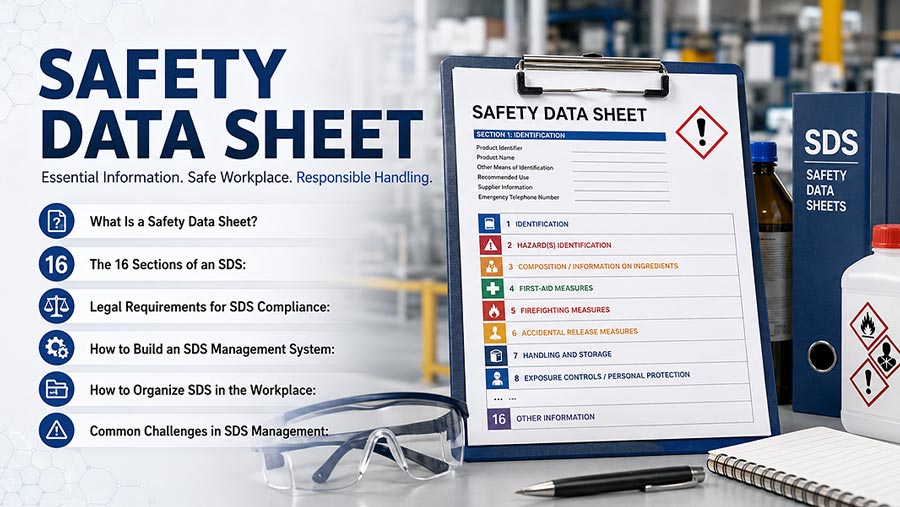
A chemical release needs different decisions, because the safest action depends on the substance. Therefore, link the procedure to safety data sheets and chemical inventory records, so responders know what they face. State when workers evacuate, when they shelter in place and who is trained to contain a spill. OSHA 1910.120 sets training requirements for workers who respond to hazardous substance releases, and response team members must know the toxic hazards well enough to judge when outside help is needed. Provide spill kits, eyewash stations and suitable PPE where a leak is likely. Finally, include notification of authorities and cleanup steps that restore safe conditions, since containment is only half the job.

Medical Emergencies, Injuries and First Aid Response:

Medical events are among the most likely emergencies on site, so this procedure deserves real attention. Name who can call for help and what to report: the nature of the emergency and the exact location, including building and room. Trained first aiders then start care and manage the scene until emergency medical services arrive. The emergency coordinator should notify the injured worker’s emergency contact and, where practicable, meet them at the medical facility. Keep a record of first aid given, because it supports investigation and insurance. Check kits and equipment regularly, and place AEDs where they can be reached within minutes.

Confined Space and Working at Height Rescue Planning:

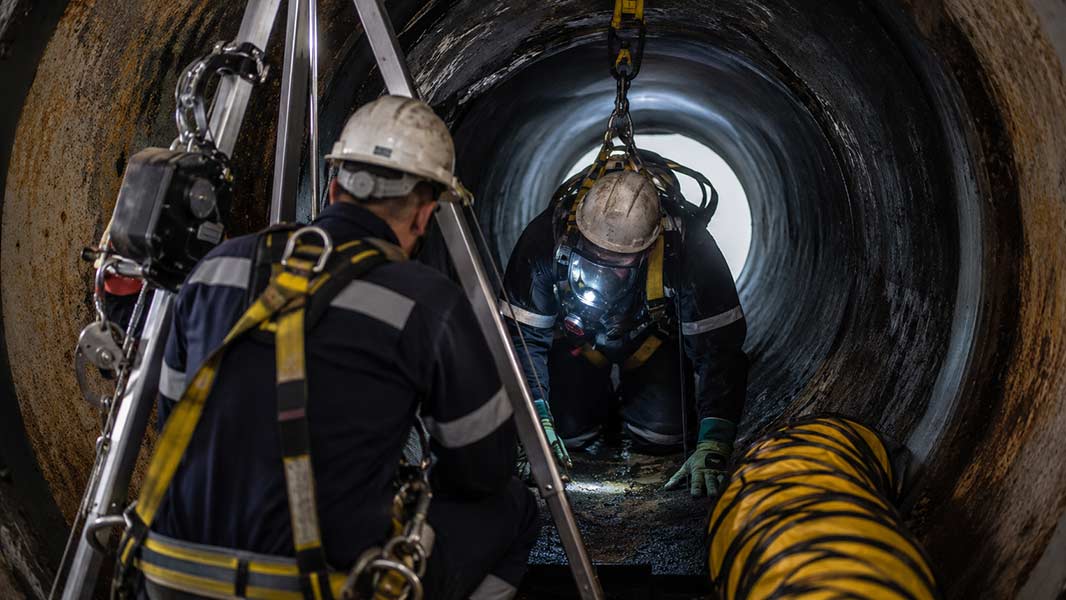
Rescue cannot be improvised. Work involving confined spaces, high angles, entrapment risk, hazardous atmospheres, underground areas or water needs written rescue procedures, prepared by a competent person before the job starts. Therefore, decide in advance who performs the rescue, what equipment they use and how they communicate with the entrant.

Never plan for untrained colleagues to enter after a casualty, because a rescuer who enters unprepared can become a second casualty. Rehearse with the real harnesses and retrieval gear, and tie the plan to your permit to work system. Finally, confirm that rescue equipment is inspected and that the rescue team can reach the work area within the time your risk assessment allows.

Severe Weather, Power Failure and Utility Disruptions:

Weather and utility failures often arrive together. For severe weather, decide in advance when workers shelter in place and where, because evacuating into a storm can be worse than staying inside.

For power failure, identify backup power sources and the equipment that must be shut down safely first, since equipment shutdown belongs in the plan. Also cover emergency lighting, lifts, ventilation and alarm systems, which depend on power. Test generators and backup batteries on a schedule.

Because hazards differ by region, tailor the list, as a coastal site, a desert site and a cold-climate site will plan for different events. Then set clear criteria for sending people home and for restarting work.

Workplace Violence, Bomb Threats and Security Incidents:

Workplace violence, bomb threats and security incidents need a different response because the safest action may be to lock down or hide, not evacuate. Planners usually separate three protective actions, namely evacuation, shelter in place and lockdown, and choose between them by threat type. Therefore, write simple criteria and make sure staff know the signal for each. Include how to report a threat, who contacts the police, how to treat suspicious items and how to support people afterwards. Because these events move fast, keep instructions short and practise them in tabletop exercises with security staff. Involve local police early so the plan matches how they would respond.

Emergency Response Plan Template and Checklist for Employers:

A template saves time, but only if you adapt it. Copy a generic one and you inherit someone else’s hazards, so use the structure below as a frame and fill every section from your own risk assessment. The checklist and matrix that follow help you confirm nothing is missing before you sign the plan off.

Emergency Response Plan Template: Sections to Include

Use these sections:

  • Purpose, scope and legal basis
  • Site description and hazards
  • Roles, named backups and shift cover
  • Alarm signals and notification methods
  • Evacuation, shelter in place and lockdown actions
  • Accountability and assembly points
  • Scenario-specific procedures
  • Shutdown and rescue arrangements
  • Equipment and first aid locations
  • Communication plan
  • Training and drill schedule
  • Review dates and revision log

Attach maps and contact lists as appendices, because they change more often than the text.

Pre-Emergency Readiness Checklist for Your Workplace:

Before the plan goes live, confirm each point:

  • A current risk assessment supports the listed scenarios.
  • Every role has a named person and a backup on each shift.
  • Alarms are distinct, audible and tested.
  • Exits and routes are clear and signed.
  • Assembly points are marked and large enough.
  • Contact lists were updated within the last year.
  • First aid kits, extinguishers and spill kits are inspected.
  • Contractors and visitors receive a briefing.
  • All workers have been trained on the plan.
  • A drill is scheduled and the last results are closed out.

Tick, date and sign each item, because a signed checklist is also evidence for auditors.

Emergency Contact and Responsibility Matrix Example:

A responsibility matrix shows at a glance who does what. List the event down the side and the roles across the top, then fill each cell with the action. This example covers a fire:

Role

Main action in a fire

Backup

Incident commander

Declares the emergency, directs response

Deputy commander

Communications lead

Calls the fire service, sends alerts

Reception supervisor

Floor warden

Sweeps the zone, directs people out

Zone deputy

First aider

Treats casualties at the assembly point

Second first aider


Common Emergency Response Plan Mistakes and How to Fix Them:

Most failures are ordinary. Plans fall apart because they are old, untested or unclear, not because the hazards were exotic. Reviewing your own plan against the three mistakes below is a quick way to find its weak points.

Outdated Plans That Ignore Site and Workforce Changes:

Facilities change faster than documents. A new process, an added floor, a staffing change or a different contractor can make a plan wrong overnight, which is why an emergency response plan has to be a living document. Therefore, set a fixed annual review and add triggers, such as layout changes, new hazards, significant staffing changes and any drill or event that exposes a gap. Check phone numbers, names and maps at each review, because they go stale first. A revision log with dates shows an inspector that the plan is alive. Finally, remove old versions from circulation, since a worker who follows last year’s exit route creates the very problem the plan was meant to prevent.

No Drills, Poor Training and Unclear Role Assignments:

Reading a plan and rehearsing it produce very different levels of readiness. Without drills, nobody knows whether alarms are heard, exits open or wardens know their zones. Poor training causes the same trouble, and unclear role assignments add confusion because everyone assumes someone else will act. Therefore, name roles with backups, train for them and rehearse until the actions feel routine. Under stress, people fall back on trained habits, not creative problem solving, so a habit that was never trained simply does not exist when it is needed. Keep records of attendance and drill results, and fix findings promptly. If a role depends on one person who is often absent, assign a deputy today.

Treating the EAP as a Complete Emergency Response Plan:

Meeting OSHA 1910.38 keeps you legal, but it does not mean you are prepared. The emergency action plan deals with reporting, evacuation, accounting for people and rescue or medical duties. It does not cover incident command, hazmat operations or recovery. A site that stores hazardous chemicals, runs large crews or performs high-consequence work needs more. So treat the EAP as the foundation of a wider emergency response plan, then add scenario procedures, command structure, resources and recovery. Ask a simple question: if the worst credible event happened tonight, would this document tell the night shift what to do after everyone is out? If not, the plan stops too early.

Emergency Response Training and OHS Competence Requirements:

People carry out the plan, so competence matters as much as the document. Training should match each role: all workers need to know alarms, routes and assembly points, while wardens, first aiders and coordinators need deeper skills. Competence also needs proof, in the form of records, assessments and refreshers.

Fire Warden, First Aider and Emergency Coordinator Training:

Fire wardens learn to check their zone, assist evacuation, report to the incident commander and understand the limits of extinguishers. First aiders need accredited first aid training and regular refreshers, while emergency coordinators need decision-making practice, communication skills and thorough familiarity with the plan. OSHA requires employers to designate and train employees to assist in a safe, orderly evacuation, and ISO 45001 expects training for the planned response. Therefore, base the training plan on the roles in your emergency response plan, and keep a register showing who is trained, when, and when it expires. Add scenario practice, because skills fade without use. Where the work involves hazardous substances or rescue, include the specific skills and equipment that response requires.

How Eduskills Supports Your Emergency Preparedness

Eduskills Training delivers internationally recognised OHS qualifications, ISO consultancy and auditor training, including IOSH, AOSH, ProQual and Qualifi programmes and ISO 45001 services. If you are building or reviewing an emergency response plan, our team can help you map clause 8.2 requirements to your site, train the people who will lead drills and prepare for audits. Contact us to discuss your site, your hazards and your certification goals, and we will recommend the route that fits.

Frequent Asked Questions (FAQs):

Where does ISO 45001 expect emergency scenarios to come from?

They should come out of hazard identification under clause 6.1. That process must consider emergency situations, and clause 6.1.4 then requires planned actions for emergency preparedness, which clause 8.2 turns into working processes. Keeping this chain visible lets an auditor trace each scenario from hazard to risk to response.

Should scenarios be ranked by likelihood alone?

No. Rank by likelihood and severity using your risk matrix, but also write procedures for a reasonably foreseeable worst case at high-consequence sites. A major release or structural collapse may score low on likelihood, yet the response still needs to be planned before the event, because nobody can design it during one.

What documented information does ISO 45001 clause 8.2 require?

The organisation must maintain and retain documented information on the processes and plans for responding to potential emergency situations. In practice, that means the plan, training records, drill reports and review results.

How do you test whether an evacuation plan is fast enough?

Compare required safe egress time with available safe egress time. Required time includes detection, alarm, pre-movement delay and travel, and it must be shorter than the time before conditions become untenable, with a safety margin. Pre-movement delay can take a large share of the total, so alarm clarity, warden action and drills matter as much as exit width.

How do you coordinate a plan on a multi-employer site?

The host’s plan governs the site, while each contractor supplies task-specific emergency and rescue arrangements that fit it. Agree alarm signals, assembly points, command authority and communication routes before work starts, then check them through inductions and joint drills. ISO 45001 clause 8.2 also expects relevant information to reach contractors and visitors.

High-risk permits, such as confined space entry, hot work and work at height, should not be issued until rescue arrangements are verified. The permit should name the rescue method, communication and standby person, and define the safe state for the work if the alarm sounds. Otherwise the rescue plan exists on paper but not at the job.

How reliable are accountability methods after evacuation?

Each one has a failure mode. Roster counts go stale, badge data can miss visitors and contractors, and zone sweeps expose wardens to risk. Therefore, use two methods, assign a person to report totals to the commander, and set a firm rule against re-entry. Report anyone unaccounted for to the fire service, with last known location.

What evidence do auditors look for under clause 8.2?

They typically trace the scenario list back to hazard identification, then check the plan, role-holder knowledge, training records, drill reports and closed corrective actions. They also interview workers, for example asking where the assembly point is or what to do when the alarm sounds. Consistent answers from the floor are often stronger evidence than a polished document.

Inquiry Form